
 Online Shop
 English
 China - 简体中文
 Global - English
 Brazil - Português
 Netherlands - Dutch
 Italy - Italiano
 Germany - Deutsch
 Spain - Español
 France - Français
 Vietnam - Tiếng Việt
 Poland - Polski
 Australia - English
 Japan - 日本語
Zhuo Yiran — Senior After-Sales Service Engineer, Energy Storage Systems

Micro Hybrid Energy Storage for Flexible Solar Independence
Modern distributed energy is moving toward smaller, smarter, more modular systems that can be installed quickly, expanded gradually, and operated with confidence in both grid-connected and off-grid conditions. The SUN-BK(80-250)-2.56KWH-EU-AM4-18L/32L micro hybrid energy storage system is designed for exactly this transition. It combines inverter functionality, lithium iron phosphate battery storage, multi-channel photovoltaic input, wireless communication, and flexible expansion into a compact all-in-one platform for residential, balcony solar, portable energy, backup power, and small-scale distributed photovoltaic applications.
Unlike traditional solar energy systems that often require separate inverters, battery cabinets, complex cabling, and a high level of installation planning, this product emphasizes plug-and-play practicality. It is built around a 2.56 kWh LiFePO4 battery module and supports multiple AC output ratings, including 800 W, 1600 W, 2000 W, and 2500 W versions. The system supports grid-tied, off-grid, and AC-coupled operating modes, allowing users to adapt the same platform to self-consumption, backup supply, portable power support, or incremental solar expansion.
Its strongest competitive value lies in the combination of compact design and serious technical capability. Four independent MPPTs, support for up to eight PV modules on the 32L version, up to 5760 W PV access power on the 32L version, IP65 protection, 4 ms on/off-grid switching, up to 102.4 kWh expansion, and 10-year warranty coverage make it far more than a simple small battery box. It is a micro hybrid ESS built with the logic of a professional solar inverter and energy storage platform.
The product also reflects the manufacturing strength of Ningbo Deye Inverter Technology Co., Ltd., part of a technology manufacturing enterprise founded in 2000 and listed on the Shanghai Stock Exchange in 2021. With products sold in more than 140 countries and regions, the company has accumulated strong experience in photovoltaic inverters, energy storage systems, environmental appliances, energy IoT, and complete solar-plus-storage solutions. This industrial foundation is important because an energy storage product is not simply a consumer device; it must combine power electronics, battery safety, grid compliance, mechanical robustness, thermal management, communication stability, and long-term service capability.
SUN-BK(80-250)-2.56KWH-EU-AM4-18L/32L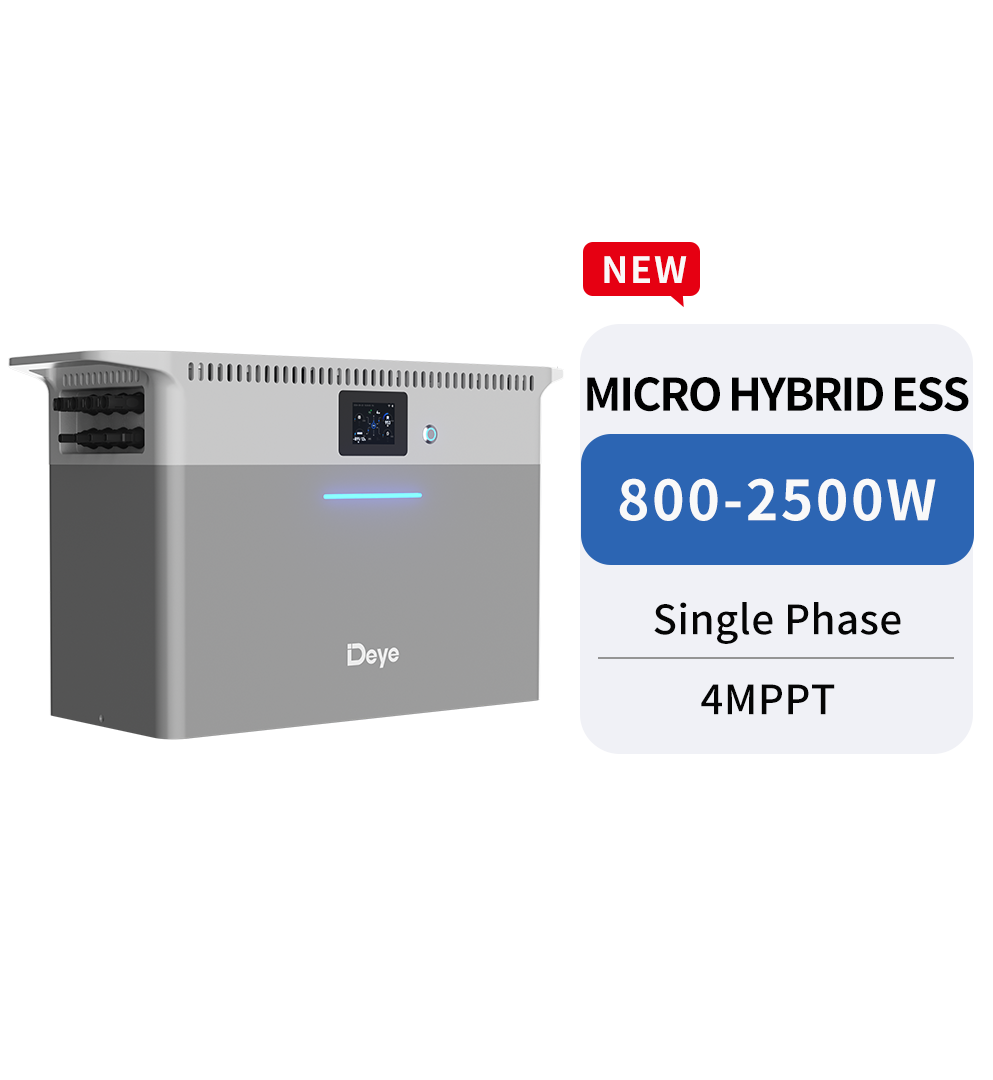
1. Product Positioning: A Compact ESS for the New Solar User
The SUN-BK(80-250)-2.56KWH-EU-AM4-18L/32L belongs to the Micro Hybrid ESS category. This category is growing quickly because solar users increasingly want systems that are easier to install and easier to expand than traditional full-size residential ESS packages. Many households and small commercial users do not immediately need a large wall-mounted or rack-mounted battery system. They may begin with a balcony solar installation, a small rooftop PV array, or a portable solar application, then expand over time as energy needs grow.
This product fits that trend by offering an all-in-one structure with integrated inverter and battery. The system starts from a 2.56 kWh battery capacity, but its architecture allows stacking and parallel expansion. Each AE-F2.56 battery module has a nominal energy of 2560 Wh, and up to five battery modules can be vertically stacked to reach 12.8 kWh per cluster. With cable connection, the system supports eight clusters, or up to forty batteries, allowing total expansion up to 102.4 kWh. This makes the platform useful not only for small personal energy storage but also for larger distributed storage scenarios where modular growth is preferred.
The product also offers several power versions: 800 W, 1600 W, 2000 W, and 2500 W. These ratings are useful because energy policies, balcony solar limitations, household load requirements, and installation budgets differ from market to market. A user who only needs entry-level self-consumption can select the 800 W version. A household that wants higher backup power or stronger daily load support can choose 1600 W, 2000 W, or 2500 W. This tiered structure gives installers and distributors a wider range of sales options while keeping the basic platform consistent.
For users, the product’s positioning can be summarized in three words: simple, expandable, and resilient. It is simple because plug-and-play operation reduces installation complexity. It is expandable because the battery architecture can grow from one module to a much larger capacity. It is resilient because it supports on-grid and off-grid work, with rapid transfer when grid conditions change.
2. All-in-One Design: Why Integration Matters
Many competing energy storage systems require separate components. A typical system may include PV modules, DC isolators, a hybrid inverter, external batteries, battery communication cables, AC distribution hardware, a monitoring gateway, and additional accessories. While such systems can be powerful, they can also be intimidating for users who want a smaller solar energy solution. Every extra component increases the chance of installation error, compatibility mismatch, or service difficulty.
The SUN-BK(80-250)-2.56KWH-EU-AM4-18L/32L addresses this issue through an integrated inverter-and-battery design. By packaging core energy conversion and storage functions into a unified product, it simplifies the physical layout and reduces the number of separate devices needed for many applications. This design is especially valuable for apartments, terraces, balconies, compact utility spaces, portable use cases, and small independent power systems where space is limited.
Integration also improves the user experience. When the inverter, battery, communication interface, and system control logic are designed as one coordinated platform, the system can manage battery charging and discharging more intelligently. The battery charging strategy is self-adaptive to the BMS, which helps coordinate safe battery operation. The user does not need to manually match battery parameters with a separate inverter from another supplier.
Competitors that rely on mixed-brand component combinations may offer flexibility, but they also create responsibility gaps. If the inverter and battery come from different manufacturers, troubleshooting can become more complicated. The inverter supplier may blame battery communication, while the battery supplier may blame inverter settings. An integrated system reduces this uncertainty by creating a single coordinated product architecture.
For installers, an all-in-one structure can reduce project time. For distributors, it simplifies inventory because the main system is standardized. For end users, it creates a cleaner installation and a more coherent energy experience. These advantages are important in micro hybrid ESS markets, where ease of adoption is often the deciding factor.
3. Plug-and-Play Convenience for Faster Deployment
Plug-and-play design is one of the product’s headline advantages. In the context of micro hybrid ESS, plug-and-play does not mean that electrical safety can be ignored; it means the system is engineered to minimize unnecessary complexity and make installation more accessible. This is particularly important for emerging balcony solar and small distributed PV markets, where users expect a product that feels closer to a smart appliance than a conventional power plant.
Traditional hybrid systems often require skilled design calculations, wall mounting, inverter-battery commissioning, firmware compatibility checks, and detailed parameter configuration. By contrast, a plug-and-play micro hybrid ESS can help installers complete projects more quickly and can make standardized deployment easier across many households. This benefits energy service providers who want to scale installations without excessive labor cost.
The compact dimensions of the inverter system, 560 × 330 × 210 mm, and the battery module dimensions, 450 × 210 × 244 mm, support practical placement in tight spaces. The inverter unit weighs about 30 kg, while the battery module weighs approximately 22 ± 3 kg. These dimensions and weights are manageable compared with large residential ESS systems, especially when modular installation is preferred.
The product’s IP65 rating further supports flexible deployment. IP65 protection helps protect the system from dust and water jets, making it suitable for more demanding environments than indoor-only devices. For balcony solar, garden cabins, small outdoor utility areas, and sheltered exterior installations, this protection level adds confidence. Competitors with lower ingress protection may require additional enclosures or more restrictive installation conditions.
The operating temperature range is -10°C to 55°C, with derating above 45°C. An optional heating configuration supports operation from -20°C to 55°C. This is valuable in regions with cold winters, where battery charging and discharging can be affected by low temperature. By offering a heating option, the product becomes more adaptable across climates.
4. Four Independent MPPTs: Better Solar Harvest in Real Conditions
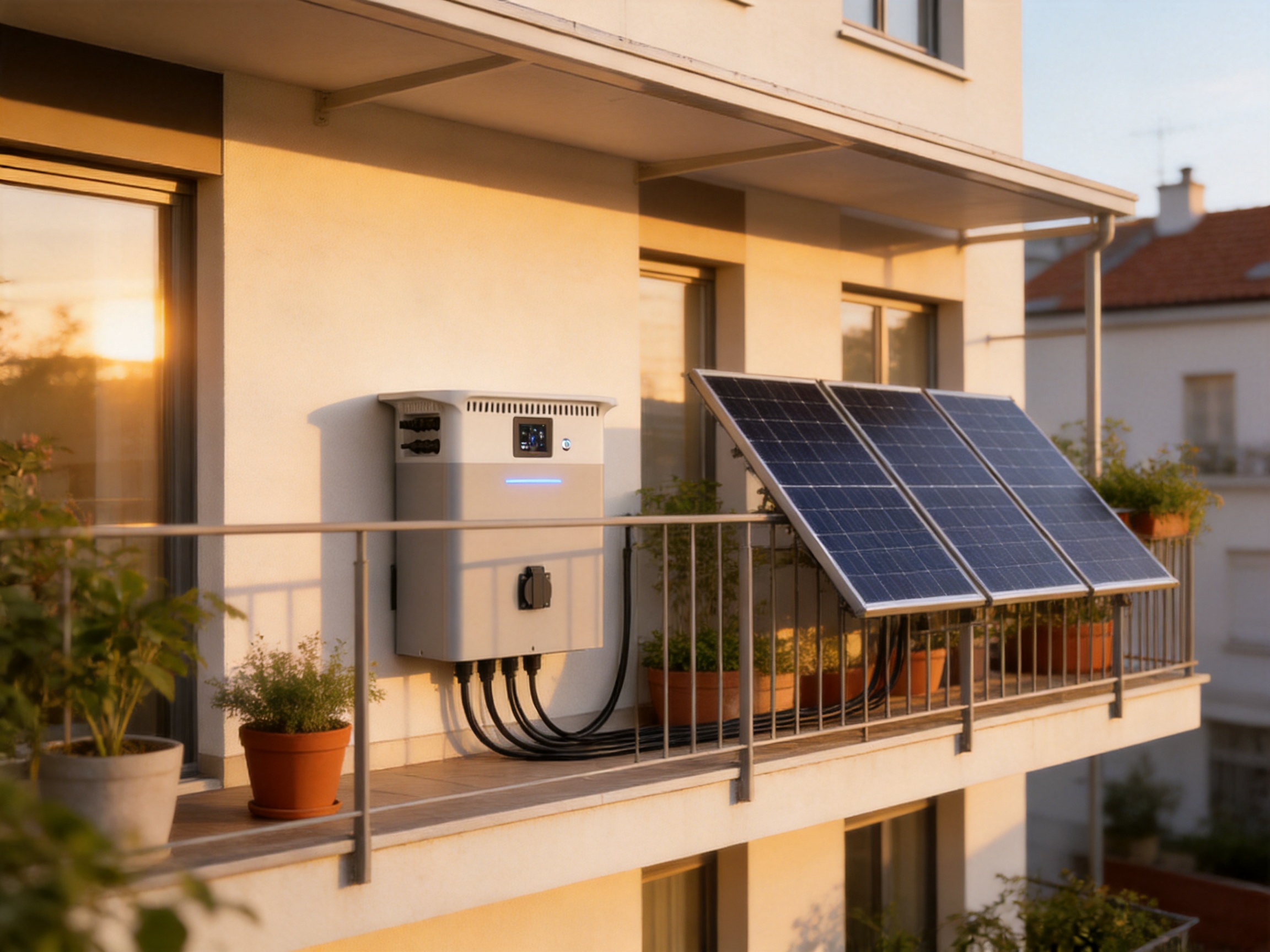
One of the most important differentiators of this micro hybrid ESS is its four independent MPPTs. MPPT stands for maximum power point tracking, a function that continuously adjusts PV operating conditions to extract the best possible power from solar modules. In real installations, panels are rarely exposed to perfectly identical conditions. One panel may face a different direction, another may be shaded by a railing, and another may receive lower irradiance due to roof geometry or seasonal sun angle.
Systems with fewer MPPT channels are less flexible under these mixed conditions. If multiple modules are forced to operate together, the weakest module can reduce the performance of the group. Four independent MPPTs allow each PV input path to be optimized separately, improving energy harvest when modules have different orientations or shading patterns.
This feature is especially useful for balcony solar and compact distributed PV. Balcony modules may be installed on multiple sides of a building, such as east-facing and west-facing railings. Rooftop modules on small homes may have limited placement options due to chimneys, skylights, or structural obstacles. Portable applications may use panels placed at different angles. In these scenarios, independent MPPTs are a significant advantage over simpler energy storage products with fewer input channels.
The product provides a rated PV input voltage of 42.5 V, a startup voltage of 25 Vdc, and an MPPT voltage range of 20 to 55 V. This low-voltage PV input structure is suitable for module-level access and small PV arrays. The number of MPP trackers and strings is 4/1+1+1+1, confirming four separate tracking channels.
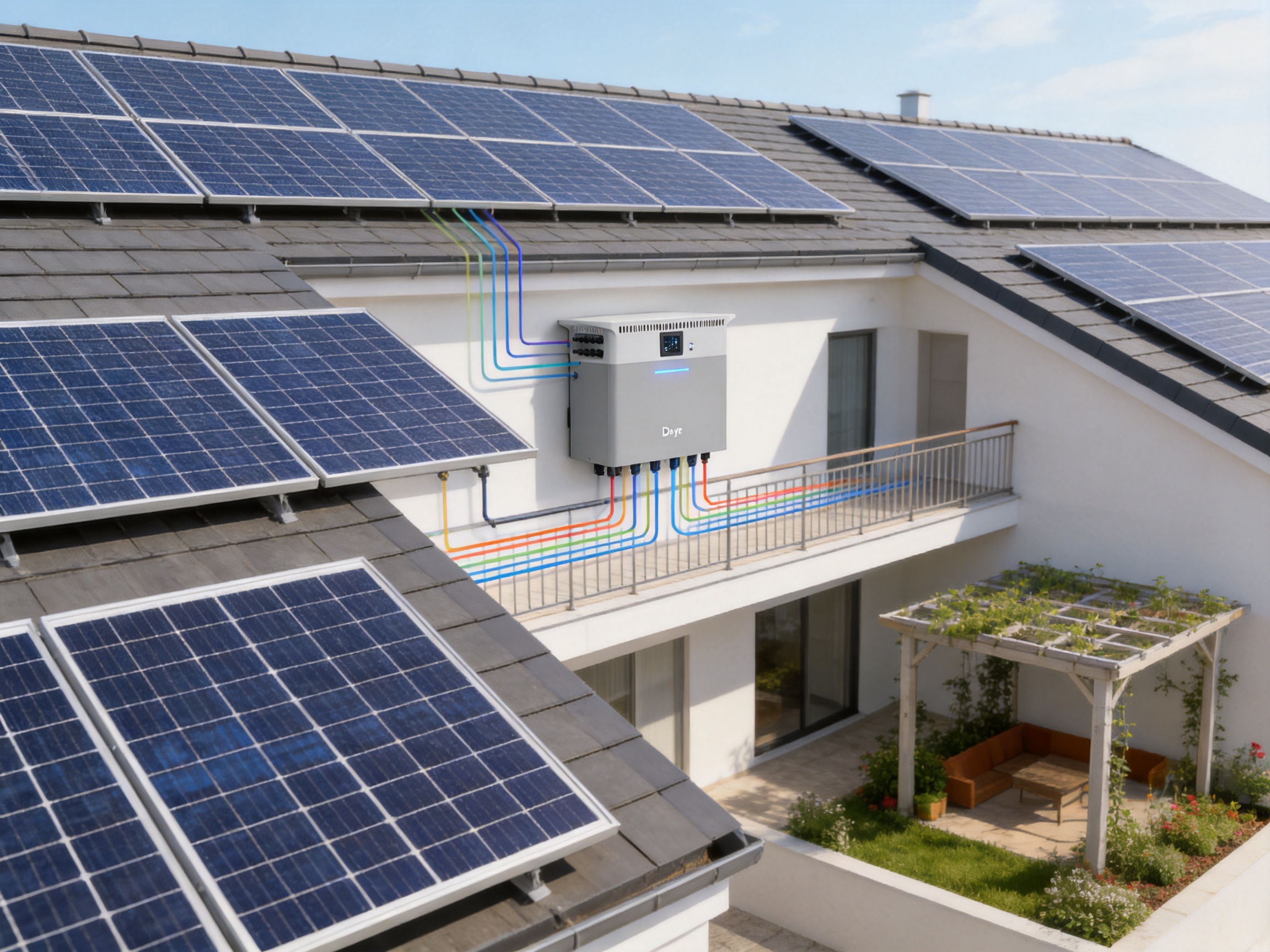
On the 18L version, maximum PV access power is 4400 W, with maximum operating PV input current of 18 A + 18 A + 18 A + 18 A and maximum input short-circuit current of 32 A + 32 A + 32 A + 32 A. On the 32L version, maximum PV access power rises to 5760 W, with maximum operating PV input current of 32 A + 32 A + 32 A + 32 A and maximum input short-circuit current of 48 A + 48 A + 48 A + 48 A. This higher current capability makes the 32L model particularly competitive for users who want to connect more PV modules and maximize solar capture.
5. Two PV Input Options: 18L and 32L for Different Solar Designs
The availability of 18L and 32L versions gives the product family important design flexibility. Both versions share the same core micro hybrid ESS concept, but they differ in PV access capability and off-grid power specification. The 18L version supports maximum PV access power of 4400 W, while the 32L version supports up to 5760 W and up to eight PV modules. This makes the 32L version better suited to users who want a higher PV-to-storage ratio or who have more module area available.
In many solar storage systems, oversizing PV input relative to battery capacity can be valuable. Solar irradiance changes throughout the day and across seasons. A higher PV access rating can improve energy capture during cloudy conditions, morning and evening periods, and winter months. It can also help recharge the battery more quickly after overnight discharge or after backup use. The 32L version’s 5760 W PV access power is therefore a strong competitive advantage in the micro hybrid ESS category.
At the same time, the 18L version remains attractive for users whose PV array is smaller or whose installation environment limits module quantity. It still provides four independent MPPTs and 4400 W PV access power, which is substantial for a compact all-in-one energy storage product. The existence of both versions allows system designers to choose the right balance between cost, PV capacity, and intended use.
Compared with competitors that provide only a single PV input configuration, this dual-version strategy is more market-friendly. It lets distributors serve entry-level and higher-performance customers without changing the entire platform. It also supports regional differences in solar module wattage, balcony solar rules, and household energy behavior.
6. AC Performance and Power Options
The product family includes four AC rated power levels: 800 W, 1600 W, 2000 W, and 2500 W. Maximum AC input/output active power reaches 880 W, 1760 W, 2200 W, and 2750 W respectively. These models operate on 220/230 Vac, L+N+PE, and support 50 Hz and 60 Hz frequency ranges. This broad compatibility is valuable for international markets.
The rated grid input/output currents are 3.7 A / 3.5 A for the 800 W model, 7.3 A / 7.0 A for the 1600 W model, 9.1 A / 8.7 A for the 2000 W model, and 11.4 A / 10.9 A for the 2500 W model. Maximum grid input/output currents are 4 A / 3.9 A, 8.0 A / 7.7 A, 10.0 A / 9.6 A, and 12.5 A / 12 A respectively.
The system supports peak power in off-grid operation equal to two times rated power for 10 seconds. This is useful because many loads require brief startup surges. Pumps, motors, refrigerators, and certain power tools may momentarily draw more than their running power. Short-duration surge capacity gives the system stronger practical usability than products rated only for steady resistive loads.
The maximum continuous AC passthrough from grid to load is 30 A. This allows the system to support load supply through grid passthrough when needed. Power factor adjustment from 0.8 leading to 0.8 lagging also reflects grid-interactive inverter capability, not merely basic battery output.
For users comparing micro hybrid systems, these AC features matter because rated watts alone do not tell the whole story. Real-world usability depends on overload behavior, switching speed, grid compatibility, passthrough current, and protection functions. The SUN-BK platform is designed to address these practical requirements rather than focusing only on nominal capacity.
7. Fast 4 ms On/Off-Grid Switching
One of the product’s major advantages is 4 ms on/off-grid switching. When grid power fails, a hybrid ESS must transfer supported loads to battery or PV-backed output as quickly as possible. Slow transfer can cause lights to flicker, routers to restart, computers to shut down, and sensitive electronics to lose operation. A 4 ms switching time is fast enough to support many backup scenarios smoothly.
This feature is important for households that rely on stable power for internet connectivity, home offices, communication equipment, security devices, medical-adjacent comfort equipment, refrigeration, and lighting. It also benefits small commercial or remote applications where brief power interruptions can be disruptive.
Many compact storage competitors focus primarily on energy saving and self-consumption but offer limited backup capability or slower transfer. The SUN-BK platform’s fast switching makes it more valuable as a true hybrid system. It is not just a battery for storing excess solar energy; it is also a resilience device that can support off-grid operation when the utility supply is unavailable.
The system supports multiple operating modes, including grid-tied, off-grid, and AC-coupled operation. Grid-tied mode allows solar self-consumption and energy management while connected to utility power. Off-grid mode supports independent load supply. AC-coupled operation adds flexibility for integration with existing PV systems or additional energy equipment. This range of modes increases the product’s application scope and differentiates it from simpler portable power stations or limited balcony inverters.
8. Battery Technology: LiFePO4 Safety and Long Cycle Life
The battery module uses LiFePO4 chemistry, widely recognized for thermal stability, safety, and long cycle performance. The AE-F2.56 battery module has a nominal voltage of 51.2 V, nominal energy of 2560 Wh, and operating voltage range of 44.8 V to 57.6 V. Maximum charging and discharging current is 50 A. Cycle life is rated at no fewer than 6000 cycles under specified conditions of 25°C ± 2°C, 0.5C charge and discharge, and 70% end of life.
LiFePO4 is a strong choice for residential and small distributed energy storage because users expect long-term reliability and safety. Compared with some higher energy-density lithium chemistries, LiFePO4 generally provides better thermal stability and is widely used in stationary storage. For a product expected to operate for many years in homes or small properties, this chemistry is a practical and responsible decision.
The battery system includes self-adaptive charging strategy to the BMS. BMS coordination is essential in lithium battery systems because voltage, temperature, current, cell balance, and protection logic must be controlled carefully. A well-integrated BMS helps prevent overcharge, over-discharge, overcurrent, and unsafe temperature operation.
The battery module also includes LED display for state of charge and alarm indication. This simple local display improves usability because users can quickly understand basic battery condition without always relying on an app or external monitoring platform. Communication through LoRa supports wireless energy management and multi-module coordination.
From a competitive perspective, the battery module’s stackability is particularly important. Many compact storage products are limited to one or two battery packs. This platform allows up to five modules in a vertical stack and up to forty modules through parallel clustering. That expansion range gives the system a lifecycle advantage. A user can begin small and scale later without replacing the original investment.
9. Expansion Strategy: From 2.56 kWh to 102.4 kWh
Scalability is one of the strongest arguments for this micro hybrid ESS. The system starts with 2.56 kWh, which is appropriate for entry-level self-consumption, emergency backup, and daily solar shifting. However, energy needs can grow. A household may add an electric vehicle, install more solar modules, work from home more often, or decide to increase backup autonomy. A rigid storage system may become obsolete when these needs change. A modular system can grow with the user.
Each battery module contributes 2.56 kWh. Five stacked modules provide 12.8 kWh, enough for much more substantial daily storage. With eight clusters and forty batteries, total energy can reach 102.4 kWh. This is remarkable for a micro hybrid ESS platform and gives it a bridge position between small residential storage and larger distributed energy storage applications.
Expansion also supports phased investment. Instead of requiring a large upfront purchase, the user can start with a basic system and add battery modules later. This is valuable in markets where energy prices, policy incentives, and household budgets change over time. Installers can also use the same product family to serve different customer sizes.
Parallel inverter capability adds another layer of scalability. The maximum inverter parallel number is three units, supporting up to 7.5 kW rated output. This means users can increase not only storage capacity but also power output capability. Competitors that allow battery expansion but not inverter output expansion may still limit load support. The ability to parallel inverters improves system adaptability.
Scalable design also reduces product waste. A non-expandable unit may be discarded or replaced when energy needs increase. A modular platform can remain in service longer because it can be upgraded. This contributes to better lifecycle economics and better sustainability.
10. Key Technical Summary
| Feature | 18L Version | 32L Version | Competitive Value |
|---|---|---|---|
| Rated AC Power Options | 800 W / 1600 W / 2000 W / 2500 W | 800 W / 1600 W / 2000 W / 2500 W | Multiple versions match different user needs and regional limits |
| Maximum AC Active Power | 880 W / 1760 W / 2200 W / 2750 W | 880 W / 1760 W / 2200 W / 2750 W | Supports practical operating margin above rated output |
| PV Access Power | Up to 4400 W | Up to 5760 W | High solar input for faster charging and better seasonal harvest |
| MPPT Channels | 4 independent MPPTs | 4 independent MPPTs | Improves solar yield under mixed orientation or partial shading |
| PV Input Current | 18 A + 18 A + 18 A + 18 A | 32 A + 32 A + 32 A + 32 A | 32L version supports higher-current module configurations |
| Battery Chemistry | LiFePO4 | LiFePO4 | Stable, long-life chemistry suitable for home energy storage |
| Nominal Battery Energy | 2.56 kWh per module | 2.56 kWh per module | Modular starting point for gradual expansion |
| Maximum Expansion | Up to 102.4 kWh | Up to 102.4 kWh | Far greater scalability than many compact ESS products |
| Switching Time | 4 ms | 4 ms | Fast backup transition for sensitive loads |
| Ingress Protection | IP65 | IP65 | Supports more flexible installation environments |
| Communication | Wi-Fi, Bluetooth, LoRa | Wi-Fi, Bluetooth, LoRa | Enables local setup, monitoring, and wireless energy management |
| Warranty | 10 years | 10 years | Long-term confidence for users and installers |
11. Protection, Safety, and Compliance
Energy storage systems must be safe in electrical, thermal, mechanical, and grid-interactive terms. The SUN-BK platform integrates multiple protection functions, including DC reverse polarity protection, thermal protection, AC output overcurrent protection, insulation impedance detection, AC output overvoltage protection, anti-islanding protection, and AC output short-circuit protection. Surge protection is rated Type II on both DC and AC sides.
Anti-islanding protection is especially important for grid-tied operation. If the utility grid is down, an inverter must not continue feeding power into the grid in a way that could endanger service personnel or damage equipment. Compliance with grid regulations and safety standards is therefore essential.
The product lists safety and EMC standards including IEC 62619, UN38.3, IEC/EN 62109-1, IEC/EN 62109-2, and IEC/EN 61000-6-1/2/3/4. Grid regulation references include VDE 4105, IEC 61727/62116, VDE 0126, AS 4777.2, CEI 0-21, EN 50549-1, G98, C10-11, and UNE 217002. These references show that the product is designed for broad international compliance requirements.
Battery certification includes UN38.3, IEC 62619, and CE. UN38.3 is important for lithium battery transportation safety. IEC 62619 relates to safety requirements for secondary lithium cells and batteries used in industrial applications. For distributors and installers, these certifications reduce market entry risk and support regulatory acceptance.
Compared with low-cost competitors that may lack broad compliance coverage, the SUN-BK platform offers stronger confidence for professional deployment. Safety standards and grid regulations are not decorative specifications; they influence whether a product can be approved, insured, transported, installed, and serviced in real markets.
12. Communication and Monitoring: Wi-Fi, Bluetooth, and LoRa
Modern energy storage systems must be connected. The SUN-BK inverter side supports Wi-Fi, Bluetooth, and LoRa communication interfaces, while the battery module uses LoRa communication. This combination supports convenient local commissioning, user monitoring, and wireless coordination.
Bluetooth is useful for nearby setup, especially during installation or maintenance. Wi-Fi supports connection to broader monitoring platforms and user access through cloud-based energy management tools. LoRa is valuable because it provides long-range, low-power wireless communication, which can be particularly useful when coordinating distributed devices or battery modules without excessive wiring.
The company has developed an energy IoT ecosystem anchored by the Deye Cloud App, along with advanced solutions such as a LoRa-based Wireless Energy Management System. This background strengthens the product’s digital value. A micro hybrid ESS is not only a physical power device; it is part of a connected energy environment. Users increasingly expect to view energy generation, consumption, battery state, alarms, and operating modes through digital interfaces.
Competitors that rely only on basic local displays may be less convenient for daily management. On the other hand, products that depend entirely on cloud connectivity can become inconvenient if internet access is unstable. By combining LED display, Bluetooth, Wi-Fi, and LoRa, this product offers a balanced communication structure that supports both local and connected use.
13. Efficiency and Energy Performance
The system provides maximum efficiency of 96.5%, Euro efficiency of 96.0%, and MPPT efficiency above 99%. High conversion efficiency matters because every percentage point affects long-term energy yield. In a solar storage system, energy may pass through several stages: PV input, inverter conversion, battery charging, battery discharging, and AC output. Losses at each stage reduce the usable energy available to the household or load.
MPPT efficiency above 99% is particularly important for solar harvesting. It indicates that the tracking algorithm and power electronics are designed to follow the module maximum power point effectively. Combined with four independent MPPT channels, this creates strong real-world performance potential.
Euro efficiency is also useful because it reflects weighted performance across different load levels rather than only peak efficiency. Many energy systems operate at partial load for much of the day. A product that performs well across load conditions can deliver better annual energy results than one optimized only for laboratory peak points.
When evaluating competitors, users should avoid comparing only nominal battery capacity. A 2.56 kWh battery in a more efficient and better-managed system may deliver more practical value than a larger nominal battery in a less optimized system. PV input capability, MPPT behavior, conversion efficiency, operating modes, and standby behavior all contribute to overall energy economics.
14. Applications: Where the Product Delivers Value
Residential Solar Self-Consumption
For homeowners, the product can store solar energy generated during the day and support evening consumption. This reduces dependence on grid electricity and increases the value of PV generation. The multiple power versions allow households to select the right output capacity for essential loads or broader daily use.
Balcony Solar and Apartment Energy Storage
Balcony solar is expanding in many urban markets because it allows apartment residents to participate in renewable energy. The SUN-BK platform is well suited to this application because it is compact, supports low-voltage PV input, includes four MPPTs, and can operate in grid-tied mode. The 800 W version is especially relevant where export or inverter limits are common.
Backup Power for Essential Loads
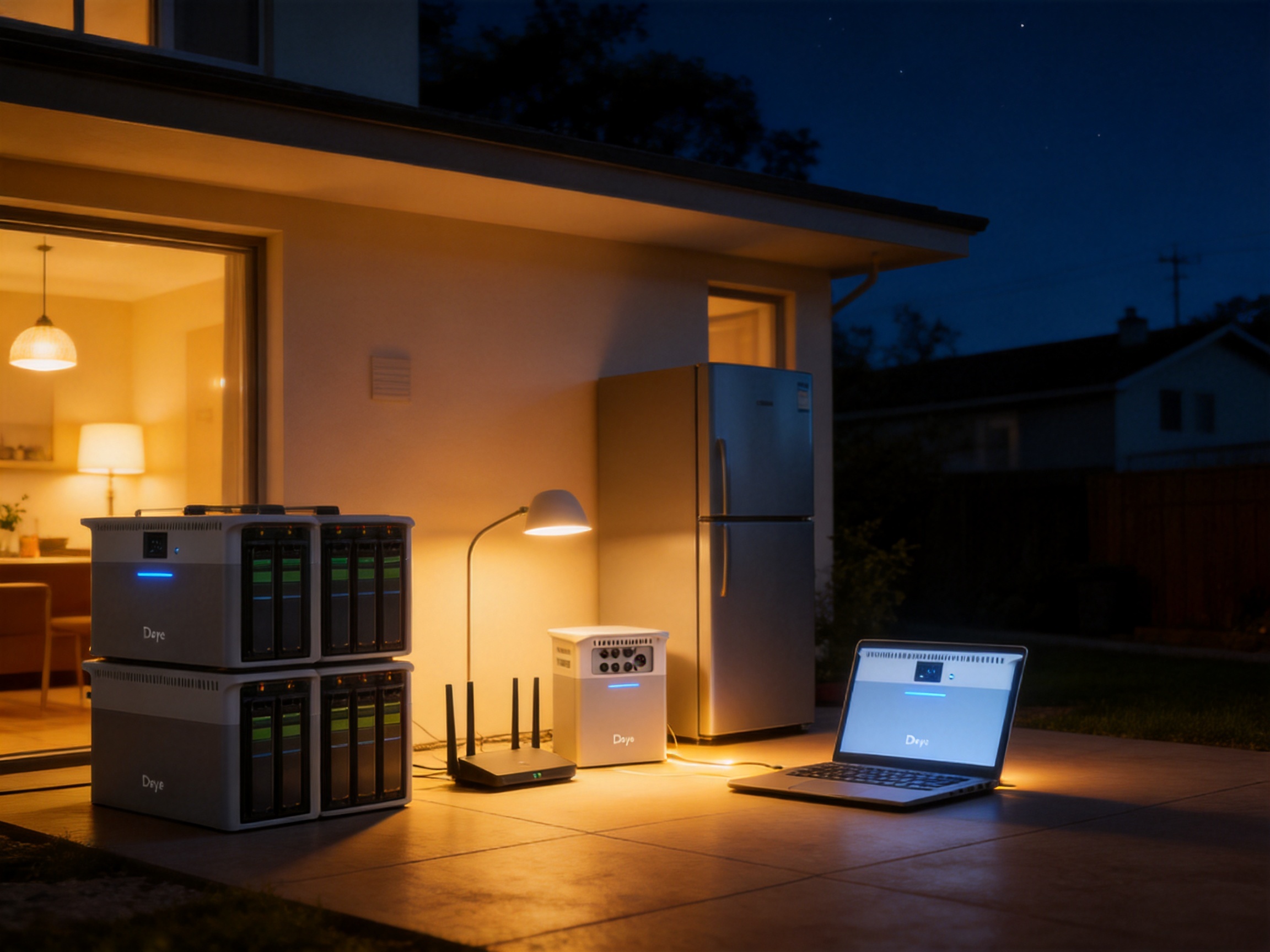
With 4 ms switching and off-grid operation, the system can support essential loads during grid interruptions. Internet routers, lighting, small appliances, communication equipment, and selected household loads can continue operating depending on system sizing and battery capacity. The ability to add batteries improves backup duration.
Portable and Semi-Portable Energy Use
The product description notes suitability for portable use. While installation conditions must always respect safety requirements, the compact form factor and integrated design make it more adaptable than conventional wall-mounted hybrid inverter systems. It can support cabins, temporary work areas, small outdoor facilities, or mobile energy scenarios where appropriate.
AC-Coupled System Expansion
AC-coupled operation allows the product to interact with existing energy systems. This can be useful when a user already has PV equipment and wants to add storage without replacing all components. AC coupling provides flexibility for retrofits, hybrid upgrades, and phased energy projects.
15. Advantages Over Typical Competitors
The first major advantage is the all-in-one design. Many competing systems require separate inverter and battery selection, while this product integrates them into a coordinated platform. This reduces installation complexity and compatibility risk.
The second advantage is four independent MPPTs. Some compact storage products offer only one or two solar input channels. Four MPPTs provide better performance for multi-orientation and partially shaded installations, which are common in balcony and residential environments.
The third advantage is high PV access capability. The 32L version supports up to 5760 W PV access power and up to eight PV modules, a strong figure for a micro hybrid ESS. This allows higher solar capture and faster battery recharge.
The fourth advantage is expansion up to 102.4 kWh. Many small storage products remain small forever. This platform allows users to begin with 2.56 kWh and scale dramatically through stacked and parallel battery configurations.
The fifth advantage is fast 4 ms switching. Some products marketed for solar storage are not designed for strong backup performance. This system’s rapid transfer makes it more suitable for resilience-focused applications.
The sixth advantage is IP65 protection. A compact ESS often needs flexible placement, and IP65 gives more confidence in dusty or moisture-prone environments.
The seventh advantage is communication diversity. Wi-Fi, Bluetooth, and LoRa support practical commissioning, monitoring, and energy management. LoRa-based communication is particularly valuable where wiring reduction and distributed coordination are priorities.
The eighth advantage is the manufacturer’s scale and experience. Ningbo Deye Inverter Technology Co., Ltd. belongs to a broader technology manufacturing group with long experience in inverter and ESS development, global sales, and complete solar solutions. This matters because power electronics and batteries require deep engineering and consistent manufacturing discipline.
16. Manufacturing Strength and Engineering Foundation
The product’s competitiveness is supported by the company’s manufacturing and engineering background. Founded in 2000, the company has developed into a comprehensive technology manufacturing enterprise integrating research and development, design, production, sales, and service. This integrated structure is valuable because it shortens the distance between product concept, engineering validation, manufacturing execution, and after-sales feedback.
In energy storage, integrated manufacturing capability helps ensure that electrical design, mechanical design, thermal behavior, firmware logic, communication protocols, and production quality are aligned. A micro hybrid ESS must work as a complete system. If one part is optimized while another is weak, user experience suffers. The company’s broad product ecosystem, including string inverters, hybrid inverters, energy storage inverters, microinverters, and ESS solutions, provides a strong knowledge base for developing compact hybrid storage products.
The company’s inverter range includes 1 kW to 136 kW string inverters, 3 kW to 80 kW energy storage inverters, and 300 W to 2.2 kW microinverters. This broad range matters because the SUN-BK product combines concepts from multiple categories: microinverter-like module-level PV access, hybrid inverter grid interaction, battery energy storage, and IoT-based monitoring. Experience across these categories enables more mature system design.
Advanced manufacturing for such products involves careful control of power electronics assembly, battery module integration, communication testing, insulation and protection verification, thermal design, firmware quality, and final product inspection. While every factory has its own proprietary process, the key principle is consistency. Energy storage products must perform reliably across thousands of charge-discharge cycles, changing weather conditions, grid disturbances, and user behavior patterns.
Compliance with standards such as IEC/EN 62109, IEC 62619, UN38.3, and EMC requirements also reflects manufacturing discipline. Standards compliance requires design controls, component selection, testing procedures, documentation, and repeatable production quality. For professional buyers, this is a major differentiator from generic low-cost products that may look similar externally but lack comparable validation depth.
The company’s global market presence in more than 140 countries and regions also strengthens its product development cycle. International deployment exposes products to different grid codes, climates, installation practices, and customer expectations. Feedback from these diverse markets can be used to improve future design, firmware, documentation, and service procedures. This global experience is difficult for smaller competitors to replicate quickly.
17. Quality, Durability, and Service Confidence
The SUN-BK platform is designed for long-term use, as shown by its 10-year warranty, LiFePO4 battery chemistry, IP65 protection, and broad compliance references. Durability is not only about surviving harsh conditions; it is about stable performance over years of daily operation.
Battery cycle life is a key durability indicator. With a cycle life of at least 6000 cycles under specified test conditions, the AE-F2.56 battery module is suitable for frequent daily cycling. In solar self-consumption applications, the battery may charge during the day and discharge in the evening almost every day. Long cycle life reduces replacement concerns and improves lifecycle economics.
Thermal management is also important. The system operates from -10°C to 55°C, with derating above 45°C, and an optional heating version extends low-temperature usability to -20°C. This operating range supports broader geographic adoption. The derating statement also reflects responsible engineering, because high-temperature operation must be managed to preserve safety and longevity.
Ingress protection at IP65 helps protect internal components from dust and water exposure. In real installations, equipment may face wind-driven dust, humidity, accidental water spray, or outdoor placement under shelter. IP65 protection gives installers more freedom and users more confidence.
The product’s 10-year warranty is also commercially meaningful. A warranty of this length indicates that the manufacturer expects the system to support long-term operation. For users comparing products, warranty coverage can be as important as technical specifications because it affects trust and investment protection.
18. Economic Value for Users and Installers
The economic value of a micro hybrid ESS comes from several sources. First, it can increase solar self-consumption by storing energy that might otherwise be exported at a low tariff or curtailed. Second, it can reduce electricity purchased during expensive periods, depending on local tariff structures. Third, it can provide backup power value during outages. Fourth, it can support phased investment, reducing the need for a large initial purchase.
For installers, the plug-and-play and all-in-one design can reduce labor time. Faster installation improves project profitability and enables more installations per team. Standardized models across multiple power ratings also simplify training and inventory management. The same general product family can be used for different customer profiles.
For distributors, the product’s global compliance orientation, broad application range, and scalable architecture improve marketability. A single product family can address balcony solar, residential storage, portable power, and retrofit scenarios. This reduces the need to manage many unrelated product lines.
For end users, the value proposition is straightforward: start small, use solar better, maintain backup capability, and expand when needed. This is a practical answer to the uncertainty of modern energy costs. Users do not need to predict their long-term energy needs perfectly from day one. They can begin with a suitable configuration and add capacity later.
19. Design Details That Improve Real-World Usability
Several specifications that may appear small on paper contribute meaningfully to daily usability. The LED display on the battery module provides quick state-of-charge and alarm information. This helps users understand system status at a glance. The communication options allow both local and remote interaction. The compact dimensions help fit the system into spaces where large ESS cabinets would be impractical.
The maximum continuous AC passthrough of 30 A supports practical grid-to-load operation. This is useful because hybrid systems often need to manage loads dynamically, drawing from grid, battery, or PV depending on conditions. Passthrough capability helps the system operate as part of the household electrical environment rather than as an isolated battery device.
The peak power capability of two times rated power for 10 seconds improves load compatibility. A system that cannot handle startup surges may fail to run common appliances even if their normal operating power seems acceptable. Short-term overload capability makes rated power more useful in real life.
The four independent MPPTs also simplify PV layout. Users do not need all modules to face the same direction or experience identical shading. This makes the product more forgiving in imperfect installation environments, which are common in cities and existing homes.
20. Why the Product Fits the Future of Distributed Energy
The energy transition is not only about large solar farms and utility-scale batteries. It is also about millions of smaller systems installed on homes, balconies, shops, cabins, and community buildings. These systems must be safe, easy to deploy, expandable, digitally connected, and compatible with changing grid requirements. The SUN-BK(80-250)-2.56KWH-EU-AM4-18L/32L reflects this future.
Its architecture supports decentralized generation and storage. Its communication capabilities support energy IoT. Its modular battery design supports gradual capacity growth. Its four MPPTs support complex real-world solar layouts. Its fast switching supports resilience. Its compliance references support international deployment. Together, these characteristics make it a strong micro hybrid ESS for the next stage of solar adoption.
The product is also aligned with the company’s broader mission of promoting solar energy utilization and providing safe, compatible, and scalable energy storage solutions. As energy systems become more distributed, product design must balance user convenience with professional-grade reliability. This micro hybrid ESS does that by combining the simplicity of an appliance-like product with the technical depth of a hybrid inverter and modular storage system.
21. Q&A Section
Q1: What is the main purpose of this micro hybrid ESS?
It is designed to store solar energy, support grid-tied and off-grid operation, provide backup power, and enable flexible energy use in residential, balcony solar, portable, and small distributed PV applications.
Q2: What battery capacity does the system start with?
The system starts with a 2.56 kWh LiFePO4 battery module. Each AE-F2.56 battery module has 2560 Wh nominal energy.
Q3: Can the battery capacity be expanded?
Yes. Up to five batteries can be vertically stacked for 12.8 kWh per cluster, and up to eight clusters can be connected by cable, supporting forty batteries and up to 102.4 kWh total capacity.
Q4: What AC power versions are available?
The product family includes 800 W, 1600 W, 2000 W, and 2500 W rated AC input/output active power versions.
Q5: What is the difference between the 18L and 32L versions?
The 18L version supports up to 4400 W PV access power, while the 32L version supports up to 5760 W PV access power and up to eight PV modules. The 32L version also supports higher PV input current.
Q6: Why are four independent MPPTs important?
Four independent MPPTs allow separate optimization of multiple PV modules or input paths. This improves solar energy harvest when panels face different directions or experience partial shading.
Q7: Is the product suitable for backup power?
Yes. It supports off-grid operation and 4 ms on/off-grid switching, making it suitable for essential backup loads when grid power is interrupted.
Q8: What battery chemistry is used?
The system uses LiFePO4 battery chemistry, known for stability, long cycle life, and suitability for stationary energy storage.
Q9: What communication options are available?
The inverter side supports Wi-Fi, Bluetooth, and LoRa. The battery module supports LoRa communication. These interfaces help with monitoring, commissioning, and wireless energy management.
Q10: What protection rating does the system have?
The inverter and battery modules are rated IP65, providing strong protection against dust and water jets for flexible installation environments.
Q11: How long is the warranty?
The product and battery module are listed with a 10-year warranty.
Q12: What makes this product stronger than many competitors?
Its main competitive strengths include all-in-one design, plug-and-play convenience, four independent MPPTs, high PV access power, fast 4 ms switching, LiFePO4 battery technology, expansion up to 102.4 kWh, IP65 protection, broad communication options, and support from an experienced global inverter and ESS manufacturer.
22. Conclusion
The SUN-BK(80-250)-2.56KWH-EU-AM4-18L/32L micro hybrid ESS is a compact but highly capable energy storage platform for modern distributed solar applications. It solves several problems that have slowed energy storage adoption: installation complexity, limited expandability, poor PV flexibility, weak backup performance, and fragmented component compatibility. By integrating inverter and battery functions into an all-in-one design, it creates a cleaner and more accessible user experience.
Its four independent MPPTs make it especially valuable for balcony solar, small rooftops, and mixed-orientation PV layouts. Its 18L and 32L versions allow users to choose between strong and higher-capacity PV input configurations. Its LiFePO4 battery module provides long cycle life and stable storage performance. Its expansion architecture, reaching up to 102.4 kWh, gives the product a future-proof quality rarely found in compact ESS solutions.
The system’s 4 ms switching, multiple operating modes, IP65 protection, wireless communication, and 10-year warranty further strengthen its value. Backed by Ningbo Deye Inverter Technology Co., Ltd.’s long-term manufacturing experience, international market presence, inverter expertise, ESS development capability, and energy IoT ecosystem, the product is positioned as a reliable and scalable solution for users who want practical solar independence.
For homeowners, it can reduce grid dependence and improve backup readiness. For apartment users, it can make balcony solar more productive. For installers, it simplifies deployment. For distributors, it offers a versatile product family with strong technical specifications. For the broader energy transition, it represents the movement toward smarter, modular, and more user-friendly solar storage systems.
References
1. Product technical datasheet for SUN-BK(80-250)-2.56KWH-EU-AM4-18L/32L micro hybrid energy storage system.
2. Product manual for SUN-BK80-250-2.56KWH-EU-AM4-32-18L micro hybrid energy storage system.
3. IEC 62619 safety requirements for secondary lithium cells and batteries for industrial applications.
4. IEC/EN 62109 safety standards for power converters used in photovoltaic power systems.
5. IEC 61727 and IEC 62116 standards for photovoltaic grid interface and anti-islanding requirements.
6. UN38.3 recommendations for lithium battery transport safety testing.
7. Company profile information for Ningbo Deye Inverter Technology Co., Ltd. and Ningbo Deye Technology Co., Ltd.
Product: SUN-BK(80-250)-2.56KWH-EU-AM4-18L/32L
PREV:Scalable 100kW–2.5MW Commercial and Industrial Energy Storage Solution
NEXT:600–1000W Single-Phase Microinverter for Safer, Smarter, Module-Level Solar Generation
Share
Product recommendations
news recommendations
-
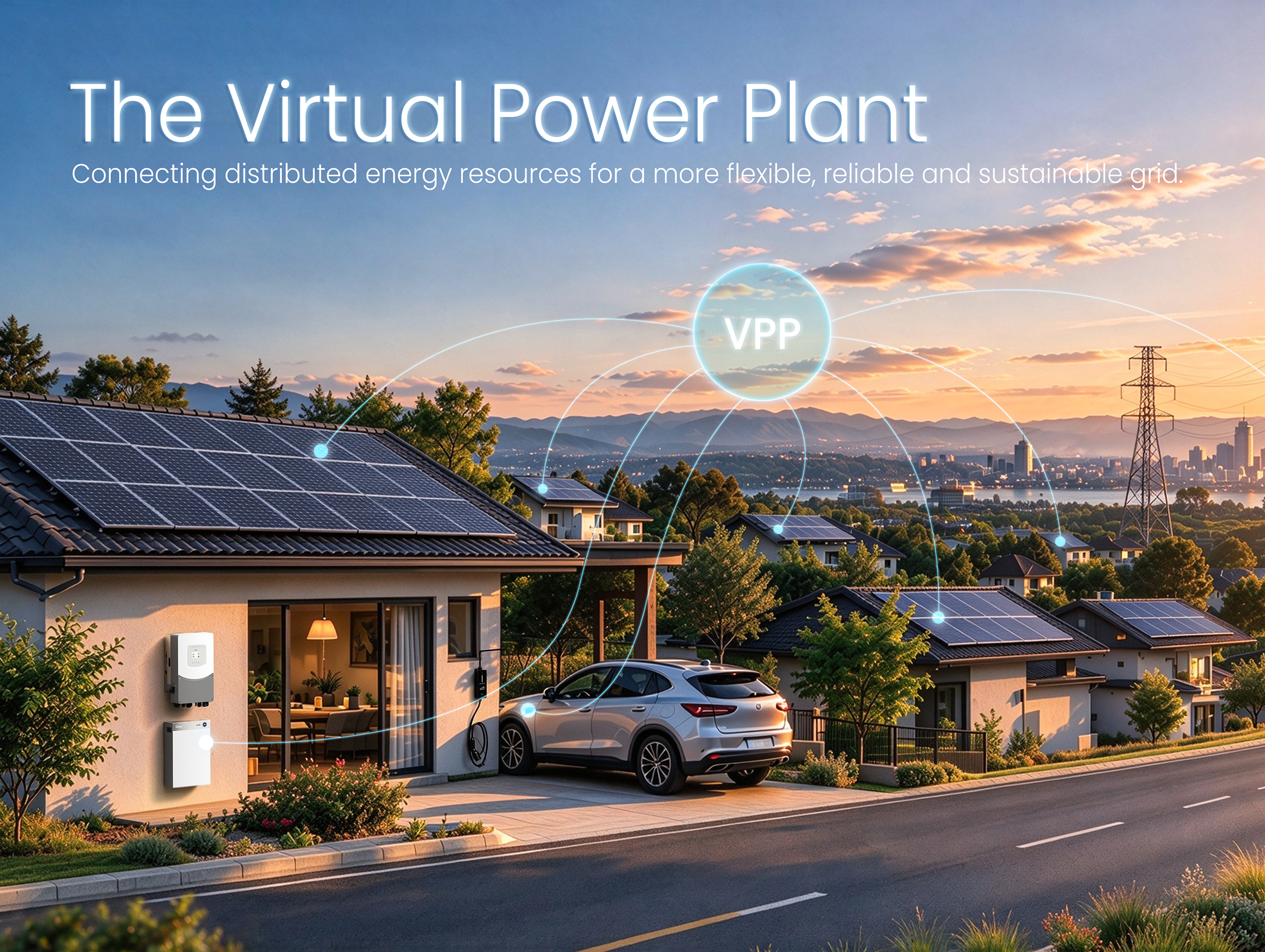 From Centralized Grids to Virtual Power Plants: The Next Evolution of the Power System
For more than a century, power systems around the world have relied on a centralized model. Large p...
-
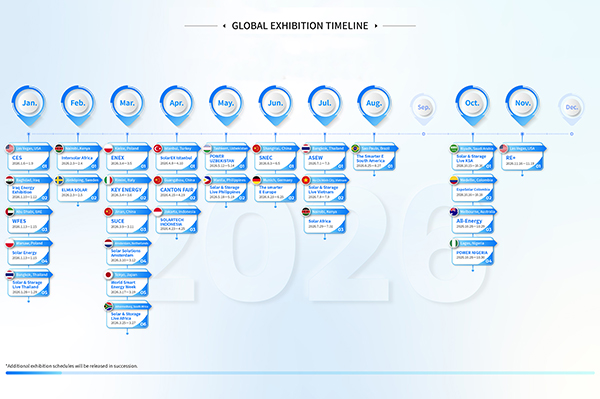 GLOBAL EXHIBITION TIMELINE
*Click to view larger image
-
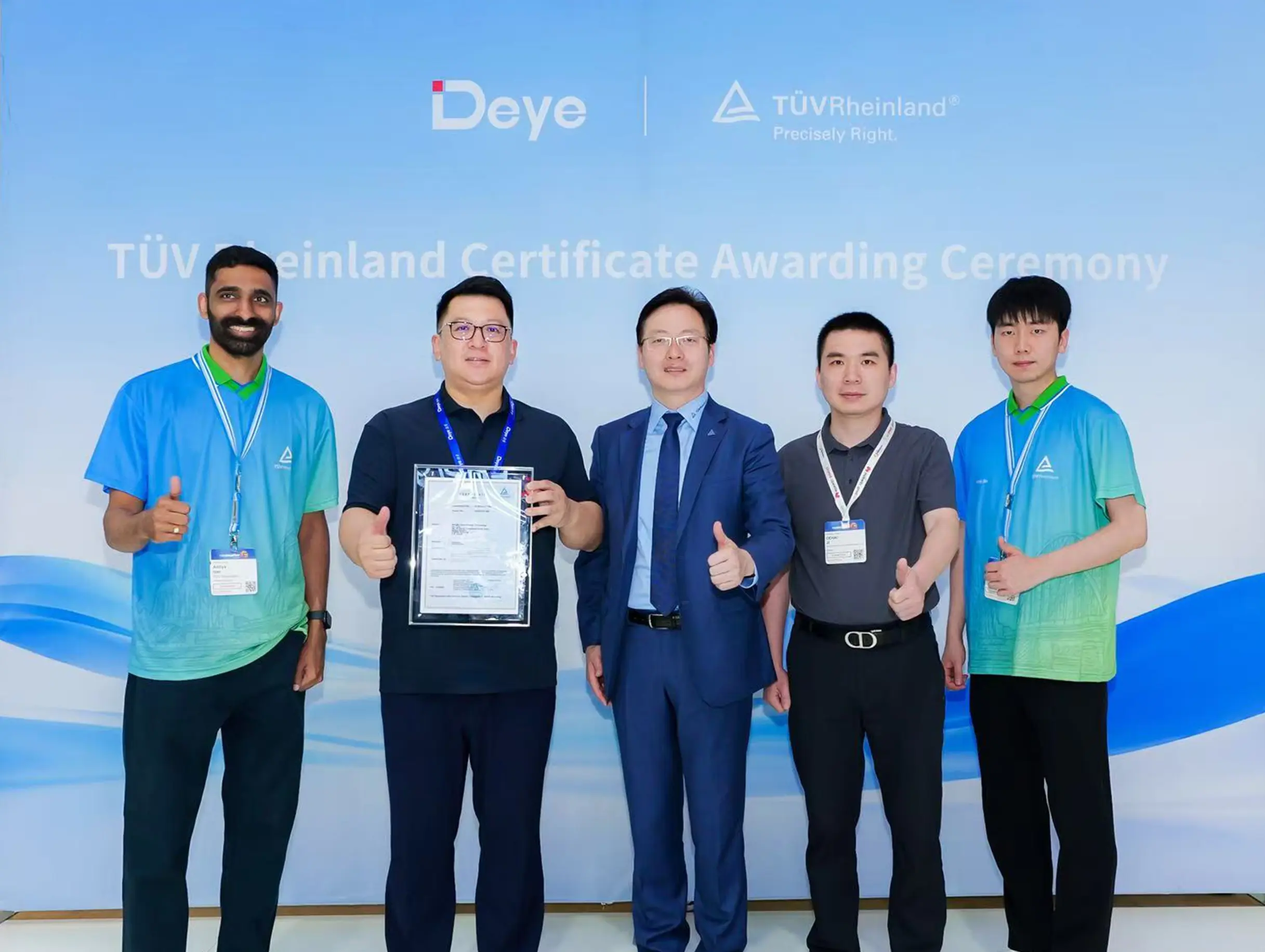 Deye Secures Multiple TÜV Rheinland Certifications at The smarter E Europe
On June 23, the opening day of The smarter E Europe 2026, Deye was officially awarded several presti...

Copyright@ 2024.Ningbo Deye Inverter Technology Co.,Ltd. All rights reserved. Solar Inverter Manufacturer
