
 Online Shop
 English
 China - 简体中文
 Global - English
 Brazil - Português
 Netherlands - Dutch
 Italy - Italiano
 Germany - Deutsch
 Spain - Español
 France - Français
 Vietnam - Tiếng Việt
 Poland - Polski
 Australia - English
 Japan - 日本語
Luo Qinxue — Regional Sales Manager, On-Grid Inverter Solutions

High-Efficiency Module-Level PV Optimizer for Safer, Smarter Solar Arrays
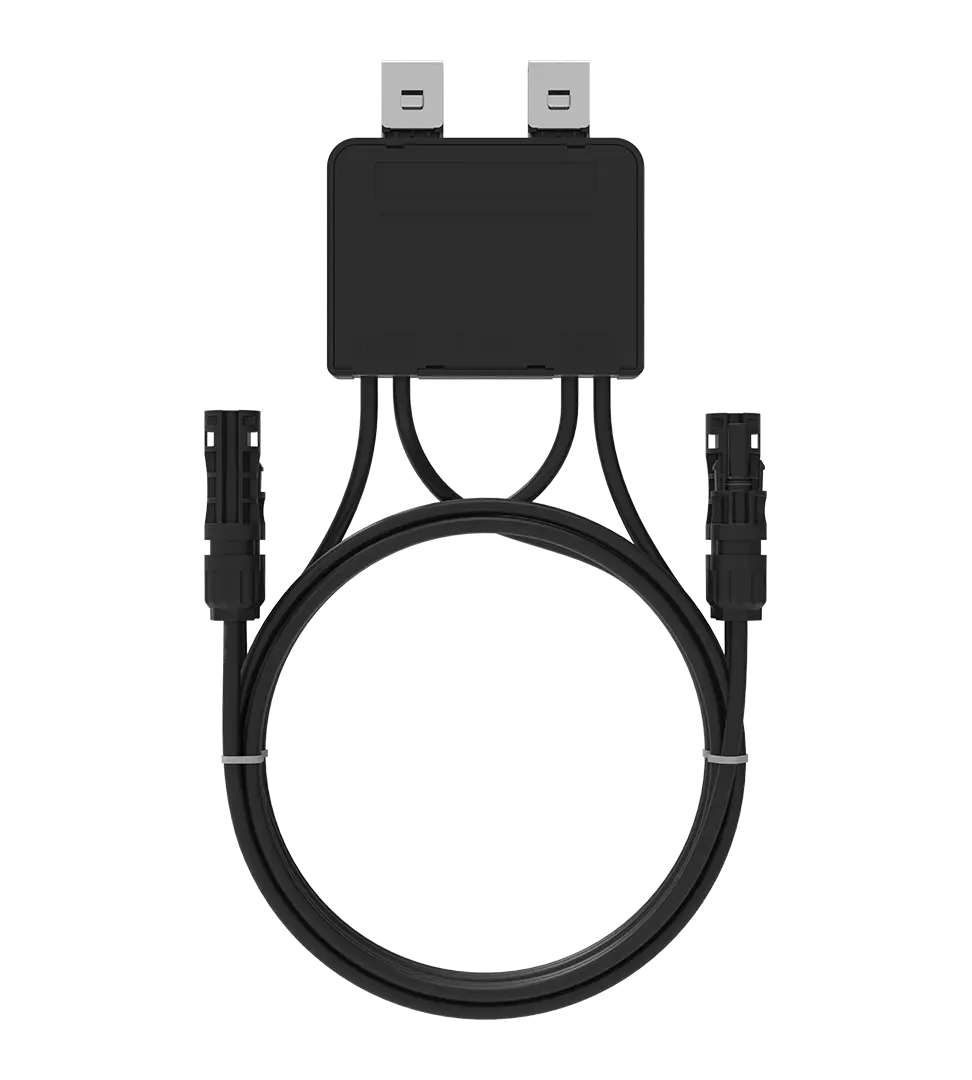
Modern photovoltaic systems are expected to do more than convert sunlight into electricity. They must harvest energy efficiently across changing weather, protect people during installation and maintenance, simplify troubleshooting, and operate reliably for decades in demanding outdoor environments. The SUN-XL02-B module-level PV optimizer is designed for this new generation of intelligent solar arrays, combining maximum power point tracking, module-level monitoring, stable power line communication, and rapid shutdown support in a compact, rugged device.
As an accessory and monitoring solution for photovoltaic installations, the SUN-XL02-B improves the performance and controllability of each solar module. Instead of relying only on string-level behavior, it allows every connected module to operate closer to its own best electrical point. This is especially valuable when modules face partial shading, orientation differences, dust accumulation, aging mismatch, or manufacturing tolerances. In such conditions, a conventional string can lose energy because one weaker module affects the whole string. A module-level optimizer helps reduce that loss and allows the system to deliver more usable power.
The product is rated for a maximum input power of 700 W, a maximum input voltage of 80 V, and a maximum input current of 15 A. Its MPPT voltage range of 12 V to 80 V gives it strong compatibility with many modern high-power PV modules. With peak conversion efficiency up to 99.5%, the optimizer is engineered to capture additional generation without imposing a large conversion penalty. Its IP68 protection, wide operating temperature range from -40°C to +85°C, and compact 105 × 105 × 22 mm form factor further strengthen its suitability for harsh rooftop and ground-mounted environments.
Beyond energy improvement, the SUN-XL02-B contributes to system intelligence. Real-time monitoring of individual photovoltaic modules helps operators detect abnormal behavior quickly and perform precise troubleshooting. Instead of searching an entire string for the source of reduced generation, maintenance teams can narrow down issues to the module level. This capability can reduce inspection time, improve operation and maintenance efficiency, and support higher lifetime energy yield.
Safety is another core advantage. The optimizer supports a rapid shutdown function that quickly reduces the DC voltage of the photovoltaic array to a safer range when used with compatible optimizer concentrators. This function is important for rooftop solar systems, commercial buildings, maintenance procedures, and emergency response scenarios where lowering high DC voltage can help reduce risk.
Ningbo Deye Inverter Technology Co., Ltd. supports this product with strong manufacturing experience, large-scale R&D capabilities, and a broad solar energy portfolio covering string inverters, hybrid inverters, microinverters, energy storage systems, monitoring solutions, and related accessories. The company’s background in power electronics, quality control, system integration, and global market service provides an important foundation for the reliability of a module-level optimizer that must work continuously in outdoor conditions.
Product Positioning in a Modern PV System
The SUN-XL02-B belongs to the accessory and monitoring category, but its function is more strategic than a simple add-on. It acts as an intelligent module-level device installed in the DC side of a photovoltaic array. Its purpose is to improve the electrical independence of each module, provide module-level visibility, and enable faster safety response when paired with required system components.
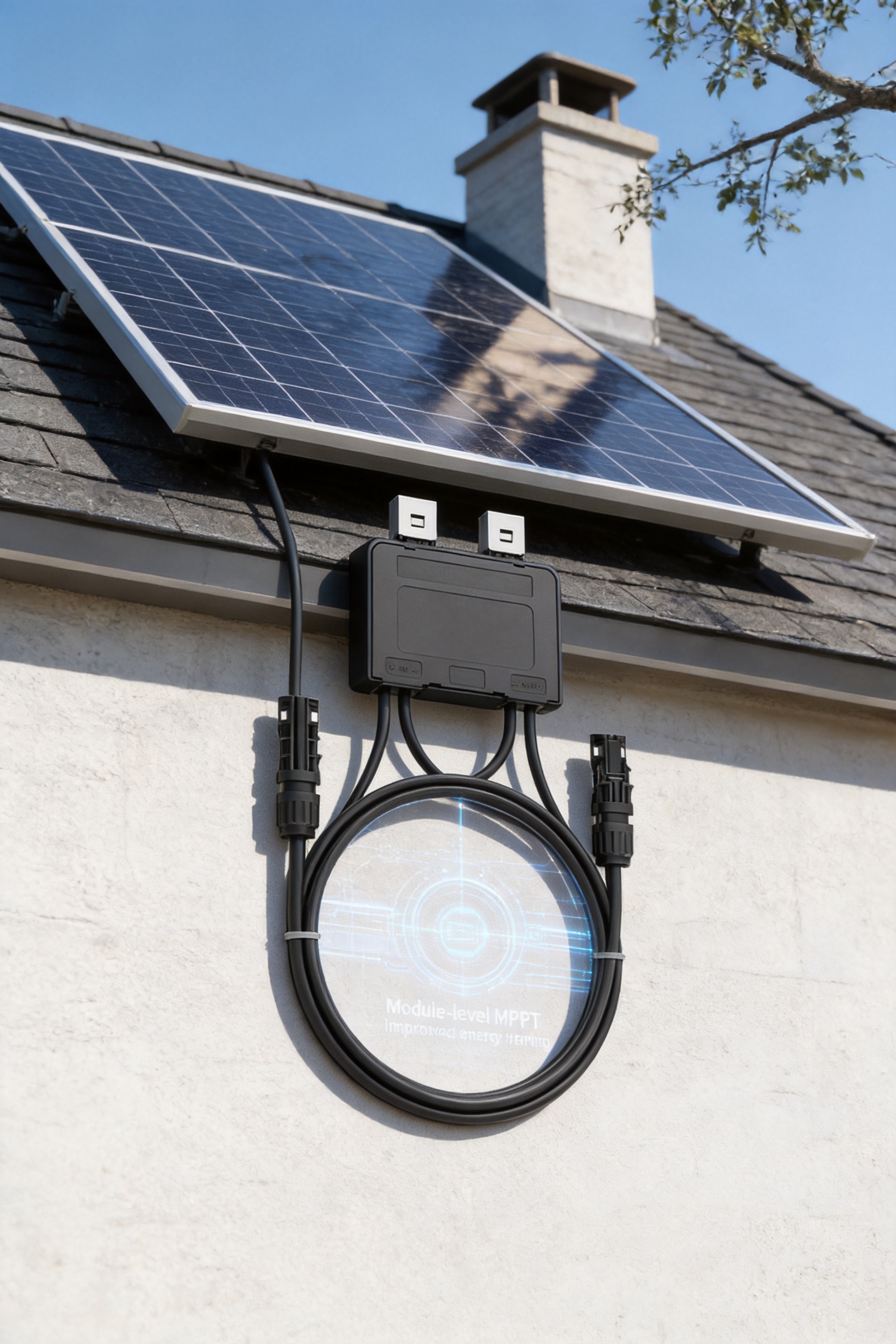
Traditional string inverter systems often connect multiple PV modules in series. While this architecture is cost-effective and widely used, it can suffer from mismatch losses. If one module is shaded by a chimney, tree branch, nearby building, dirt, bird droppings, snow, or uneven degradation, the entire string may be affected. The optimizer addresses this issue by helping each module track its maximum power point more independently. The result is a more resilient array that can respond to real-world operating conditions instead of assuming that all panels behave identically.
The product’s module-level MPPT capability can increase power generation capacity by 5% to 25%, depending on site conditions. The highest improvements are generally seen in systems with frequent shading, multiple roof planes, irregular layouts, module mismatch, or complex commercial rooftops. Even in cleaner sites, module-level optimization can help reduce small losses caused by tolerances, temperature variation, and soiling differences.
The SUN-XL02-B is also important for system data. With monitoring capability, every module becomes more transparent. Operators can observe whether a module is underperforming, disconnected, shaded, or affected by an electrical problem. This level of visibility is increasingly valued by residential installers, commercial asset managers, and distributed generation operators who need to maintain predictable output over many years.
Another key design choice is its PLC communication mode. PLC, or power line communication, uses photovoltaic cables as the communication carrier. This eliminates the need for additional communication cables and reduces installation complexity. Fewer auxiliary cables can mean faster deployment, cleaner layouts, lower material use, and fewer potential wiring mistakes.
Key Technical Specifications
The SUN-XL02-B combines compact mechanical design with strong electrical ratings. Its specifications show that it is developed for contemporary PV modules with high output power and demanding field conditions.
| Item | Specification | Practical Value |
| Model | SUN-XL02-B | Module-level PV optimizer for accessory and monitoring applications |
| Maximum input power | 700 W | Suitable for many high-power modern photovoltaic modules |
| Maximum input voltage | 80 V | Supports module operating conditions with appropriate voltage margin |
| MPPT voltage range | 12 V to 80 V | Wide tracking range for flexible module compatibility |
| Maximum input current | 15 A | Compatible with higher-current PV module designs |
| Peak conversion efficiency | 99.5% | Minimizes internal power loss while improving energy harvest |
| Dimensions | 105 × 105 × 22 mm | Compact profile for installation under or near PV modules |
| Weight | 660 g | Light enough for convenient handling and mounting |
| Cable | 4.0 mm² input 70 cm, output 100 cm | Preconfigured cabling supports practical field installation |
| Connector | MC4 or MC4-compatible | Supports common PV installation practices |
| Operating temperature range | -40°C to +85°C | Designed for cold, hot, and highly variable outdoor environments |
| Protection level | IP68 | Strong resistance to dust and water ingress |
| Product certification | CE | Supports compliance expectations in relevant markets |
| Communication mode | PLC | Uses PV cables for communication without extra communication wiring |
Energy Harvesting Advantages
The most direct value of the SUN-XL02-B is increased energy production. Photovoltaic systems rarely operate under perfect laboratory conditions. In real installations, sunlight is uneven, temperatures differ across the array, modules age at slightly different rates, and environmental conditions change hour by hour. Module-level MPPT is designed to manage this variation.
In a typical string system without module-level optimization, current through the series-connected modules must remain the same. If one module produces lower current, other modules can be limited by that weaker performer. Bypass diodes can reduce severe losses, but they do not fully recover the lost energy and can introduce step-like behavior in the power curve. A module-level optimizer allows the module to seek its own maximum power point and can reduce the negative influence of mismatch on the rest of the system.
The stated improvement range of 5% to 25% reflects a realistic spectrum of installation conditions. A system installed on a simple, unshaded, south-facing plane may see modest gains. A rooftop with dormers, vents, parapets, antennas, seasonal shading, different orientations, or uneven soiling may experience much larger improvements. Commercial rooftops with mechanical equipment and irregular row layouts can be particularly suitable for optimization because shade may move across the array throughout the day.
Another advantage is long-term yield stability. Even if an array starts with well-matched modules, differences emerge over time. Microcracks, cell degradation, encapsulation aging, dirt accumulation, and thermal stress can create electrical differences between modules. The optimizer helps reduce the energy penalty of these differences and supports more predictable system production as the plant ages.
The 99.5% peak conversion efficiency is an important competitive feature. Optimization must not create excessive internal loss. A high-efficiency optimizer provides the benefits of module-level control while preserving most of the captured energy. This balance is essential because the added device should increase total system yield rather than merely shift losses from mismatch to conversion.
Compared with basic monitoring-only devices, the SUN-XL02-B adds real energy management through MPPT. Compared with string-only designs, it enables more granular power control. Compared with optimizers that require more complex communication wiring, its PLC-based design can simplify installation while maintaining module-level intelligence.
Module-Level Monitoring for Faster Troubleshooting
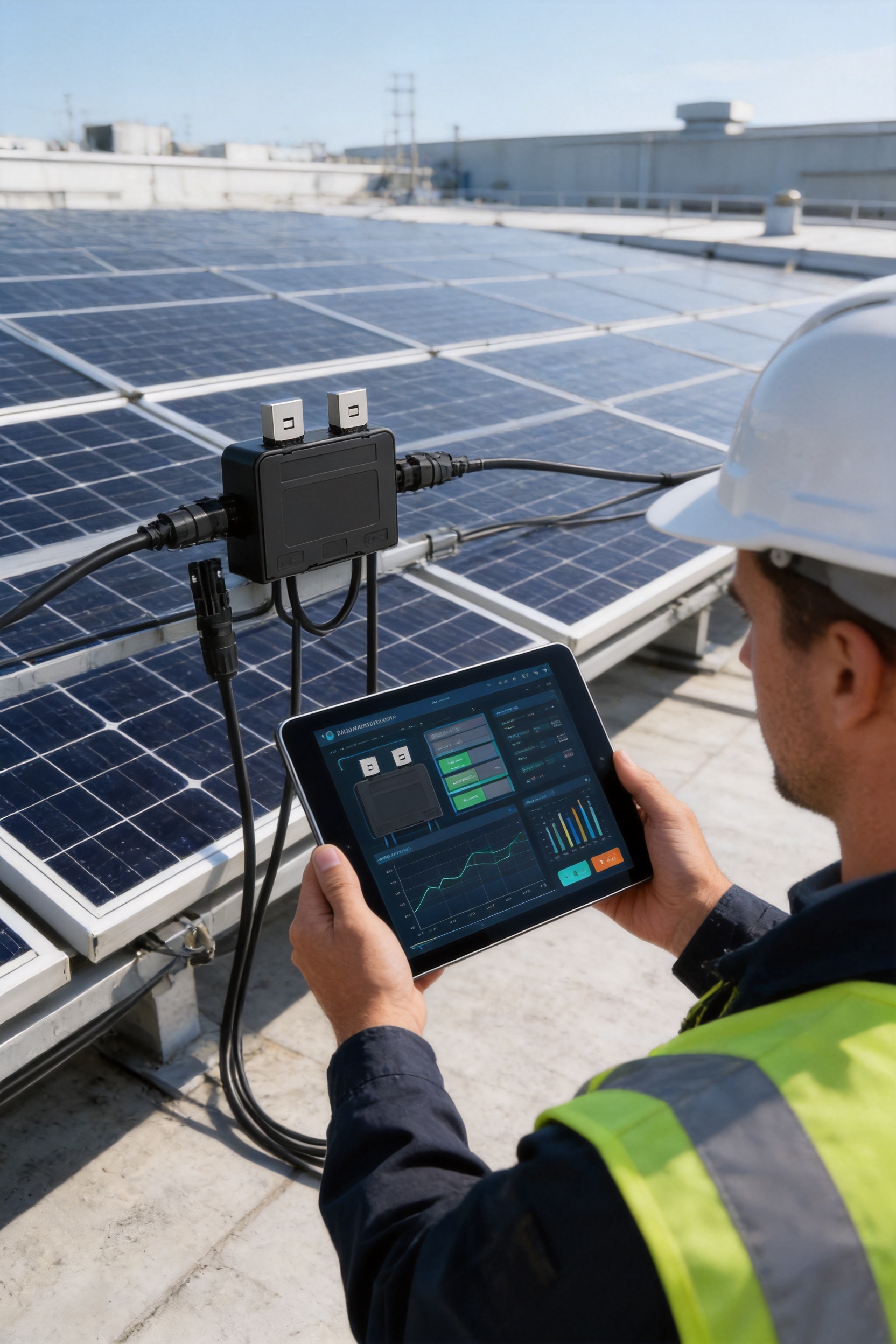
Monitoring is becoming a standard requirement in professional PV systems. System owners want to know not only total inverter output but also how individual components are performing. The SUN-XL02-B supports real-time monitoring of the operating status of each photovoltaic module, allowing timely issue detection and precise troubleshooting when used within a compatible monitoring architecture.
Without module-level data, a performance problem can be difficult to locate. A string may show reduced output, but the cause could be shading, connector failure, module defect, soiling, cable damage, inverter behavior, or installation error. Maintenance teams may need physical inspection, thermal imaging, electrical measurements, and time-consuming elimination. Module-level monitoring narrows the search and allows teams to focus on the affected area.
For residential systems, this can improve owner confidence. If one module underperforms, the installer can verify the issue more quickly and explain the cause with data. For commercial and industrial systems, faster troubleshooting can reduce lost production, improve asset management, and support contractual performance targets. For distributed portfolios, module-level data can help service teams prioritize visits and allocate labor efficiently.
Monitoring also supports preventive maintenance. Gradual performance decline may indicate dirt buildup, vegetation growth, mechanical stress, or connector deterioration. Early detection helps operators address problems before they cause larger losses or safety concerns. In climates with snow, dust storms, salt mist, or heavy pollen, module-level visibility can be especially useful for understanding environmental impacts.
The product’s PLC communication mode strengthens the monitoring value by avoiding extra communication cables. Additional communication wiring can increase installation time, introduce more failure points, and complicate rooftop cable management. By using photovoltaic cables as the communication carrier, the optimizer supports a cleaner and more integrated data pathway. This is a practical advantage over systems that depend on separate signal lines or more complicated wiring methods.
Safety Through Rapid Shutdown Support
High-voltage DC circuits are one of the most important safety considerations in photovoltaic installations. Even when AC power is disconnected, PV modules can continue producing DC voltage when exposed to light. Rapid shutdown solutions are designed to reduce this voltage to a safer range during emergencies, maintenance, installation, or system isolation.
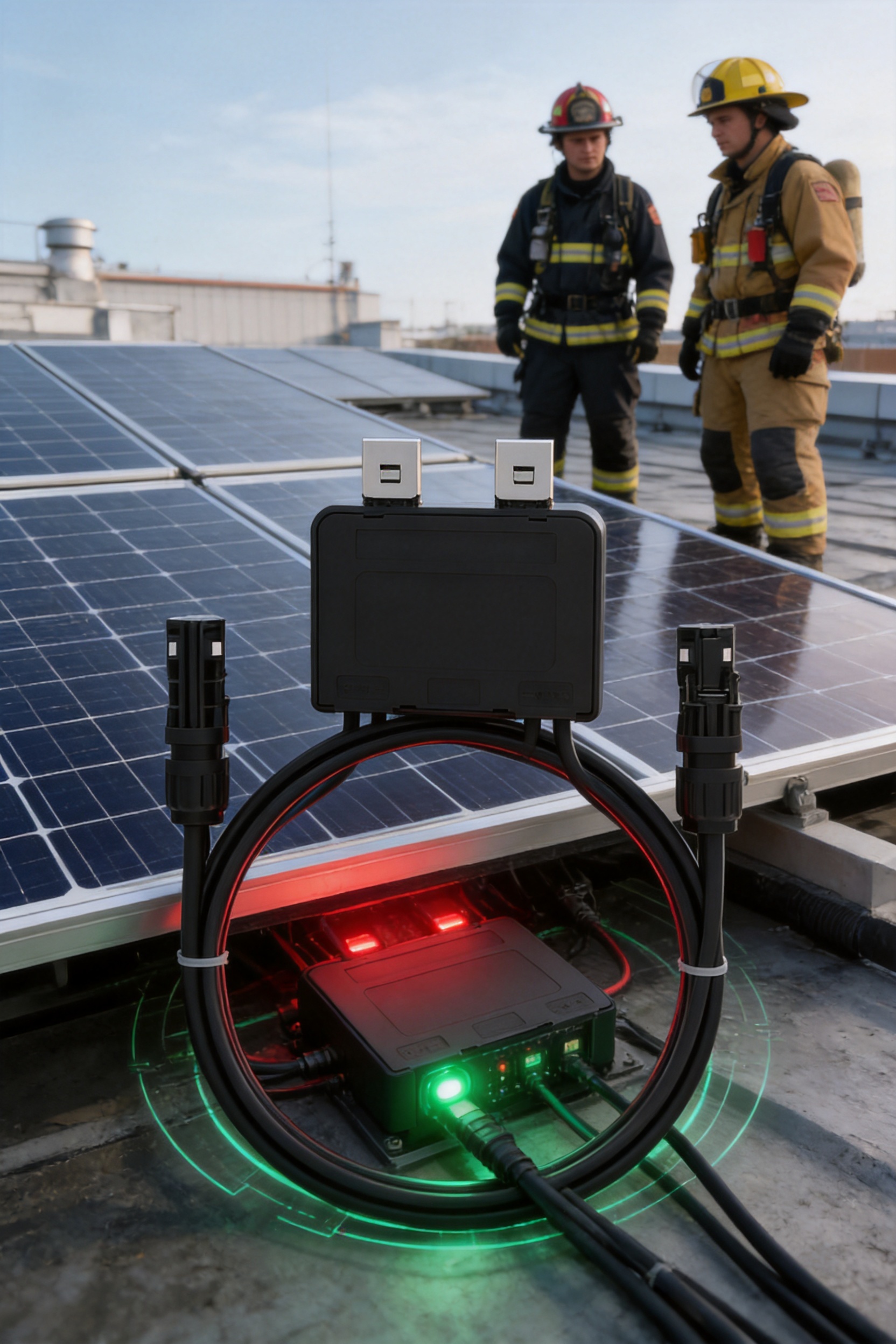
The SUN-XL02-B supports rapid shutdown functionality when used with optimizer concentrators. This pairing is important: the rapid shutdown function is only available when the optimizer is used with compatible concentrator equipment. In a complete system design, this allows the DC voltage of the photovoltaic array to be quickly reduced to a safe range.
This feature is valuable for installers, maintenance technicians, firefighters, and building owners. On rooftops, electrical safety must be considered not only during normal operation but also during fire response, storm damage, equipment replacement, and inspection. Module-level shutdown capability helps reduce the energy present in conductors and can support safer access around PV equipment.
Compared with systems that rely only on inverter-side disconnection, module-level rapid shutdown can provide more localized control. If high voltage remains present across long DC cable runs, service and emergency response risks may remain. A module-level solution can reduce voltage closer to the source of generation, which is the PV module itself.
Safety also supports market acceptance. As PV systems are installed on more homes, factories, schools, hospitals, warehouses, and public buildings, stakeholders increasingly require equipment that supports safe operation and rapid risk reduction. The SUN-XL02-B aligns with this direction by integrating optimization, monitoring, communication, and shutdown support in one compact product.
Mechanical Design and Environmental Reliability
Outdoor PV electronics must survive heat, cold, rain, dust, ultraviolet exposure, humidity, wind-driven particles, and continuous thermal cycling. The SUN-XL02-B is built with an operating temperature range of -40°C to +85°C, making it suitable for diverse climates from cold winter rooftops to hot solar fields. This wide range is critical because equipment mounted behind modules may face intense heat during summer operation.
The IP68 protection rating indicates strong protection against dust ingress and water exposure. For a module-level device, this is particularly important because it is installed outdoors and often in locations that are difficult to access after the array is completed. A strong enclosure and sealing design help protect internal electronics from moisture, dust, and corrosion.
The compact 105 × 105 × 22 mm dimensions allow the optimizer to fit neatly within PV array layouts. A thinner, smaller device is easier to position under or near modules without creating mechanical interference. At 660 g, it is light enough for convenient handling while maintaining a solid structure.
Its 4.0 mm² cables, 70 cm input length, and 100 cm output length are practical for installation flexibility. MC4 or MC4-compatible connectors support common solar wiring practices, reducing the need for unusual adapters and helping installers work with familiar connection methods. Connector compatibility is a competitive advantage because field installation speed and reliability often depend on simple, repeatable wiring steps.
A module-level device must also manage thermal performance. High conversion efficiency reduces heat generation inside the device, which supports component longevity. Lower internal losses mean less thermal stress on semiconductors, capacitors, solder joints, and encapsulated parts. This is one reason the 99.5% peak conversion efficiency matters not only for energy yield but also for reliability.
Competitive Advantages Over Conventional Alternatives
The SUN-XL02-B offers advantages when compared with several common alternatives in the PV market. Against a basic string-only design, it provides module-level MPPT, monitoring, and rapid shutdown support. Against monitoring-only accessories, it adds active power optimization. Against optimizer systems requiring additional communication wiring, its PLC communication can reduce wiring complexity. Against lower-rated optimizers, its 700 W input capacity and 15 A current rating support many modern high-power modules.
One major competitive advantage is the wide MPPT voltage range from 12 V to 80 V. This allows the device to adapt to module behavior across changing irradiance and temperature conditions. The maximum input voltage of 80 V and maximum input power of 700 W make it appropriate for many present-day PV module classes, including higher wattage modules used in residential, commercial, and industrial applications.
Another advantage is its conversion efficiency. Some module-level electronics can introduce losses that reduce the net benefit of optimization. With peak efficiency up to 99.5%, the SUN-XL02-B is engineered to keep losses low. In practical terms, the device is intended to recover energy that would otherwise be lost to mismatch while consuming very little of the recovered value internally.
The integrated monitoring capability also differentiates it from simpler DC accessories. Monitoring transforms the optimizer from a passive component into part of an intelligent PV operation system. This helps installers deliver higher-value solutions and helps owners understand system performance at a granular level.
The PLC communication mode is especially practical in retrofit or complex installations. When no additional communication cable is required, system layouts can be simpler and cleaner. Installers can reduce rooftop wiring congestion, limit cable management labor, and minimize extra material. This advantage can matter greatly in commercial projects where hundreds or thousands of modules are involved.
The rapid shutdown support adds another competitive layer. In markets and applications where safety features are mandatory or strongly preferred, a device that supports fast DC voltage reduction can help system designers meet project requirements. When paired with optimizer concentrators, the product can contribute to a safer electrical architecture.
Manufacturing Strength Behind the Product
A PV optimizer is a small device, but it carries significant responsibility. It must operate outdoors for long periods, handle electrical stress, communicate reliably, and maintain safety functions. The manufacturing strength behind the device is therefore as important as the specification sheet.
Ningbo Deye Inverter Technology Co., Ltd. is part of a technology manufacturing enterprise founded in 2000, with capabilities in research, design, production, sales, and service. The company has built broad experience in photovoltaic inverters, energy storage systems, and environmental appliance technologies. Its inverter product lines include string inverters, hybrid inverters, energy storage inverters, microinverters, and monitoring solutions, creating a strong technical foundation for module-level power electronics.
Experience across inverter and energy storage platforms is relevant because optimizers require advanced knowledge of DC power conversion, MPPT algorithms, thermal management, insulation, electromagnetic compatibility, communication, and safety control. A company that already develops solar inverters and energy management systems can apply system-level understanding to accessory products. This helps ensure that the optimizer is not designed in isolation but as part of a broader PV ecosystem.
Advanced manufacturing processes typically include incoming material inspection, automated assembly procedures, soldering process control, functional testing, insulation testing, environmental validation, communication verification, and final quality inspection. For a product such as the SUN-XL02-B, important production concerns include connector reliability, cable strain relief, enclosure sealing, thermal interface performance, PCB quality, and consistent calibration of electrical parameters.
The company’s large product portfolio also supports platform learning. Lessons from string inverters, hybrid systems, microinverters, and energy storage systems can inform component selection, reliability engineering, and quality assurance. For example, experience with high-efficiency power conversion can improve optimizer circuit design. Experience with monitoring platforms can improve module-level data communication. Experience with global field operation can help identify environmental stresses that laboratory testing must reproduce.
Scale is another strength. Products sold in more than 140 countries and regions must adapt to different climates, installation practices, grid environments, and regulatory expectations. This global exposure encourages robust design and disciplined manufacturing. A module-level optimizer used in such varied conditions must be resistant to humidity, heat, cold, dust, salt air, and field handling variation.
Quality Control and Testing Philosophy
Quality control for module-level electronics should begin before assembly. Raw materials, semiconductors, connectors, cables, seals, and enclosure parts must meet defined specifications. Consistency is essential because small variations can affect long-term reliability when the device is exposed to heat and moisture for years.
During production, process control helps maintain stable electrical and mechanical performance. Automated or semi-automated assembly can reduce human error. Controlled soldering processes help protect circuit integrity. Proper potting, sealing, or enclosure assembly methods help achieve environmental protection. Cable and connector assembly must be secure because outdoor DC connections are exposed to mechanical stress, temperature swings, and moisture.
Electrical testing confirms that each unit performs within specification. For the SUN-XL02-B, relevant checks may include input voltage behavior, current handling, MPPT operation, conversion efficiency, communication function, insulation resistance, and safety response. Communication testing is especially important because PLC performance depends on stable signal transmission through the PV wiring environment.
Environmental reliability testing is also critical. Products intended for -40°C to +85°C operation need validation under temperature extremes and thermal cycling. IP68-rated products require sealing reliability and resistance to water and dust ingress. Long-term reliability may also be supported by damp heat testing, high-temperature operation checks, vibration or mechanical stress assessments, and connector durability tests.
A disciplined testing philosophy gives installers and owners confidence. When a product is installed under a PV module, replacement can require labor and roof access. Reliability is therefore not merely a technical preference; it is an economic requirement. A robust optimizer reduces service visits, protects system yield, and supports long-term customer satisfaction.
Integration with PV and Energy Ecosystems
The SUN-XL02-B is most valuable when viewed as part of an integrated PV system. It connects module-level operation to broader energy management goals. In residential systems, it can support higher self-consumption by improving daytime generation. In commercial and industrial systems, it can improve asset visibility and reduce maintenance uncertainty. In systems combined with energy storage or EV charging, better PV generation can improve the value of the entire energy ecosystem.
Deye’s broader product portfolio includes string inverters, hybrid inverters, microinverters, off-grid inverters, energy storage solutions, monitoring systems, and EV charging products. This broad ecosystem matters because modern energy projects increasingly combine multiple technologies. A rooftop PV system may connect to a hybrid inverter, battery storage, a monitoring platform, and EV charging infrastructure. Module-level optimization can strengthen the front end of this energy chain by improving the quality and predictability of solar generation.
The company’s experience with energy IoT and cloud-based monitoring also complements module-level data. Energy systems are moving toward digital management, where performance, faults, consumption, storage status, and grid interaction can be observed and optimized. Module-level optimizers generate detailed data that can support this transition from simple generation systems to intelligent distributed energy assets.
In commercial applications, module-level data may support performance analytics, warranty claims, preventive maintenance, and operational reporting. In residential applications, it may support homeowner confidence and installer service efficiency. In utility or large distributed portfolios, data granularity can support fleet-level diagnostics and targeted maintenance planning.
Installation Benefits for EPCs and Installers
For engineering, procurement, and construction teams, installation efficiency has direct economic value. The SUN-XL02-B supports practical field work through compact dimensions, familiar connectors, preconfigured cable lengths, and PLC communication. These features can reduce installation complexity and help crews maintain consistent quality.
The MC4 or MC4-compatible connector design aligns with common PV industry practices. Installers are already familiar with this connection style, which reduces training needs and supports faster field assembly. The cable lengths provide flexibility for connecting modules and arranging wiring neatly within the array structure.
The compact size can be useful in constrained rooftop layouts. Installers often work around racking systems, module frames, roof surfaces, and cable pathways. A low-profile device is easier to position without interfering with module placement or airflow. Its relatively light weight also makes handling easier during repetitive installation across many modules.
PLC communication can be a major labor-saving factor. Separate communication cables require routing, securing, labeling, and protection. They also create more opportunities for connection mistakes. By using photovoltaic cables for communication, the system reduces the number of independent wiring tasks. This can improve installation speed and help maintain a cleaner finished array.
For commissioning, module-level monitoring can help verify installation quality. If a connector is not seated properly or a module is not communicating correctly, the issue can be identified earlier. Early detection during commissioning is far less costly than troubleshooting after the system is handed over to the owner.
Application Scenarios
Residential Rooftop Systems
Residential rooftops often include chimneys, vents, dormers, antennas, skylights, and trees that create partial shading. Roof planes may face different directions, and available space may require irregular module layouts. The SUN-XL02-B helps each module operate more independently, improving total energy yield and reducing the performance impact of shaded or mismatched modules.
Homeowners also value monitoring because it provides transparency. If total generation falls, module-level data can show whether the cause is weather, shading, dirt, or a specific module issue. This improves trust between the homeowner and installer and supports more efficient service.
Commercial and Industrial Rooftops
Commercial rooftops often contain HVAC units, exhaust vents, parapets, walkways, and structural constraints. These obstacles can create moving shade during the day. Large rooftops may also have modules installed in different zones with varying conditions. A module-level optimizer can improve energy harvest and provide detailed operational data across the array.
For businesses, lost solar generation can affect energy cost savings and sustainability targets. Faster fault identification helps reduce downtime and supports predictable returns. The rapid shutdown support is also valuable for commercial safety planning, especially on buildings with maintenance staff and emergency response requirements.
Ground-Mounted Distributed PV
Ground-mounted systems can experience mismatch from terrain, row-to-row shading, soiling, vegetation growth, and module degradation. While large utility projects may use different optimization strategies, distributed ground-mounted systems can benefit from module-level visibility and mismatch reduction. The SUN-XL02-B is especially useful where maintenance teams need precise diagnostics across multiple sites.
PV Systems with Energy Storage
When PV generation is paired with batteries, every additional kilowatt-hour of solar energy can improve storage value. Higher and more predictable PV output can help charge batteries more effectively, support backup power strategies, and reduce grid dependence. By improving module-level harvest, the optimizer strengthens the energy source feeding the storage system.
PV-BESS-EV Charging Integration
Solar-plus-storage-plus-EV charging systems depend on coordinated energy flows. Better PV generation improves the availability of renewable energy for vehicle charging and building loads. The SUN-XL02-B contributes at the module level, while broader inverter and energy management systems coordinate consumption, storage, and charging.
Economic Value Over the System Lifetime
The economic case for a PV optimizer should consider lifetime energy yield, maintenance savings, safety value, installation efficiency, and asset visibility. The SUN-XL02-B can support each of these value streams.
First, increased power generation can improve project returns. A 5% to 25% gain in energy generation under suitable mismatch conditions can be significant over a system’s lifetime. Even modest annual improvements accumulate over decades. For commercial systems with large arrays, incremental yield can represent substantial financial value.
Second, module-level monitoring can reduce operation and maintenance costs. Faster fault location means fewer labor hours, fewer truck rolls, and less production lost during diagnosis. For installers managing many residential systems or commercial portfolios, this can improve service efficiency and customer satisfaction.
Third, rapid shutdown support contributes to risk management. Safety features may help meet project requirements, improve emergency preparedness, and support responsible building operation. While safety value is not always measured directly in kilowatt-hours, it is a critical part of system quality.
Fourth, installation simplification through PLC communication can reduce labor and material costs compared with systems requiring separate communication wiring. The savings may be especially meaningful in larger installations where extra cable routes multiply quickly.
Finally, long-term reliability protects the initial investment. A high-efficiency, IP68-rated, wide-temperature device reduces the likelihood that performance gains will be offset by service problems. Reliability is central to the lifetime economics of module-level electronics.
Why the Product Fits Current Solar Market Trends
The solar market is moving toward higher module power, smarter monitoring, stricter safety expectations, and integrated energy systems. The SUN-XL02-B aligns well with these trends.
High-power PV modules require accessory devices with adequate current and power ratings. The optimizer’s 700 W maximum input power and 15 A maximum input current support compatibility with many modern modules. As module technologies continue to increase output, optimizers must be designed with sufficient electrical headroom.
Smarter monitoring is now expected by many system owners. Simple generation totals are no longer enough for professional asset management. Module-level visibility helps transform PV arrays into transparent, manageable energy assets.
Safety requirements are also becoming more important. Rapid shutdown capability, when implemented with compatible concentrators, addresses the need to reduce DC voltage quickly. This is particularly relevant for rooftop systems and commercial buildings.
Integrated energy systems require high-quality PV input. Solar arrays increasingly feed batteries, loads, heat pumps, EV chargers, and grid services. Improving PV yield and monitoring at the module level strengthens the performance of these downstream technologies.
Responsible Use and System Design Considerations
To achieve the best results, the SUN-XL02-B should be selected and installed according to system design requirements. The PV module’s voltage, current, and power characteristics must remain within the optimizer’s specified limits. Designers should confirm compatibility with modules, inverters, monitoring equipment, and optimizer concentrators where rapid shutdown is required.
The rapid shutdown function is available only when the optimizer is used with compatible optimizer concentrators. This point is essential for accurate system planning. Installers and designers should not assume standalone rapid shutdown performance without the required associated equipment.
Proper installation practices remain critical. Connectors should be fully seated, cables should be routed and secured correctly, and devices should be mounted according to installation guidance. Even the most advanced optimizer depends on sound field workmanship.
Monitoring systems should be commissioned carefully so that module-level data is correctly mapped. Accurate mapping helps operators identify the physical location of a module when an alert occurs. Poor mapping can reduce the practical value of monitoring even if the electronics are functioning correctly.
Company Strength and Global Service Capability
Ningbo Deye Inverter Technology Co., Ltd. benefits from a long-established manufacturing and technology background. Founded in 2000, the broader enterprise has developed capabilities across R&D, design, production, sales, and service. Its listing on the Shanghai Stock Exchange in 2021 reflects a stage of accelerated growth and increased organizational maturity.
The company’s inverter and energy storage businesses have established strong R&D capabilities and scale advantages. Its product range covers residential, commercial, industrial, and utility applications. This matters because a module-level optimizer is part of a larger energy conversion landscape, and system-level expertise improves product relevance.
Products sold in more than 140 countries and regions demonstrate broad market exposure. Different regions bring different challenges: tropical humidity, desert dust, coastal salt, cold winters, high rooftop temperatures, varied installation practices, and different regulatory requirements. A global manufacturer must respond with robust engineering, quality assurance, and service support.
The company’s mission to provide safe, compatible, and scalable energy solutions is reflected in the SUN-XL02-B. The product is compact, efficient, intelligent, and safety-oriented. It supports better solar utilization while fitting into a wider ecosystem of inverters, storage systems, monitoring platforms, and integrated PV-BESS-EV solutions.
Q&A
What is the SUN-XL02-B?
The SUN-XL02-B is a module-level photovoltaic optimizer used as an accessory and monitoring device in solar PV systems. It provides module-level MPPT, monitoring, PLC communication, and rapid shutdown support when used with compatible optimizer concentrators.
How can it increase solar power generation?
It tracks the maximum power point of each module individually. This reduces mismatch losses caused by shading, dirt, aging, orientation differences, or module variation. Depending on site conditions, module-level MPPT can increase power generation by 5% to 25%.
What type of PV modules can it support?
It supports modules within its electrical specifications, including maximum input power of 700 W, maximum input voltage of 80 V, MPPT voltage range of 12 V to 80 V, and maximum input current of 15 A. Designers should always verify module compatibility before installation.
Why is 99.5% peak conversion efficiency important?
High conversion efficiency means the optimizer consumes very little of the energy it helps recover. This improves net system gain and reduces heat generation inside the device, supporting both performance and reliability.
What is the benefit of PLC communication?
PLC communication uses photovoltaic cables as the communication carrier. This eliminates the need for additional communication cables, reducing installation complexity, wiring materials, and potential connection errors.
Does the product support rapid shutdown by itself?
The rapid shutdown function is available when the optimizer is used with compatible optimizer concentrators. System designers must include the required concentrator equipment to enable this function.
Is it suitable for harsh outdoor environments?
Yes. The optimizer is rated for an operating temperature range from -40°C to +85°C and has an IP68 protection level. These specifications support use in demanding outdoor PV environments.
How does module-level monitoring help maintenance?
Module-level monitoring allows operators to identify underperforming or abnormal modules quickly. This reduces troubleshooting time, improves maintenance accuracy, and helps protect long-term energy yield.
What makes it competitive compared with conventional string systems?
Conventional string systems may suffer when one module underperforms. The SUN-XL02-B adds module-level MPPT, monitoring, PLC communication, and rapid shutdown support, making the array more intelligent, safer, and more resilient to real-world mismatch conditions.
Why does the manufacturer’s experience matter?
A module-level optimizer must be reliable, efficient, and compatible with broader PV systems. The manufacturer’s experience in inverters, energy storage, monitoring, and global solar applications supports stronger product engineering, manufacturing control, and system integration.
Conclusion
The SUN-XL02-B represents the evolution of photovoltaic accessories from simple electrical components into intelligent module-level energy devices. By combining MPPT, monitoring, PLC communication, and rapid shutdown support, it addresses four major needs of modern solar systems: higher generation, better visibility, easier installation, and improved safety.
Its technical specifications are well matched to current PV trends. A 700 W maximum input power rating, 15 A maximum input current, 12 V to 80 V MPPT range, and 99.5% peak conversion efficiency make it suitable for many high-power module applications. Its compact design, MC4 or compatible connectors, IP68 protection, and -40°C to +85°C operating range support practical deployment in demanding field conditions.
Compared with conventional string-only systems, the product offers stronger resilience against mismatch and shading. Compared with monitoring-only accessories, it adds active optimization. Compared with solutions requiring extra communication wiring, its PLC approach simplifies installation. When paired with compatible concentrators, its rapid shutdown function supports safer PV array operation.
Behind the product is the manufacturing and engineering strength of Ningbo Deye Inverter Technology Co., Ltd., a company with deep experience in solar inverters, energy storage, monitoring systems, and global renewable energy applications. This system-level expertise is important because module-level optimization must work reliably within a complete PV architecture.
For residential rooftops, commercial buildings, distributed ground-mounted arrays, and integrated PV-storage-energy systems, the SUN-XL02-B provides a practical path toward smarter and more productive solar generation. It helps transform each PV module from a passive generator into a monitored, optimized, and safety-aware energy unit. As solar systems become more advanced and expectations for performance rise, this kind of module-level intelligence will continue to play an important role in reliable renewable energy deployment.
References
1. Manufacturer technical specification sheet for the SUN-XL02-B module-level PV optimizer.
2. Manufacturer product manual for the SUN-XL02-B optimizer, English edition.
3. International Electrotechnical Commission, photovoltaic system safety and performance guidance documents.
4. National Renewable Energy Laboratory, studies on photovoltaic mismatch, shading, and module-level power electronics.
5. Solar Energy Industries Association, best practices for photovoltaic system installation, safety, and maintenance.
6. European Committee for Electrotechnical Standardization, guidance on low-voltage electrical equipment conformity and CE-related compliance principles.
Product: SUN-XL02-B
PREV:15–18 kW Split Phase Hybrid Inverter for Resilient Solar and Storage Systems
NEXT:High-Efficiency Three-Phase String Inverter for 3–15 kW Solar Applications
Share
Product recommendations
news recommendations
-
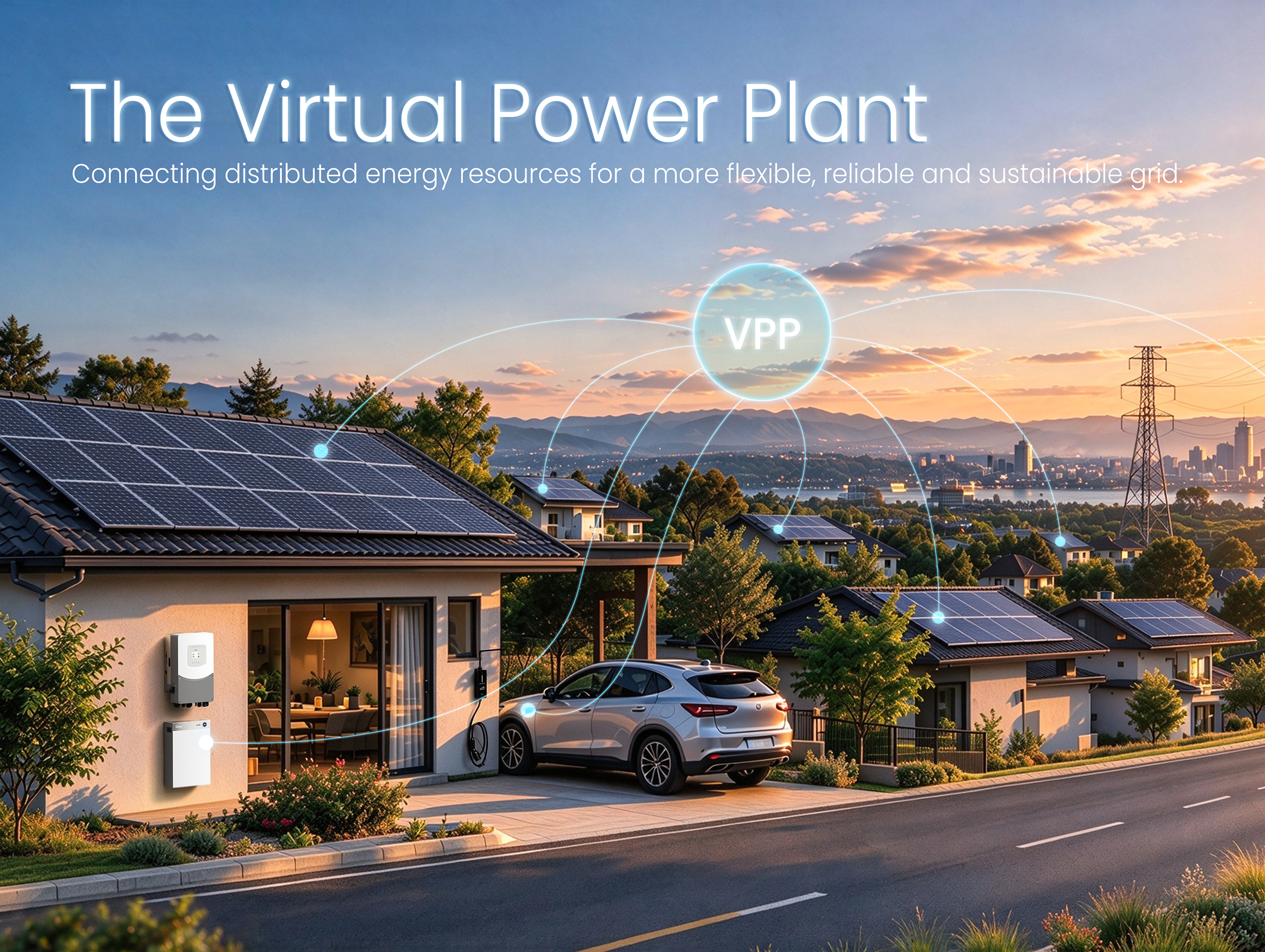 From Centralized Grids to Virtual Power Plants: The Next Evolution of the Power System
For more than a century, power systems around the world have relied on a centralized model. Large p...
-
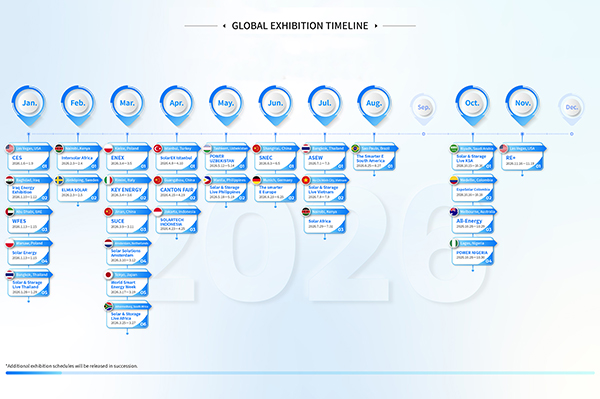 GLOBAL EXHIBITION TIMELINE
*Click to view larger image
-
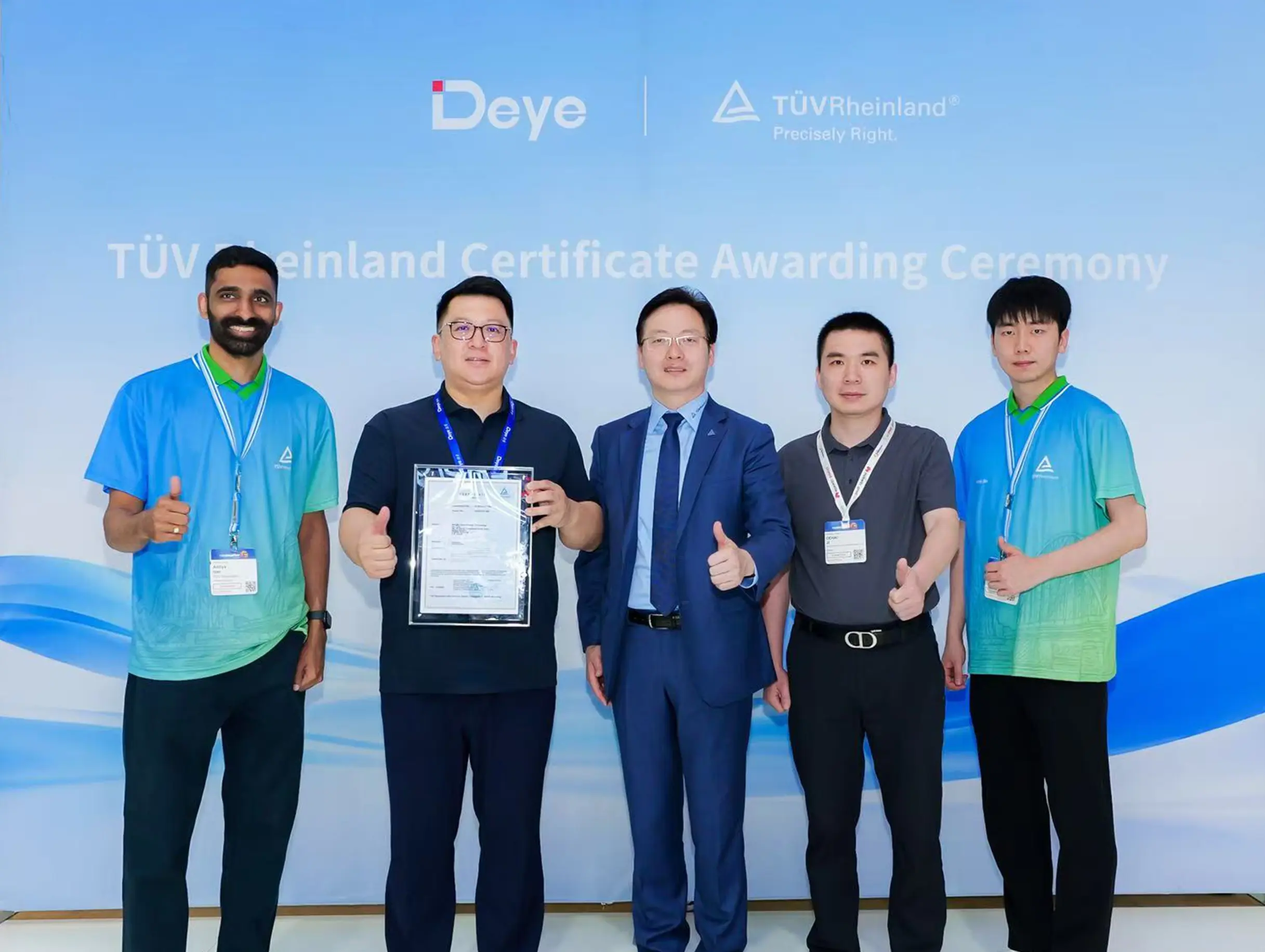 Deye Secures Multiple TÜV Rheinland Certifications at The smarter E Europe
On June 23, the opening day of The smarter E Europe 2026, Deye was officially awarded several presti...

Copyright@ 2024.Ningbo Deye Inverter Technology Co.,Ltd. All rights reserved. Solar Inverter Manufacturer
