
 Online Shop
 English
 China - 简体中文
 Global - English
 Brazil - Português
 Netherlands - Dutch
 Italy - Italiano
 Germany - Deutsch
 Spain - Español
 France - Français
 Vietnam - Tiếng Việt
 Poland - Polski
 Australia - English
 Japan - 日本語
Luo Qinxue — Regional Sales Manager, On-Grid Inverter Solutions

15–18 kW Split Phase Hybrid Inverter for Resilient Solar and Storage Systems
Modern solar energy systems are no longer judged only by how much power they can generate at noon on a clear day. Homeowners, installers, and commercial users increasingly expect a complete energy platform that can manage solar production, batteries, the grid, backup loads, time-of-use tariffs, and even generator support. The SUN-15/18K-SG01LP2-US-AM3-P split phase hybrid inverter is designed for this new reality, combining high PV input capacity, low-voltage battery compatibility, robust backup performance, and flexible system expansion in one integrated platform.
Positioned as a 15–18 kW split phase hybrid inverter with three MPPT channels and low-voltage battery support, this product is suitable for demanding residential and light commercial applications where energy independence, backup reliability, and installation flexibility matter. It supports both lead-acid and lithium-ion batteries, enables AC coupling for retrofitting existing solar systems, allows multiple units to operate in parallel, and provides a colorful touch LCD interface for easier commissioning and daily operation.
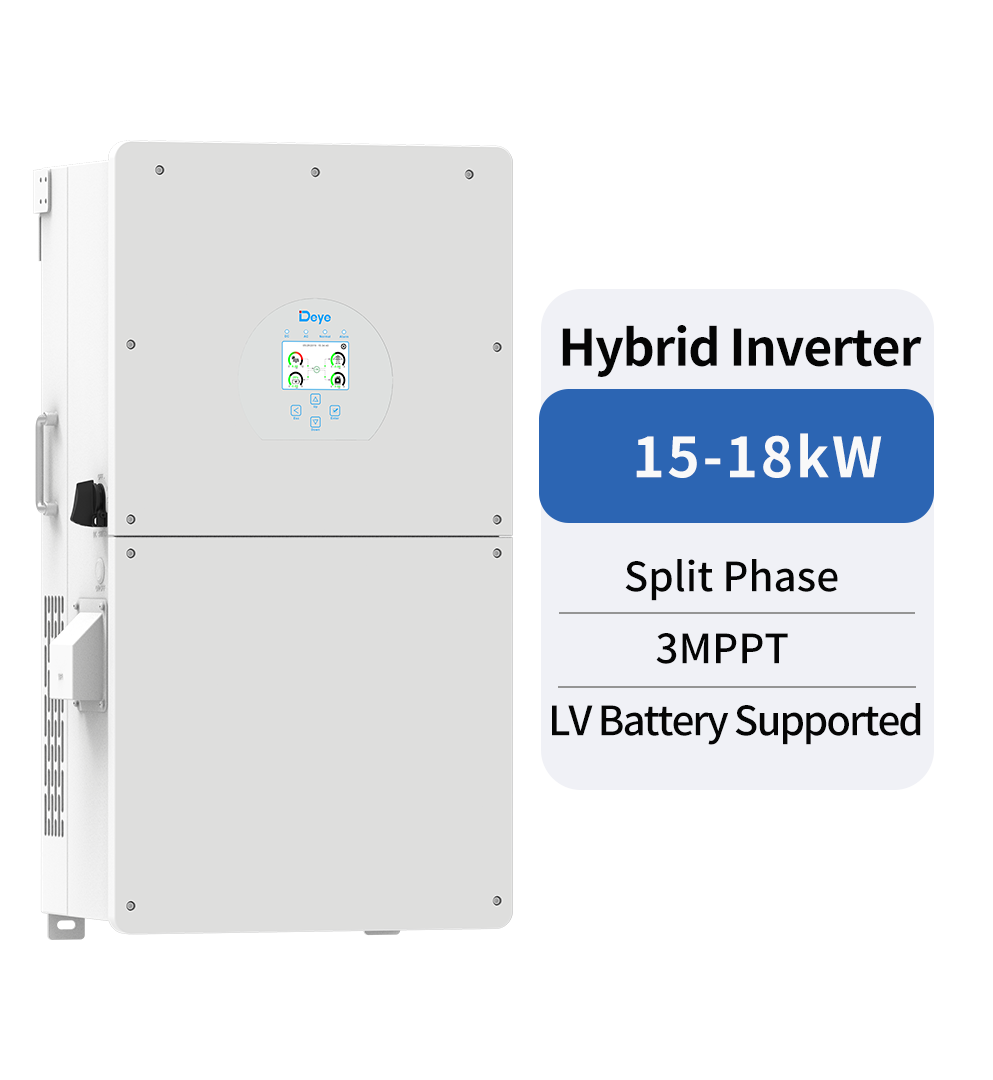
Product Overview: A High-Capacity Hybrid Platform
The SUN-15/18K-SG01LP2-US-AM3-P series includes two main models: SUN-15K-SG01LP2-US-AM3-P and SUN-18K-SG01LP2-US-AM3-P. The rated AC input and output active power is 15,000 W for the 15 kW model and 18,000 W for the 18 kW model. This capacity range places the product in a strong position for larger residential properties, villas, farms, backup-focused homes, and small commercial energy systems that require more power than a conventional entry-level hybrid inverter can provide.
The inverter supports 120/240 V split phase output and 208 V applications, making it aligned with common North American electrical architectures. Its grid connection form is 2L+N+PE, and the rated frequency is 60 Hz with an allowable range of 55–65 Hz. These characteristics make the inverter relevant for installations where split phase power is essential for operating typical household loads, HVAC equipment, pumps, kitchen appliances, and other high-demand circuits.
One of the product’s most important advantages is its combination of large PV input capacity and low-voltage battery support. The 15 kW model accepts up to 24,000 W of DC PV input, while the 18 kW model accepts up to 28,800 W. This oversizing capability can improve energy harvest across varying weather conditions and seasonal changes, helping users obtain more usable energy from the PV array throughout the year.
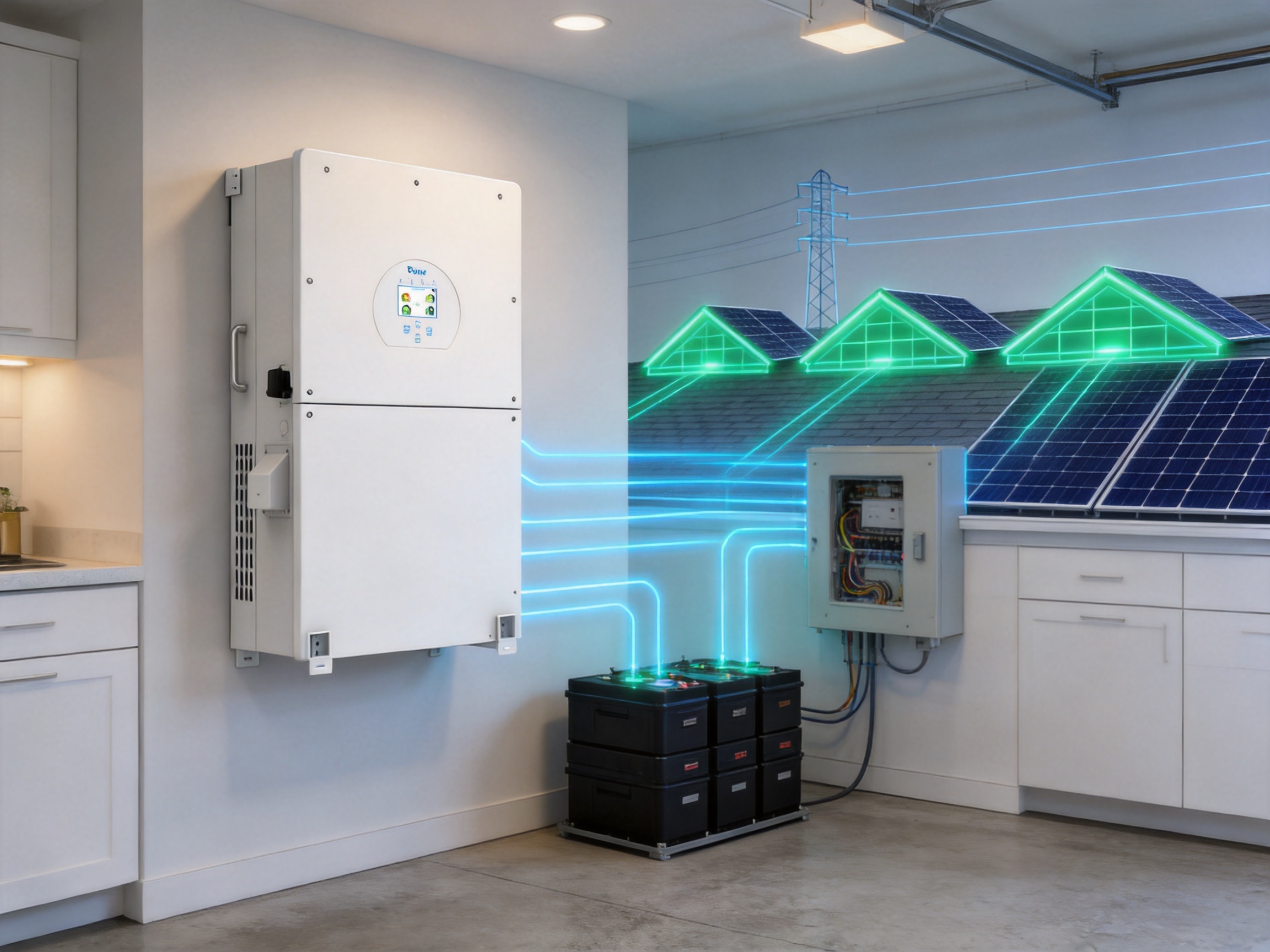
The inverter uses three maximum power point trackers, with a configuration of 3 MPPT and 2+2+2 strings. This allows arrays facing different directions or operating under different shade conditions to be managed more effectively than systems with fewer MPPT channels. For installers, this offers more freedom in roof design. For users, it can mean stronger real-world yield when the array is divided across multiple roof planes.
Key Product Advantages at a Glance
This hybrid inverter stands out because it is not limited to one energy scenario. It can be used for new solar-plus-storage projects, for retrofits through AC coupling, for backup systems with batteries, for generator-supported energy storage, and for larger installations where parallel operation is required. The maximum continuous AC passthrough from grid to load is 200 A, which is particularly valuable for whole-home backup and large-load applications.
The product supports a maximum of 16 units in parallel for both on-grid and off-grid operation. This scalability is a major competitive advantage. Many hybrid inverters are effective for single-home systems but become less practical when the project grows. By contrast, this platform can expand toward higher power applications while maintaining coordinated operation. It also supports multiple batteries in parallel, allowing system designers to increase energy capacity according to load requirements and user budgets.
Another strong advantage is the maximum charging and discharging current. The 15 kW model supports up to 275 A charging and discharging current, while the 18 kW model supports up to 380 A. High battery current capability is important in low-voltage battery systems because it enables the inverter to charge and discharge substantial energy quickly. For backup use, this contributes to stronger power delivery when grid supply is interrupted. For time-of-use energy management, it allows the battery to respond more effectively to pricing windows and load peaks.
The inverter provides six time periods for battery charging and discharging. This gives users and installers flexible control over energy behavior throughout the day. A system can be configured to charge batteries from solar energy during high production hours, discharge during expensive grid periods, preserve capacity for backup, or coordinate with generator operation. This time-based energy management capability is increasingly important as electricity tariffs become more dynamic.
Technical Specification Summary
| Item | SUN-15K-SG01LP2-US-AM3-P | SUN-18K-SG01LP2-US-AM3-P |
| Product Type | Split Phase Hybrid Inverter | Split Phase Hybrid Inverter |
| Rated AC Input/Output Active Power | 15,000 W | 18,000 W |
| Maximum DC Input Power | 24,000 W | 28,800 W |
| Battery Type | Lead-acid or lithium-ion | Lead-acid or lithium-ion |
| Battery Voltage Range | 40–60 V | 40–60 V |
| Maximum Charging Current | 275 A | 380 A |
| Maximum Discharging Current | 275 A | 380 A |
| MPPT Configuration | 3 MPPT, 2+2+2 strings | 3 MPPT, 2+2+2 strings |
| Maximum DC Input Voltage | 500 V | 500 V |
| MPPT Voltage Range | 150–425 V | 150–425 V |
| Rated Output Voltage | 120/240 V; 208 V supported | 120/240 V; 208 V supported |
| Maximum Continuous AC Passthrough | 200 A | 200 A |
| Peak Off-Grid Power | 2 times rated power for 10 seconds | 2 times rated power for 10 seconds |
| Maximum Efficiency | 97.6% | 97.6% |
| MPPT Efficiency | More than 99% | More than 99% |
| Communication Interface | Wi-Fi, RS485 | Wi-Fi, RS485 |
| Protection Rating | Type 3R | Type 3R |
| Cooling | Intelligent air cooling | Intelligent air cooling |
| Safety and Grid Standards | UL 1741, FCC, IEEE 1547.1, SRD V2.0 | UL 1741, FCC, IEEE 1547.1, SRD V2.0 |
Three MPPT Design for Higher Real-World Energy Yield
PV systems rarely operate under perfect laboratory conditions. Roofs may face east, west, and south. Trees, chimneys, dormers, and nearby buildings may create partial shade. Module strings may have different orientations or different daily irradiance profiles. A hybrid inverter with only one or two MPPT channels may force compromises in array design, but the three-MPPT configuration of this inverter allows more intelligent separation of PV strings.
The operating PV input current is 36 A + 36 A + 36 A, and the maximum input short-circuit current is 54 A + 54 A + 54 A. This current capacity gives the inverter compatibility with high-current PV modules and modern array designs. As solar modules continue to increase in wattage and current output, inverter input flexibility becomes more important. This product’s PV input architecture helps future-proof installations and reduces the risk that an installer must undersize or reconfigure an array because the inverter cannot accept the module current.
The MPPT voltage range of 150–425 V and startup voltage of 125 V provide a practical operating window for various string lengths. The rated DC input voltage is 370 V, and the maximum DC input voltage is 500 V. This combination supports efficient operation while keeping the system within a voltage class suitable for many residential and light commercial designs. The MPPT efficiency of more than 99% indicates that the inverter is engineered to track the optimal PV operating point with high accuracy, helping maximize energy conversion from the solar array.
Low-Voltage Battery Support with Strong Current Capability
The battery voltage range of 40–60 V makes this inverter compatible with low-voltage battery architectures. Low-voltage systems are often preferred in residential storage because they can simplify battery handling, improve compatibility with widely available battery modules, and provide a familiar installation framework for many technicians. The inverter supports lead-acid and lithium-ion batteries, giving users flexibility in both legacy and modern storage configurations.
For lithium-ion batteries, the charging strategy is self-adaptive to the battery management system. This is an important feature because the BMS is responsible for monitoring battery state, temperature, voltage, current, protection limits, and safety conditions. By adapting to the BMS, the inverter can coordinate charging and discharging more intelligently, helping preserve battery life and supporting safer operation.
The product includes two battery inputs. This is useful for higher-capacity battery banks or systems that require flexible wiring and modular expansion. Multiple batteries can also be connected in parallel, allowing users to increase storage capacity over time. For example, an owner may begin with a battery bank sized for essential backup loads and later expand to support whole-home backup or greater self-consumption.
Compared with many competing hybrid inverters that offer lower battery charge and discharge current, this series offers a strong current platform. The 18 kW model’s 380 A maximum charging and discharging current is especially notable. When a large home experiences a grid outage, the battery and inverter must respond rapidly to changing load conditions. High current capacity helps the system support demanding loads more confidently, especially when combined with the inverter’s ability to deliver two times rated power for 10 seconds in off-grid mode.
Backup Power Performance for Demanding Loads
Backup capability is one of the main reasons users choose a hybrid inverter rather than a basic grid-tie inverter. In a traditional grid-tie system, solar generation often shuts down during a utility outage to protect utility workers and comply with anti-islanding requirements. A hybrid inverter with batteries can continue supplying protected loads when the grid is unavailable. This inverter is designed with off-grid capability and peak power support, making it suitable for users who value resilience.
The peak power rating in off-grid mode is two times the rated power for 10 seconds. This matters because many appliances require a high starting current. Motors, compressors, pumps, HVAC systems, and refrigeration equipment can draw several times their running power when starting. A system that cannot handle these transient loads may trip or fail to start key equipment. The ability to provide temporary surge power helps improve backup usability in real homes and commercial spaces.
The maximum continuous AC passthrough of 200 A further strengthens the product’s whole-home potential. In many installations, users do not want to back up only a small emergency panel. They want a system that can support a broad range of loads and work smoothly with the main service architecture. While final design always depends on local electrical codes, load calculations, battery capacity, and installation practice, the 200 A passthrough rating provides a strong foundation for robust backup system design.
AC Coupling for Retrofitting Existing Solar Systems
One of the product’s strongest market advantages is its support for AC coupling. Many homes and businesses already have a solar system installed with a conventional grid-tie inverter. When these users decide to add batteries, replacing the entire system can be expensive and disruptive. AC coupling allows a hybrid inverter and battery system to be added to an existing solar installation, making storage retrofits more practical.
In a retrofit scenario, the existing PV inverter continues converting solar energy into AC power. The hybrid inverter then manages battery charging, backup operation, and energy flow. This architecture can reduce waste, preserve the value of existing equipment, and open the door for customers who want energy storage without a full system rebuild. Compared with hybrid platforms that are optimized only for new installations, AC coupling makes this inverter more versatile and installer-friendly.
For solar contractors, retrofit capability is a commercial advantage. It expands the addressable market from new solar customers to the large base of existing solar owners. For users, it creates a path toward backup power and energy management without abandoning prior investment. This is especially important in regions where grid instability, extreme weather, or time-of-use electricity pricing has increased interest in battery storage.
Generator Integration for Extended Energy Security
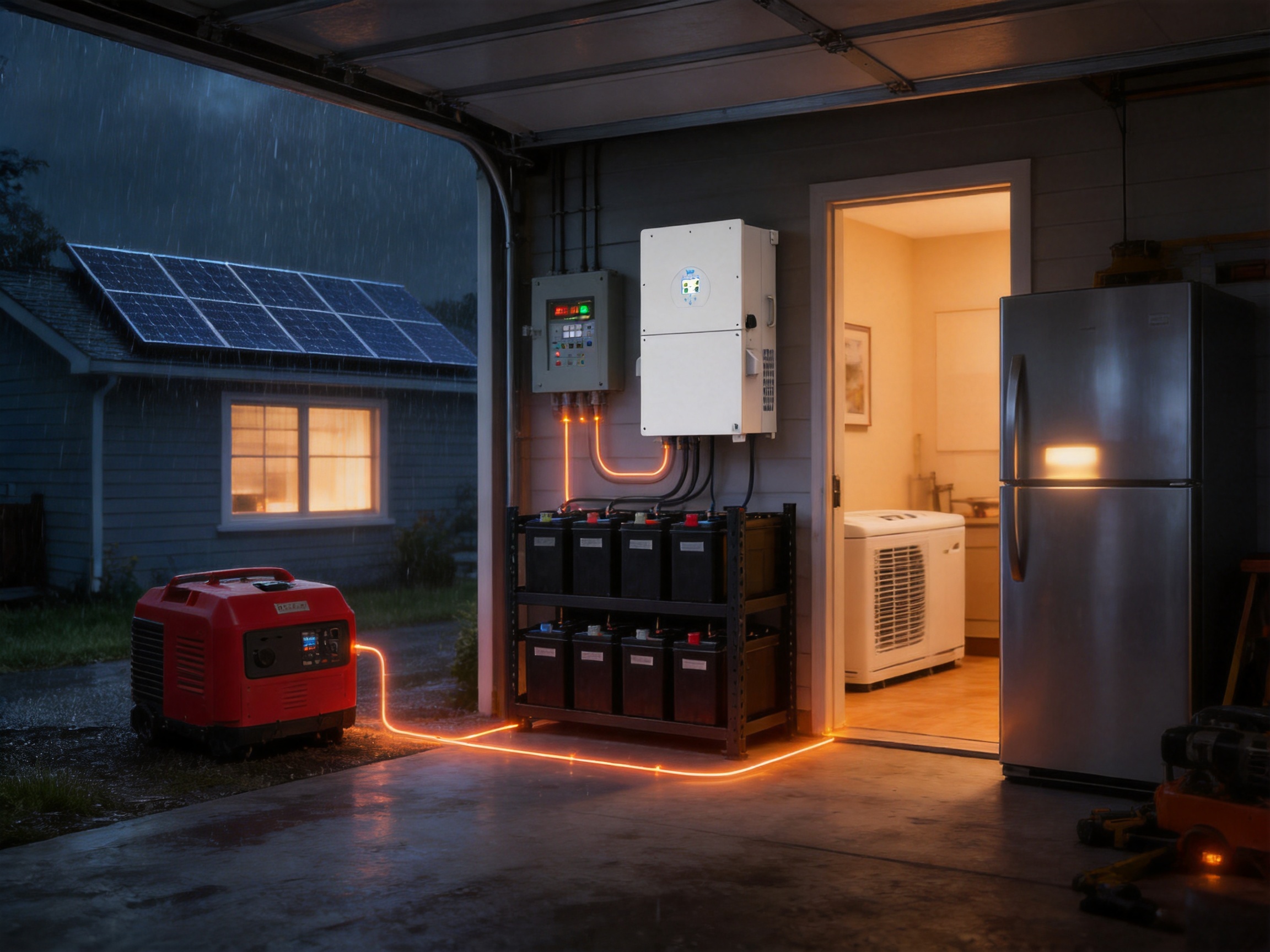
The inverter supports storing energy from a diesel generator. This feature is important for sites where long outages are possible or where solar resources may be limited during extended cloudy periods. A solar-plus-storage system can cover many outages, but a generator connection adds another layer of resilience. Instead of running a generator continuously to serve loads, the generator can be used strategically to recharge batteries, after which the inverter and battery system can continue supplying loads more quietly and efficiently.
Generator-supported storage can reduce generator runtime, fuel consumption, noise, and maintenance compared with generator-only backup. It also allows users to prioritize solar energy whenever available. In remote properties, farms, small businesses, or areas with weak grid infrastructure, this hybrid approach can be more practical than relying on any single energy source.
Compared with simpler battery inverters that lack generator energy storage support, this product provides stronger multi-source energy coordination. Solar, battery, grid, and generator resources can be planned together, giving users more control over cost, reliability, and sustainability.
Parallel Operation for Scalable System Design
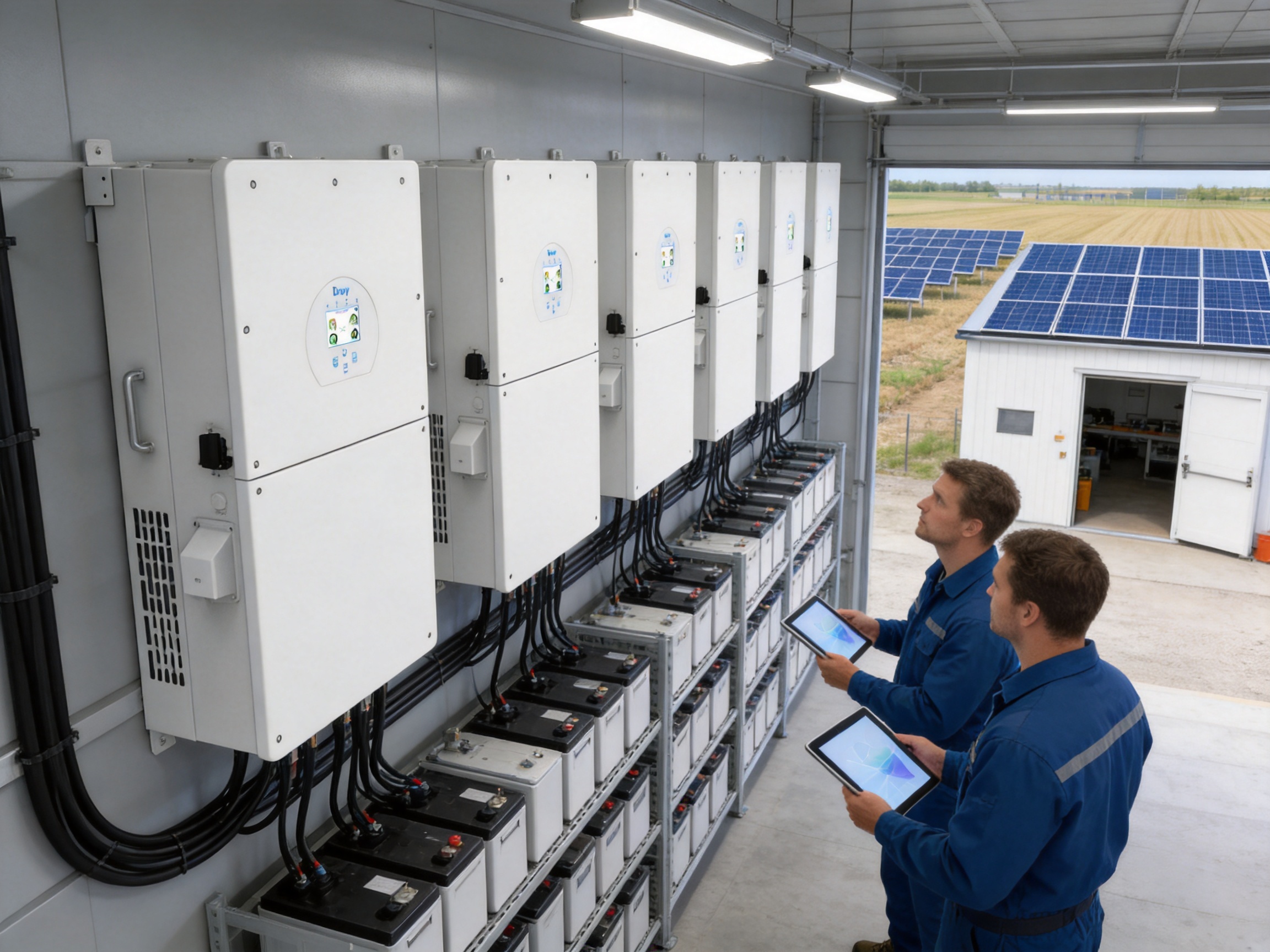
Scalability is a defining feature of advanced energy systems. The ability to connect up to 16 units in parallel for on-grid and off-grid operation gives this inverter an advantage over many competing systems that are limited to a small number of parallel units or are intended only for single-inverter residential installations. Parallel operation enables higher total power output and can support larger properties, commercial buildings, workshops, and multi-load facilities.
Parallel capability is also valuable for staged investment. A project can start with one or several inverters and expand as energy needs grow. This is especially relevant for users who plan to add electric vehicles, heat pumps, additional buildings, or more battery capacity in the future. A scalable inverter platform helps avoid the need to replace core equipment when demand increases.
From an installer’s point of view, a product family that supports parallel operation can simplify training and inventory. The same platform can be used across a wider range of project sizes. This standardization can reduce design complexity, improve service efficiency, and strengthen long-term customer support.
Efficiency and Energy Conversion Quality
The maximum efficiency of the inverter is 97.6%, while the Euro efficiency is 96.5%. In practical terms, high conversion efficiency reduces energy losses as electricity flows between solar panels, batteries, loads, and the grid. Over the lifetime of a solar storage system, even small efficiency improvements can translate into meaningful energy savings.
Total current harmonic distortion is less than 3% of nominal power, and DC injection current is less than 0.5% of rated current. These specifications indicate attention to power quality. Good power quality helps protect appliances, supports stable grid interaction, and contributes to compliance with modern interconnection requirements.
The power factor adjustment range is 0.8 leading to 0.8 lagging. This provides flexibility for grid support and power quality management. In some applications, reactive power control may be required by utilities or beneficial for site-level electrical performance. By offering adjustable power factor capability, the inverter is better prepared for modern grid requirements than basic products with limited control functions.
Protection Features and Safety-Oriented Engineering
A hybrid inverter is a central device in a solar and storage system, so protection design is essential. This product integrates a wide range of protection functions, including DC reverse polarity protection, AC output overcurrent protection, thermal protection, AC output overvoltage protection, AC output short-circuit protection, DC component monitoring, anti-islanding protection, DC switch, insulation impedance detection, and residual current detection. Arc fault circuit interrupter functionality is optional.
These protections help safeguard the inverter, battery, PV array, connected loads, and service personnel. Reverse polarity protection helps prevent damage from incorrect DC wiring. Overcurrent and short-circuit protections respond to abnormal electrical conditions. Thermal protection helps manage internal temperature and prevent overheating. Anti-islanding protection is essential for grid-connected systems because it helps ensure that the inverter disconnects properly during grid outages unless operating in an approved backup mode.
The surge protection level is Type II for DC and Type II for AC. Surge protection is important because PV systems are exposed to outdoor conditions, long cable runs, and potential transient voltage events. While external surge protection and proper grounding may still be required by project design and local code, integrated surge protection strengthens the inverter’s defense against electrical stress.
The product complies with or is designed around standards including UL 1741, FCC, IEEE 1547.1, and SRD V2.0. These standards are important in North American and international contexts because they relate to inverter safety, electromagnetic compatibility, and grid interconnection performance.
Rugged Mechanical Design and Environmental Adaptability
The inverter has a Type 3R protection rating and is designed for operating temperatures from -40°C to +60°C, with derating above 45°C. This wide temperature range supports installation in diverse climates, including cold regions and hot environments. The permissible ambient humidity range is 0–100%, and the permissible altitude is 3000 m, which adds further installation flexibility.
The cabinet size is 464 mm by 863 mm by 282 mm, excluding connectors and brackets, and the weight is 61.5 kg. This size and weight reflect a high-capacity power electronics device with substantial thermal and electrical architecture. Intelligent air cooling helps manage temperature according to operating conditions. Compared with passive cooling, intelligent air cooling can provide stronger thermal regulation during high-load operation. Compared with simple fixed-speed fan systems, intelligent cooling can reduce unnecessary noise and improve operational efficiency when full cooling is not required.
The noise level is specified as no more than 55 dB. In residential and light commercial environments, acoustic performance matters because inverters may be installed near living areas, garages, utility rooms, or exterior walls. A controlled cooling system helps balance thermal needs with user comfort.
User Interface and Monitoring
The colorful touch LCD is a practical advantage for installers and owners. A clear local interface can reduce commissioning time, simplify parameter checks, and make troubleshooting more direct. While many systems rely heavily on mobile apps or external monitoring portals, a built-in LCD remains valuable because it provides immediate visibility at the equipment location.
The inverter supports Wi-Fi and RS485 communication. Wi-Fi enables convenient monitoring and configuration in many residential applications, while RS485 provides a robust wired communication method for professional energy systems, battery communication, and integration scenarios. The combination of local display and communication interfaces supports both user convenience and installer-level control.
Monitoring is especially important in hybrid systems because energy flow is more complex than in simple grid-tie solar. Users may want to know how much solar is being generated, how much energy is stored in the battery, whether the system is importing or exporting power, and how backup reserve settings are configured. A strong monitoring ecosystem helps turn complex energy equipment into a manageable household or business asset.
Advantages Over Conventional Grid-Tie Inverters
Compared with conventional grid-tie inverters, this hybrid inverter offers several important advantages. First, it supports battery storage, allowing solar energy to be used after sunset or during grid outages. Second, it provides backup power capability, while standard grid-tie inverters generally shut down when the grid fails. Third, it supports time-based charge and discharge scheduling, enabling smarter use of electricity tariffs and backup reserves.
Another key difference is energy source coordination. A conventional grid-tie inverter mainly converts PV power into AC power for immediate use or export. This hybrid inverter can manage PV, batteries, grid power, and generator-supported storage. That makes it a more complete energy management platform.
For customers concerned about resilience, a basic grid-tie inverter may no longer be sufficient. Extreme weather, aging grid infrastructure, and rising electricity prices have changed the value proposition of solar systems. Solar generation alone reduces energy bills, but solar plus storage can also protect essential loads and increase self-consumption. This inverter addresses both goals.
Advantages Over Smaller Hybrid Inverters
Many hybrid inverters in the residential market are designed around lower power ratings. They may work well for essential-load backup but may not be ideal for larger homes or high-power equipment. The 15–18 kW rating of this product provides stronger support for demanding applications. With 200 A continuous AC passthrough and two times rated power surge capability for 10 seconds, the inverter is better suited for whole-home and high-load scenarios than smaller alternatives.
The three-MPPT design is also a differentiator. Smaller hybrid inverters often provide fewer MPPT channels, which can limit PV layout options. The ability to accept up to 24 kW or 28.8 kW of DC PV input gives system designers more room to optimize array size and annual production.
Parallel operation up to 16 units is another advantage over many smaller systems. Instead of treating each larger project as a custom engineering challenge, installers can use a scalable architecture based on the same inverter platform. This can improve design repeatability and long-term serviceability.
Advantages Over High-Voltage Battery-Only Platforms
Some hybrid systems are built around high-voltage battery architectures. High-voltage batteries can offer benefits in certain applications, but they may also introduce additional compatibility constraints and installation considerations. This product’s 40–60 V battery range supports low-voltage battery systems, which are widely used and familiar to many installers.
Low-voltage battery support can be attractive for customers who want flexible battery options, parallel battery expansion, or compatibility with existing low-voltage storage assets. The inverter’s high charge and discharge current helps address one of the traditional challenges of low-voltage systems: delivering sufficient power at lower voltage. By supporting up to 275 A or 380 A depending on the model, the inverter provides substantial battery power capability within a low-voltage framework.
The result is a practical balance between flexibility, power, and scalability. Users can select appropriate battery capacity, expand storage over time, and benefit from BMS-adaptive lithium charging when lithium-ion batteries are used.
Manufacturing Strength Behind the Product
Ningbo Deye Inverter Technology Co., Ltd. is part of a technology manufacturing organization founded in 2000, with business activities spanning research and development, design, production, sales, and service. The company is associated with extensive experience in solar inverters, energy storage systems, and environmental appliances. Its inverter portfolio includes string inverters, energy storage inverters, microinverters, off-grid inverters, accessories, monitoring systems, and integrated energy solutions.
The company’s manufacturing strength is reflected in its broad product coverage and global market presence. Products are sold in more than 140 countries and regions, which requires not only production capacity but also quality consistency, certification management, technical documentation, and after-sales support. A manufacturer serving many markets must design products that can adapt to different grid rules, environmental conditions, installation practices, and customer expectations.
Advanced manufacturing for hybrid inverters typically involves tightly controlled assembly processes, automated or semi-automated testing, power electronics calibration, thermal verification, insulation checks, firmware loading, communication testing, and final quality inspection. For a high-power inverter such as this one, manufacturing discipline is especially important because the device must manage PV input, battery current, grid interaction, backup output, monitoring interfaces, and protection systems simultaneously.
The company’s scale advantage supports continuous product improvement. A broad installed base provides feedback from different climates and applications, helping engineering teams refine future generations. Research and development capability is also important because hybrid inverters are evolving quickly. Features such as AC coupling, parallel operation, BMS communication, generator support, and intelligent energy scheduling require both hardware and software expertise.
Research, Development, and Energy IoT Capability
Hybrid inverters are no longer only power conversion devices. They are increasingly connected energy controllers. The company has developed an energy Internet of Things ecosystem anchored by cloud-based monitoring and application tools. This digital capability matters because modern users expect visibility, remote diagnostics, performance analytics, and simplified service support.
In practice, strong R&D capability allows the manufacturer to integrate power electronics, embedded control, communication protocols, battery compatibility, grid compliance, and user interface design into a single product. The SUN-15/18K-SG01LP2-US-AM3-P reflects this direction by combining a touch LCD, Wi-Fi, RS485, BMS-adaptive charging, time-of-use scheduling, parallel operation, and multi-source energy management.
Compared with manufacturers that focus narrowly on one inverter category, a company with broad experience in string inverters, storage inverters, microinverters, off-grid products, commercial ESS, and monitoring systems can leverage cross-platform engineering knowledge. For example, grid-tie inverter experience supports PV conversion and grid compliance, while ESS experience supports battery integration and backup behavior. This integrated knowledge base strengthens the product’s competitiveness.
Quality Control and Reliability Considerations
Reliability is one of the most important purchasing criteria for solar and storage equipment. An inverter is expected to operate for years under changing electrical loads, weather conditions, grid disturbances, and thermal stress. The product’s protection functions, Type 3R enclosure rating, intelligent cooling, and wide operating temperature range all contribute to system durability.
Quality control in inverter manufacturing must address component selection, circuit board assembly, enclosure integrity, connector reliability, insulation performance, firmware stability, and full-load operation. For hybrid inverters, battery communication and protection logic must also be verified carefully. A strong manufacturing process reduces early failures, improves installation confidence, and supports long-term warranty commitments.
The listed warranty is 5 years or 10 years depending on the final installation site and warranty policy. This flexibility reflects the importance of installation environment, regional policy, and proper system design. Users should always confirm warranty terms with the supplier or installer before purchase, but the availability of extended warranty periods can be an important confidence factor.
Application Scenarios
Large Residential Solar and Storage
For a large home with significant daily energy use, the inverter’s 15–18 kW output range and high PV input capacity can support a substantial solar array. The battery interface enables evening energy use and backup reserves. The split phase output is suitable for common residential electrical systems, and the 200 A passthrough rating supports more comprehensive backup design.
Whole-Home Backup
When paired with sufficient battery capacity and proper electrical design, the inverter can serve as the center of a whole-home backup system. Its surge capability helps with motor starting loads, and its parallel capability allows larger systems to be built where needed. Time-period control can preserve battery energy for outages while still allowing daily self-consumption.
Solar Retrofit with Battery Addition
For users who already have solar panels and a grid-tie inverter, AC coupling provides a route to add storage. This avoids unnecessary replacement of existing PV equipment and creates a more economical upgrade path. Retrofit applications are likely to grow as older solar customers seek backup power and better energy management.
Small Commercial and Agricultural Sites
Small businesses, farms, workshops, and rural properties often have larger loads than typical homes and may experience greater economic losses during outages. The inverter’s high power rating, generator support, and scalable parallel architecture make it suitable for these applications. Battery storage can reduce peak demand, support critical equipment, and improve energy security.
Remote or Weak-Grid Locations
In areas with unstable utility service, the ability to coordinate solar, batteries, and generator energy is valuable. The inverter can help reduce generator dependence while maintaining backup readiness. Its wide operating temperature range and environmental tolerance also support deployment in challenging climates.
Installation and System Design Considerations
Although the inverter provides extensive flexibility, proper system design remains essential. Installers must size PV strings within the voltage and current limits, select compatible batteries, configure BMS communication where applicable, calculate backup loads, and follow local electrical codes. Battery capacity should match the customer’s backup expectations. A powerful inverter cannot provide long backup duration without sufficient stored energy.
Load analysis is especially important for whole-home backup. High-demand appliances, HVAC equipment, water pumps, and electric vehicle chargers can create large starting and running loads. The inverter’s surge capability helps, but system designers should still evaluate load sequencing, battery discharge limits, and transfer configurations.
For parallel installations, communication wiring, phase coordination, protection devices, and commissioning procedures must be carefully implemented. Parallel systems offer excellent scalability, but they also require disciplined engineering and installation practice. Working with trained installers and following official documentation is strongly recommended.
Why This Inverter Is a Strong Choice in a Competitive Market
The solar inverter market includes many products that appear similar at first glance, but meaningful differences emerge when evaluating real project requirements. This inverter’s strength lies in the combination of high power, large PV input, three MPPT channels, low-voltage battery compatibility, high battery current, AC coupling, generator support, 200 A passthrough, parallel scalability, and comprehensive protection.
For homeowners, this means stronger energy independence and a more capable backup platform. For installers, it means a flexible product that can be used in new systems, retrofits, high-load homes, and scalable projects. For commercial users, it means a robust energy management tool that can reduce outage risk and improve use of solar generation.
The product is also supported by a manufacturer with broad experience in PV inverters and ESS solutions. This matters because hybrid inverter performance depends not only on hardware specifications but also on software quality, battery compatibility, grid compliance, monitoring, production consistency, and long-term service.
Q&A Section
What type of product is the SUN-15/18K-SG01LP2-US-AM3-P?
It is a split phase hybrid inverter designed for solar PV, battery storage, grid interaction, and backup power applications. It is available in 15 kW and 18 kW models and supports low-voltage batteries.
What battery types are supported?
The inverter supports lead-acid and lithium-ion batteries. For lithium-ion batteries, the charging strategy can adapt to the battery management system, helping coordinate safe and efficient charging behavior.
Why are three MPPT channels important?
Three MPPT channels allow PV strings with different orientations or shading conditions to be managed more independently. This can improve real-world energy harvest compared with systems that have fewer MPPT inputs.
Can this inverter be used with an existing solar system?
Yes. The inverter supports AC coupling, which makes it suitable for retrofitting existing grid-tie solar systems with battery storage and backup capability.
How many units can operate in parallel?
Up to 16 units can operate in parallel for on-grid and off-grid applications, allowing system designers to scale power capacity for larger projects.
Does the inverter support generator charging?
Yes. It supports storing energy from a diesel generator, which can improve energy security during long outages or in remote locations.
What is the maximum AC passthrough current?
The maximum continuous AC passthrough from grid to load is 200 A, which supports robust whole-home or large-load system designs when installed correctly.
What communication interfaces are available?
The inverter supports Wi-Fi and RS485 communication, and it includes a colorful touch LCD for local operation and monitoring.
What standards are associated with the inverter?
The product references UL 1741, FCC, IEEE 1547.1, and SRD V2.0, supporting safety, electromagnetic compatibility, and grid interconnection requirements.
What makes this inverter competitive?
Its competitive strengths include high output power, large PV input capacity, three MPPT channels, high battery current, low-voltage battery support, AC coupling, generator integration, 200 A passthrough, and parallel scalability up to 16 units.
Conclusion
The SUN-15/18K-SG01LP2-US-AM3-P split phase hybrid inverter is engineered for users who need more than standard solar conversion. It is a high-capacity energy management platform capable of supporting solar production, battery storage, backup loads, grid interaction, generator-assisted charging, and scalable parallel systems. Its 15–18 kW power range, 24–28.8 kW maximum PV input, three MPPT channels, 40–60 V battery compatibility, and high charge/discharge current make it especially suitable for demanding residential and light commercial projects.
In a market where customers increasingly expect energy independence, resilience, and intelligent control, this inverter offers a strong balance of power, flexibility, and system integration. Its AC coupling capability opens opportunities for retrofit projects, while its parallel operation supports larger installations. The protection design, efficiency ratings, communication interfaces, and environmental adaptability further strengthen its practical value.
Behind the product is a manufacturer with extensive experience in inverter and ESS technologies, global market reach, and a broad portfolio covering residential, commercial, industrial, and utility energy solutions. That manufacturing and R&D foundation supports the product’s competitiveness and helps installers and users build solar-plus-storage systems that are safer, smarter, and more scalable.
References
1. Product Datasheet: SUN-15/18K-SG01LP2-US-AM3-P Split Phase Hybrid Inverter, 15–18 kW, 3 MPPT, Low-Voltage Battery Supported.
2. UL 1741 Standard for Inverters, Converters, Controllers and Interconnection System Equipment for Use With Distributed Energy Resources.
3. IEEE 1547.1 Standard Conformance Test Procedures for Equipment Interconnecting Distributed Energy Resources with Electric Power Systems.
4. FCC Electromagnetic Compatibility Requirements for Electronic Equipment.
5. General technical literature on solar-plus-storage system design, hybrid inverter operation, battery management systems, and distributed energy resource integration.
Product: SUN-15/18K-SG01LP2-US-AM3-P
PREV:18–20 kW Three-Phase String Inverter for High-Performance Commercial Solar Systems
NEXT:High-Efficiency Module-Level PV Optimizer for Safer, Smarter Solar Arrays
Share
Product recommendations
news recommendations
-
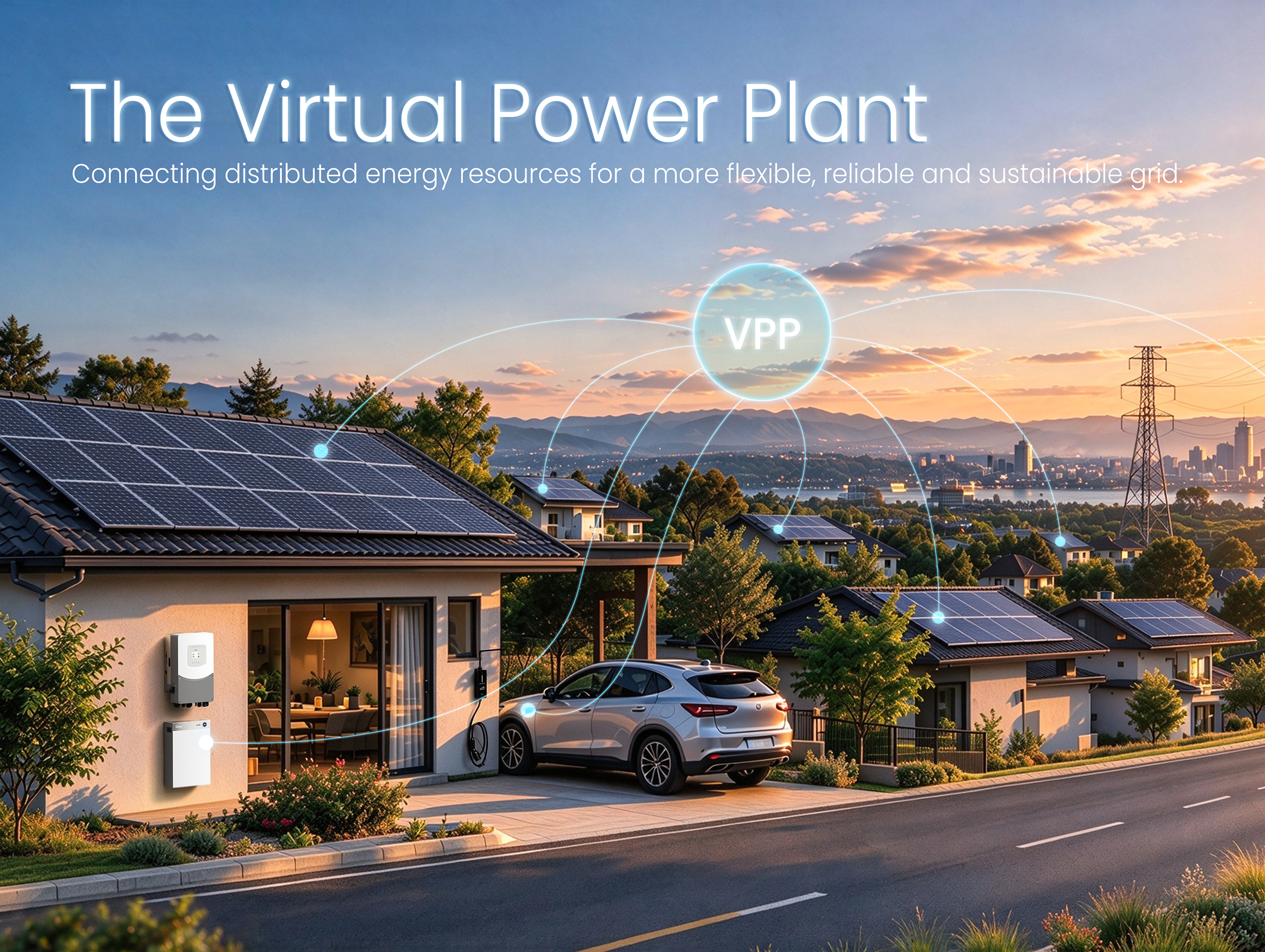 From Centralized Grids to Virtual Power Plants: The Next Evolution of the Power System
For more than a century, power systems around the world have relied on a centralized model. Large p...
-
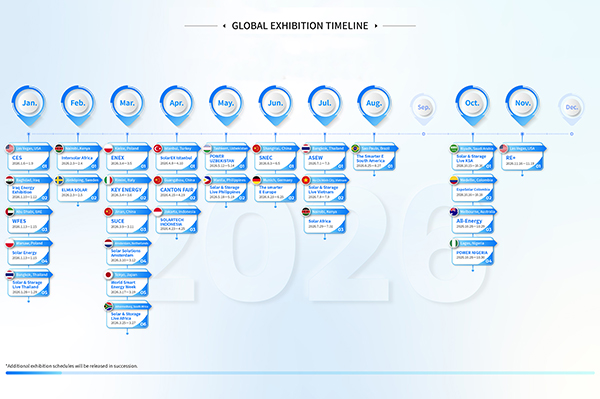 GLOBAL EXHIBITION TIMELINE
*Click to view larger image
-
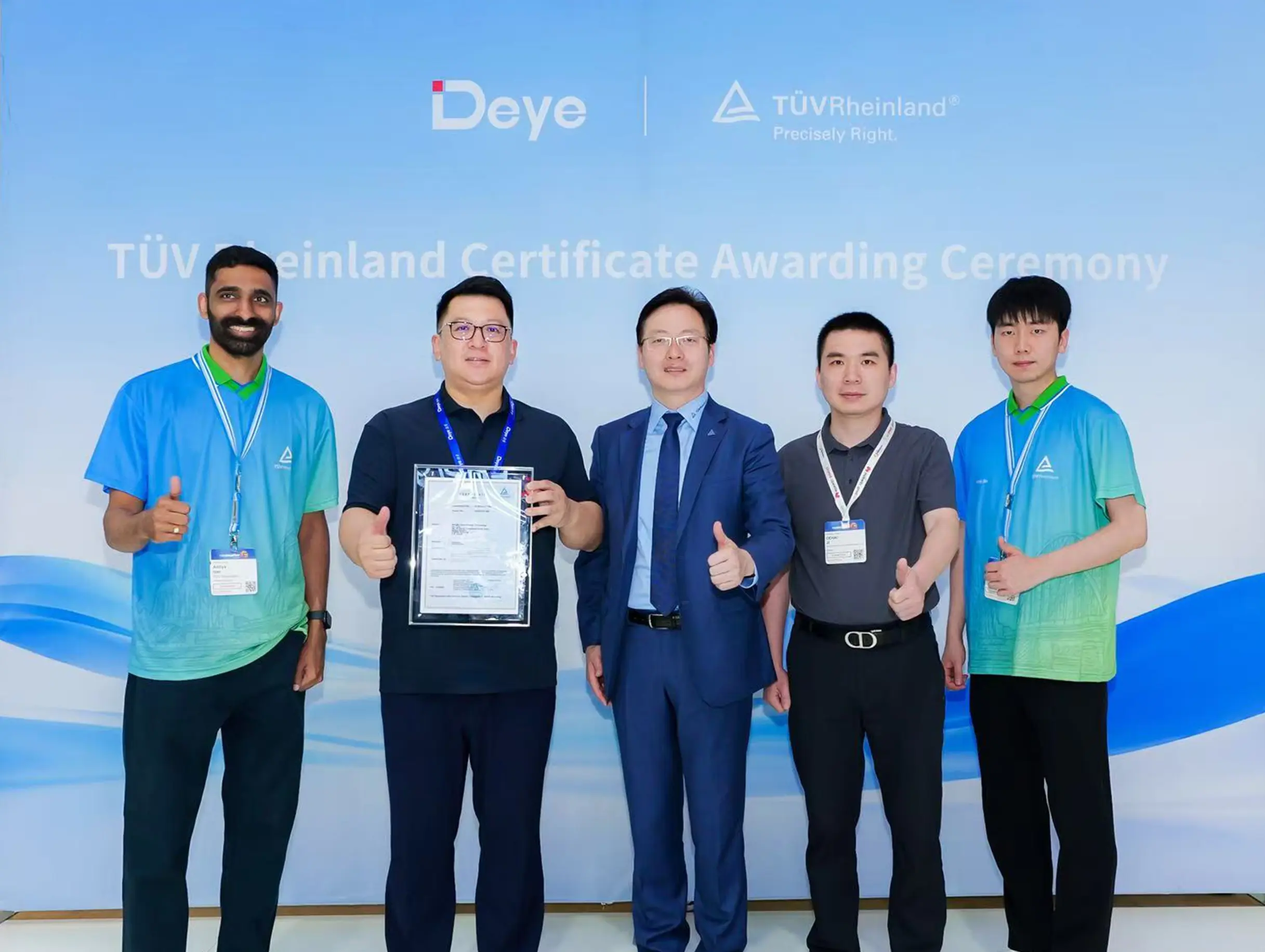 Deye Secures Multiple TÜV Rheinland Certifications at The smarter E Europe
On June 23, the opening day of The smarter E Europe 2026, Deye was officially awarded several presti...

Copyright@ 2024.Ningbo Deye Inverter Technology Co.,Ltd. All rights reserved. Solar Inverter Manufacturer
