
 Online Shop
 English
 China - 简体中文
 Global - English
 Brazil - Português
 Netherlands - Dutch
 Italy - Italiano
 Germany - Deutsch
 Spain - Español
 France - Français
 Vietnam - Tiếng Việt
 Poland - Polski
 Australia - English
 Japan - 日本語
Luo Qinxue — Regional Sales Manager, On-Grid Inverter Solutions

High-Efficiency Three-Phase String Inverter for 3–15 kW Solar Applications
The 3–15 kW three-phase string inverter represented by the SUN-3/4/5/6/7/8/9/10/12/15K-G06P3-EU-BM2 series is designed for modern grid-tied solar photovoltaic systems that require high conversion efficiency, dependable protection, flexible monitoring, and smooth integration with residential, commercial, and light industrial power networks. With two independent MPPT channels, a maximum efficiency of up to 98.5%, a wide MPPT voltage range, and advanced grid-support functions such as zero export and virtual synchronous generator application, this inverter series addresses the practical needs of installers, system designers, property owners, and energy investors.
As solar projects become more technically demanding, an inverter is no longer viewed simply as a DC-to-AC conversion device. It is now the operational center of the PV system, responsible for energy harvesting, safety supervision, grid interaction, data communication, fault response, and long-term economic performance. This product family has been developed to meet that broader role. It combines compact mechanical design, natural cooling, IP65 environmental protection, Type II surge protection on both DC and AC sides, optional AFCI, optional anti-PID function, and multiple communication choices including GPRS, WiFi, Bluetooth, 4G, and LAN.
The result is a versatile inverter series suitable for rooftops, small commercial buildings, distributed PV projects, public facilities, agricultural sites, schools, workshops, and three-phase residential properties. Its power range from 3 kW to 15 kW allows one design platform to cover many installation sizes, reducing complexity for procurement, training, installation, commissioning, and maintenance. For customers comparing this product with competing inverters, its combination of 1100 V maximum PV input voltage, 120–1000 V MPPT operating window, 2 MPPT architecture, high efficiency, safety features, and grid-standard compatibility creates a strong value proposition.
SUN-3/4/5/6/7/8/9/10/12/15K-G06P3-EU-BM2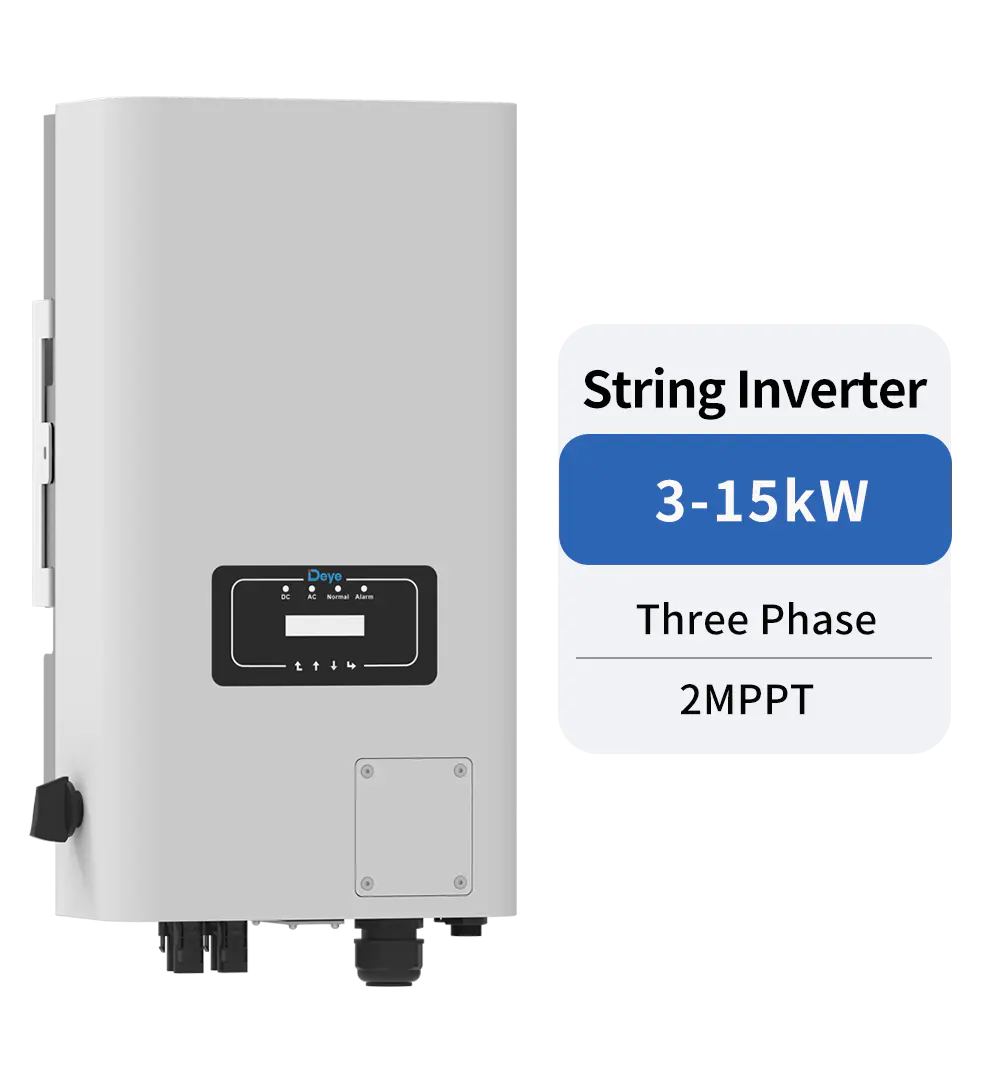
Product Positioning and Application Value
The SUN-3/4/5/6/7/8/9/10/12/15K-G06P3-EU-BM2 series belongs to the three-phase string inverter category. It is engineered for grid-connected photovoltaic systems where solar modules are arranged in strings and connected directly to the inverter. Compared with microinverter-based systems, a string inverter solution can provide an attractive balance of cost, efficiency, serviceability, and centralized control, especially for medium-sized PV arrays. Compared with larger central inverters, this series offers easier installation, modular system design, and more flexible rooftop deployment.
The power range is one of its major practical advantages. Installers can select from 3 kW, 4 kW, 5 kW, 6 kW, 7 kW, 8 kW, 9 kW, 10 kW, 12 kW, and 15 kW models while maintaining a familiar product structure. This consistency matters in real projects. A solar company may work on several sites in a single month, each with different roof sizes, consumption profiles, local grid limitations, and module configurations. Using one inverter family across many project sizes simplifies design calculations, installation training, spare parts planning, and after-sales support.
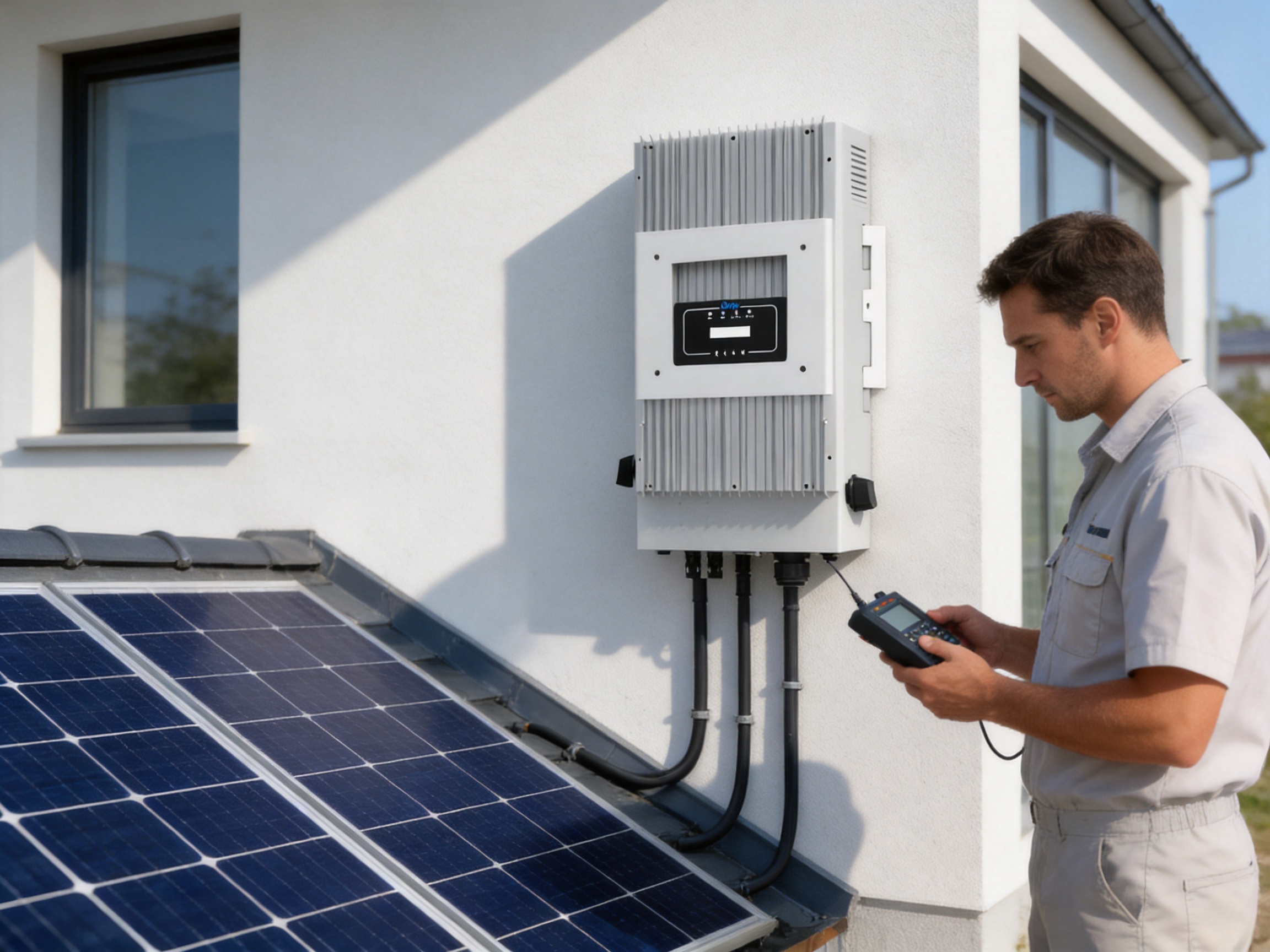
The two MPPT trackers enable the inverter to manage two separate PV input zones. This is especially important for rooftops with different orientations, partial shading, mixed string layouts, or uneven module exposure. In many real installations, one roof plane may face east while another faces west, or one string may be affected by a chimney, antenna, parapet, nearby tree, or seasonal shadow. With two MPPTs, each input can track its own optimal operating point, reducing mismatch losses and improving daily energy yield compared with a single-MPPT design in similar conditions.
The maximum PV input voltage of 1100 V supports efficient string design and helps reduce DC current and cable losses. A higher voltage ceiling can offer more configuration freedom when selecting module counts per string, particularly as modern PV modules continue to increase in wattage and voltage. The MPPT voltage range of 120–1000 V further supports flexible operation over changing weather and irradiance conditions. The inverter starts at 140 V, allowing operation to begin when sufficient sunlight becomes available and continuing through a broad operating envelope during the day.
Core Technical Strengths
The most visible performance indicator is efficiency. This inverter series reaches maximum efficiency up to 98.5%, with Euro efficiency up to 98.0% depending on the model. High efficiency directly affects project economics. Even a small difference in conversion efficiency can become meaningful over years of operation, particularly in markets with high electricity prices, net billing structures, self-consumption incentives, or commercial demand management strategies. Less energy lost during conversion means more usable AC power from the same PV array.
MPPT efficiency above 99% is equally important because energy harvest depends not only on peak conversion efficiency but also on how accurately and rapidly the inverter tracks the maximum power point of the modules. Irradiance changes constantly due to clouds, temperature shifts, and seasonal sun angles. An advanced MPPT algorithm helps the system adapt and maintain strong output. This becomes especially valuable in partially shaded or multi-orientation installations where operating conditions are not uniform.
The series supports maximum PV input power from 4.5 kW on the 3 kW model up to 22.5 kW on the 15 kW model. This allows practical DC oversizing, a common design strategy in solar systems. Because PV modules rarely operate at their rated output under real-world conditions for long periods, moderate oversizing can improve energy production during mornings, evenings, cloudy periods, and winter months. The inverter can therefore produce more energy across the day and year, improving utilization of the AC capacity.
On the AC side, the product provides rated active output from 3 kW to 15 kW and maximum apparent power from 3.3 kVA to 16.5 kVA. Its rated output voltage supports 220/380 V and 230/400 V three-phase systems with a range from 0.85 Un to 1.1 Un. The grid connection form is 3L/N/PE, and the rated grid frequency supports 50 Hz and 60 Hz networks with applicable operating ranges. This broad compatibility helps the inverter adapt to diverse grid environments and regional requirements.
The power factor adjustment range from 0.8 leading to 0.8 lagging enables reactive power management. For commercial and grid-connected applications, reactive power capability can be important for grid compliance, voltage support, and power quality management. Total current harmonic distortion below 3% and DC injection current below 0.5% of rated current further support stable grid interaction. These characteristics help the inverter perform as a responsible grid-connected power electronics device rather than merely a passive generator.
Technical Specification Overview
| Feature | Specification or Capability | Practical Benefit |
| Power Range | 3 kW to 15 kW three-phase models | Covers residential, commercial, and light industrial PV projects with one platform |
| MPPT Design | 2 MPP trackers | Improves energy harvest on multi-orientation or partially shaded roofs |
| Maximum Efficiency | Up to 98.5% | Reduces conversion loss and improves lifetime energy yield |
| MPPT Voltage Range | 120 V to 1000 V | Supports flexible string design and stable operation across changing conditions |
| Maximum PV Input Voltage | 1100 V | Enables efficient high-voltage string configuration |
| Grid Functions | Zero export and VSG application | Supports self-consumption control and advanced grid interaction |
| Protection Level | IP65 | Suitable for indoor and outdoor installation environments |
| Surge Protection | Type II on DC side and Type II on AC side | Improves resilience against electrical surge events |
| Communication | RS485/RS232 with optional GPRS, WiFi, Bluetooth, 4G, or LAN monitoring | Supports remote monitoring, commissioning, and maintenance |
| Cooling Method | Natural cooling | Reduces noise and mechanical wear associated with fans |
| Operating Temperature | -25 degrees Celsius to +60 degrees Celsius, with derating above 45 degrees Celsius | Supports operation in diverse climates |
| Warranty | 5 years | Provides standard product assurance for project owners |
Advantages Over Competing Solutions
When comparing three-phase string inverters, buyers often evaluate price, efficiency, warranty, brand reputation, monitoring quality, safety protections, grid certification, and installation convenience. This inverter series competes strongly because it does not rely on a single headline feature. Instead, it offers a balanced combination of high efficiency, wide voltage adaptability, intelligent monitoring options, practical protection functions, compact dimensions, quiet operation, and extensive compliance with grid and safety standards.
One advantage over many entry-level competing inverters is the broad model range. Some manufacturers offer limited power steps, forcing designers to oversize or undersize the inverter relative to the PV array and customer demand. The 3–15 kW ladder gives designers more precise selection. A small three-phase residential site may use a 3 kW or 5 kW unit, while a larger commercial rooftop may use 12 kW or 15 kW units. Multiple units can also be deployed in parallel across larger distributed projects, preserving modularity and simplifying maintenance.
Another advantage is the combination of high maximum efficiency and strong Euro efficiency. Maximum efficiency indicates peak technical performance, while Euro efficiency reflects weighted performance across operating points. A product with high peak efficiency but weaker partial-load performance may not deliver the best real-world yield. This series performs well in both areas, which is important because PV systems spend much of their operating time below peak irradiance. Morning, afternoon, cloudy, and cool-season operation all contribute significantly to annual energy generation.
The 1100 V maximum PV input voltage also strengthens system design flexibility. Competitors with lower input voltage limits may require shorter strings, more combiner complexity, or less optimal cable layouts. Higher voltage capability can reduce current for a given power level, which may reduce conductor losses and improve design efficiency. In regions where module sizes and electrical characteristics are advancing quickly, having a high voltage ceiling helps protect system design relevance.
Zero export application is an important differentiator for markets where feeding electricity into the grid is restricted, poorly compensated, or administratively complicated. In a zero export setup, the inverter can be configured with suitable monitoring and control equipment to limit export power and prioritize local consumption. This is valuable for factories, offices, warehouses, farms, and residential sites that want solar savings without violating utility interconnection rules. Competing products without robust zero export capability may be less suitable in such markets.
The VSG application is another forward-looking feature. As solar penetration grows, grids increasingly need inverter-based generation to behave in ways that support grid stability. Virtual synchronous generator functionality is associated with improved grid support behavior, helping inverter systems better interact with power networks traditionally dominated by rotating machines. For installers and developers, choosing equipment with advanced grid-support capabilities can help prepare projects for evolving utility requirements.
Optional string intelligent monitoring provides another advantage. In many PV systems, performance issues do not always appear as complete failures. A connector problem, shading change, module degradation, soiling pattern, or wiring issue may reduce one string’s output while the rest of the system continues operating. Intelligent string monitoring can help identify underperforming strings and support targeted maintenance. This reduces troubleshooting time and can improve long-term energy yield.
The optional anti-PID function further supports long-term module health. Potential induced degradation can reduce module output in certain high-voltage PV systems under specific environmental and electrical conditions. By offering anti-PID functionality as an option, the inverter series gives system designers an additional tool for projects where PID risk is a concern. This can be particularly relevant in humid climates, high-voltage string designs, and installations using module types sensitive to PID.
Safety and Protection Architecture
Safety is a central requirement for any grid-connected inverter. This series includes a wide range of equipment protection functions: DC reverse polarity protection, AC output overcurrent protection, AC output overvoltage protection, AC output short circuit protection, thermal protection, insulation impedance detection, DC component monitoring, anti-islanding protection, residual current detection, surge protection, and an integrated DC switch. These protections help reduce risk during installation, operation, abnormal grid conditions, and maintenance.
DC reverse polarity protection is important because PV strings are connected in the field, often under challenging roof or outdoor conditions. If polarity is accidentally reversed, protection helps prevent damage and improves installation robustness. AC output overcurrent, overvoltage, and short circuit protection are essential for safe grid connection. Thermal protection helps the inverter respond when internal or ambient temperatures exceed normal operating conditions. Because the product uses natural cooling and is rated for operation from -25 degrees Celsius to +60 degrees Celsius, thermal design and protection are both critical to reliable performance.
Insulation impedance detection helps monitor the electrical isolation condition of the PV array and wiring. This is important for detecting potential ground faults or insulation deterioration. DC component monitoring helps prevent unacceptable DC injection into the AC grid, protecting transformers and grid equipment. Anti-islanding protection ensures that the inverter disconnects when the grid is unavailable, helping protect utility workers and electrical systems. Residual current detection contributes to personal and system safety by detecting leakage current conditions.
The Type II surge protection level on both DC and AC sides is especially valuable for outdoor PV systems exposed to transient electrical events caused by lightning-induced surges or switching disturbances. While no surge protection can guarantee immunity to all events, integrated surge protection improves system resilience and may reduce the need for external protective complexity in some designs, depending on local regulations and site risk assessment.
Optional AFCI, or arc fault circuit interrupter functionality, addresses a growing safety priority in PV systems. DC arcs can occur because of damaged cables, loose connectors, degraded insulation, or installation defects. Arc detection and interruption can reduce fire risk. In markets where AFCI is required or strongly recommended, the optional availability of this function improves product adaptability.
The IP65 ingress protection rating means the inverter is protected against dust ingress and water jets, supporting outdoor installation. Combined with 0–100% permissible ambient humidity and 4000 m permissible altitude, the inverter can serve a wide variety of project environments. Natural cooling also contributes to quiet operation below 45 dB and avoids the maintenance concerns associated with mechanical fans. For residential and noise-sensitive commercial environments, low noise is a meaningful comfort benefit.
Monitoring, Communication, and Digital Operation
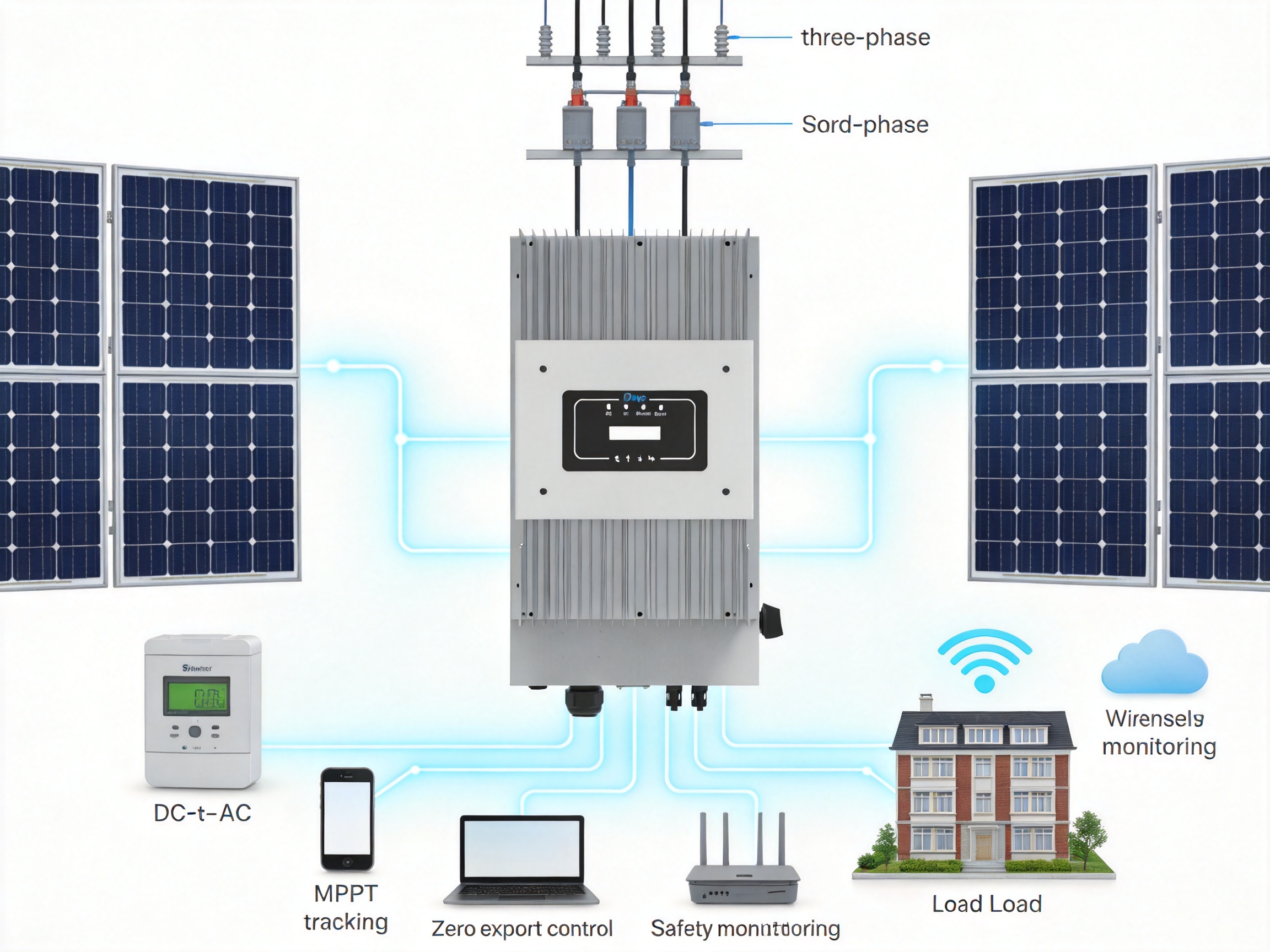
Modern solar assets require visibility. A PV system that cannot be monitored effectively is harder to maintain and optimize. This inverter series provides RS485 and RS232 communication interfaces, with optional monitoring modes including GPRS, WiFi, Bluetooth, 4G, and LAN. This range of options supports different site conditions. A home installation may use WiFi, a commercial rooftop may use LAN, a remote agricultural site may use 4G, and a technician may use Bluetooth during commissioning or local troubleshooting.
Monitoring allows owners and service teams to track generation, identify faults, review operating status, and compare expected production with actual output. For commercial users, monitoring is also important for sustainability reporting, energy cost analysis, and operational planning. If a system underperforms, remote data can shorten the time between issue detection and service response. This improves customer satisfaction and protects project return on investment.
The wider Deye ecosystem includes the Deye Cloud App and an energy IoT platform that supports solar PV and energy storage solutions. Inverter hardware becomes more valuable when it is supported by a strong digital environment. Cloud-based monitoring can connect multiple sites, support fleet management, and enable more efficient after-sales service. For installers, such digital tools can reduce truck rolls and improve service efficiency. For owners, they improve confidence that the system is working as intended.
The availability of optional communication technologies is also a competitive strength because not every market has the same infrastructure. Some locations have stable broadband; others rely on mobile networks. Some installations are managed by professional operators; others are owned by households with basic monitoring needs. A flexible communication architecture allows the same inverter platform to adapt to many user profiles.
Design for Installation and Service
The cabinet size is 283 x 525 x 178 mm, excluding connectors and brackets, and the weight is 11.5 kg. This compact, lightweight design is advantageous for installers who must carry equipment to rooftops, mount units on walls, work in tight electrical rooms, or complete multiple installations per day. A smaller and lighter inverter reduces physical handling difficulty, can shorten installation time, and may reduce mounting complexity.
Natural cooling eliminates the need for fan replacement and reduces audible noise. Fan-based cooling can be effective, but fans introduce moving parts that may wear out in dusty, humid, salty, or hot environments. A naturally cooled inverter can therefore offer maintenance advantages, especially in locations where service access is difficult. The non-isolated topology contributes to efficiency and compactness, while protection systems and compliance standards support safe deployment.
The integrated DC switch provides practical convenience and safety during commissioning or maintenance. Installers can isolate the DC side without relying entirely on external disconnection equipment, although final system design must always comply with local electrical codes. Clear grid compatibility, broad voltage range, and communications options also help reduce commissioning challenges.
Because the series covers multiple power levels with common characteristics, training becomes easier. Installers who understand one model can apply much of that knowledge to the rest of the range. This matters for solar companies scaling operations. Product consistency reduces the likelihood of errors, simplifies documentation, and improves service efficiency. Compared with competitors that use different platforms for every power class, a unified series can lower operational burden.
Manufacturing Strength and Company Capabilities
Ningbo Deye Inverter Technology Co., Ltd. is part of a broader technology manufacturing enterprise founded in 2000, with capabilities that include research and development, design, production, sales, and service. The company is associated with a broad portfolio spanning solar inverters, energy storage systems, and environmental appliances. Its listing on the Shanghai Stock Exchange in April 2021 marked an important stage of accelerated development and strengthened its ability to expand manufacturing capacity, quality systems, and international market support.
The company’s inverter and energy storage businesses have developed strong R&D capabilities and scale advantages. This is important because inverter performance depends on many disciplines working together: power electronics, thermal engineering, embedded software, grid compliance, mechanical design, electromagnetic compatibility, reliability testing, manufacturing process control, and after-sales data analysis. A manufacturer with integrated R&D and production can respond more quickly to market requirements and improve product design based on field experience.
Deye’s core inverter product line includes 1 kW to 136 kW string inverters, 3 kW to 80 kW energy storage inverters, and 300 W to 2.2 kW microinverters. This broad product range demonstrates a deep involvement in multiple PV architectures. The company also offers residential all-in-one energy storage solutions, commercial and industrial battery cabinets, modular energy storage systems, PV-battery-EV charging integrated solutions, and utility-scale liquid-cooled energy storage systems. This broader ecosystem strengthens the value of each inverter product because customers increasingly want complete energy solutions rather than isolated equipment.
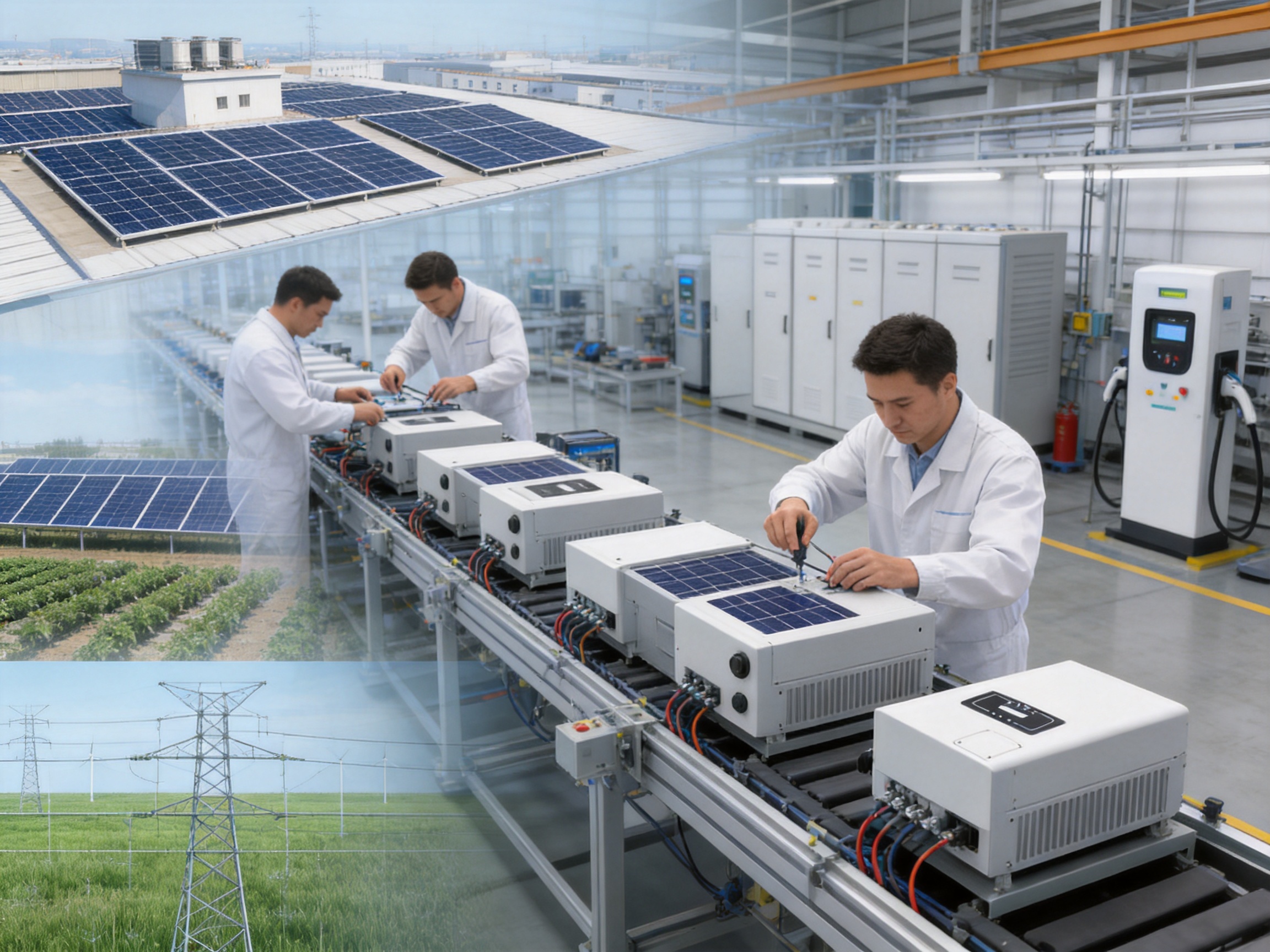
Advanced manufacturing strength is reflected not only in production volume but also in process discipline. Inverter manufacturing requires accurate component selection, automated assembly where appropriate, controlled soldering and connection processes, firmware programming, electrical safety testing, burn-in or reliability screening procedures, final inspection, and packaging validation. Quality must be built into every stage because inverters operate outdoors for years, often under heat, humidity, voltage stress, and grid disturbances.
Manufacturers with mature production systems can better maintain consistency across batches. This matters for solar developers and distributors who may purchase hundreds or thousands of units. Consistent mechanical dimensions, electrical behavior, firmware management, labeling, communication compatibility, and documentation reduce project risk. A strong factory process also supports traceability. If a field issue occurs, traceability helps identify production records, component lots, test data, and corrective actions.
The company’s global presence, with products sold in more than 140 countries and regions, demonstrates experience with diverse grid codes, climates, installation practices, and customer expectations. A manufacturer serving only one market may optimize products narrowly. A manufacturer serving global markets must design for broader voltage conditions, frequency requirements, certification regimes, communication needs, and environmental stresses. This global experience is a competitive advantage for the SUN-3/4/5/6/7/8/9/10/12/15K-G06P3-EU-BM2 series.
Compliance and Grid Adaptability
The inverter series references grid regulations and standards including IEC 61727, IEC 62116, CEI 0-21, EN 50549, NRS 097, RD 140, UNE 217002, OVE-Richtlinie R25, G98, G99, and VDE-AR-N 4105. Safety and EMC standards include IEC/EN 61000-6-1/2/3/4, IEC/EN 62109-1, and IEC/EN 62109-2. These standards are important because grid-connected inverters must operate safely and predictably in public electrical networks.
IEC 61727 relates to the characteristics of utility interfaces for photovoltaic systems, while IEC 62116 addresses anti-islanding test procedures. EN 50549 and national grid codes support compliance for connection to distribution networks in European and other markets. G98 and G99 are relevant for the United Kingdom, while VDE-AR-N 4105 is widely recognized in Germany. The presence of multiple listed standards indicates that the product family is designed for international deployment rather than a single isolated market.
For installers and distributors, compliance breadth reduces the burden of product qualification. It can shorten the path to market entry and support customer confidence. For project owners, compliance means the inverter is more likely to meet utility requirements and pass inspection. Grid codes continue to evolve as renewable energy penetration rises, so selecting an inverter from a manufacturer with active certification capabilities is a practical risk-reduction strategy.
Power factor adjustment, harmonic control, DC injection limitation, anti-islanding protection, and voltage/frequency operating ranges all contribute to grid adaptability. These are not merely technical details; they influence whether a PV system can be connected smoothly and operate without causing disturbances. In competitive markets, strong compliance and grid behavior can be as important as price.
Energy Yield and Financial Performance
The economics of a solar PV system depend on installed cost, electricity tariff, solar resource, system availability, degradation, maintenance cost, and inverter efficiency. While modules convert sunlight to DC power, the inverter determines how much of that power becomes usable AC energy. With maximum efficiency up to 98.5%, Euro efficiency up to 98.0%, and MPPT efficiency above 99%, this inverter series supports strong lifetime yield.
DC oversizing capability can improve project economics. For example, the 10 kW model supports maximum PV input power of 15 kW, and the 15 kW model supports maximum PV input power of 22.5 kW. This ratio allows system designers to increase module capacity where appropriate, making better use of inverter capacity during less-than-ideal irradiance. While clipping may occur during peak sunlight, annual energy production can still increase significantly because the inverter reaches useful output earlier in the morning and maintains it later in the afternoon.
The two MPPT design also protects financial performance on complex roofs. A single-MPPT inverter may force strings with different orientations or shading conditions to operate at a compromise point, reducing yield. Independent MPPT channels reduce this mismatch. For building owners who want maximum use of available roof space, this flexibility is valuable. It can make solar viable on roofs that are not perfectly uniform.
Reliability also affects financial return. A high-efficiency inverter that fails often is not economical. The protection features, natural cooling, IP65 rating, and extensive operating range contribute to uptime. Monitoring options help detect problems quickly. Optional string monitoring and anti-PID support long-term performance. Together, these features help protect the investment over years of operation.
Use Cases
Three-Phase Residential Solar
In homes with three-phase electrical service, a 3 kW to 10 kW model can provide balanced grid-connected solar generation. The quiet natural cooling, compact size, and IP65 rating make the inverter suitable for installation in garages, utility areas, exterior walls, or sheltered outdoor locations. Zero export control can be helpful where households are not permitted to export electricity or where self-consumption is the primary goal.
Small Commercial Rooftops
Shops, offices, schools, restaurants, clinics, and small warehouses can benefit from the 8 kW to 15 kW models. These users often consume electricity during daylight hours, matching solar production well. Monitoring helps facility managers track savings and detect issues. Power factor capability and grid compliance support responsible interconnection.
Agricultural and Rural Installations
Farms and rural businesses may have three-phase loads such as pumps, refrigeration, processing equipment, and ventilation systems. The inverter’s broad operating temperature range, IP65 rating, and optional mobile communication modes make it suitable for locations where environmental conditions vary and wired internet may not be available.
Distributed Multi-Inverter Projects
For larger sites, multiple units from the same series can be deployed across different roof zones or buildings. This distributed approach can reduce DC cable lengths, improve design modularity, and simplify service. If one inverter requires maintenance, the rest of the system can continue operating, which can improve overall availability compared with a single large inverter architecture.
Why the Product Is Well Suited to Modern Solar Markets
Solar markets are changing. In the early stages of PV adoption, the main objective was often simple energy generation. Today, users expect intelligent control, grid compliance, safety, digital visibility, compatibility with energy storage, and readiness for evolving regulations. This inverter series aligns with those expectations by combining efficient power conversion with smart functions and system-level adaptability.
The zero export function reflects the growing importance of self-consumption. Many markets are moving away from generous feed-in tariffs and toward energy savings behind the meter. An inverter that can support zero export helps users maximize on-site use and avoid policy complications. The VSG application reflects the grid’s need for more sophisticated inverter behavior as renewable penetration increases.
Monitoring flexibility reflects the digitization of energy assets. Solar owners increasingly want to view energy data on apps, service teams want remote diagnostics, and commercial users want performance records. A product that supports multiple communication channels can meet these expectations across different project types.
The product’s combination of compact design and high efficiency is also important. Rooftop space, wall space, and installation labor are all valuable. A lighter inverter with natural cooling helps reduce installation friction. High efficiency reduces heat generation and contributes to long-term performance. IP65 protection and wide temperature tolerance support deployment in varied climates.
Company Service and Global Solution Capability
Deye positions itself as a one-stop provider of solar PV and energy storage solutions. This is relevant because the inverter market is moving toward integrated energy systems. Customers who begin with a grid-tied solar inverter may later consider battery storage, EV charging, or energy management upgrades. A manufacturer with broad solution capability can provide a more coherent pathway for future expansion.
The company’s portfolio includes hybrid inverters, microinverters, string inverters, off-grid inverters, modular commercial and industrial energy storage systems, micro hybrid energy storage systems, EV chargers, PV optimizers, accessories, and monitoring solutions. This breadth allows different technologies to be combined according to project requirements. For example, a commercial site may begin with string inverters and later add energy storage or EV charging. A residential customer may choose a hybrid energy storage system in another project. The manufacturer’s wider ecosystem can support consistent service and technical knowledge.
Global sales in more than 140 countries and regions indicate extensive experience with localization. Different countries have different languages, installation practices, electrical standards, warranty expectations, and certification requirements. A company operating globally must build technical documentation, training, logistics, and service processes to support these differences. That background strengthens confidence in the product family.
The company’s long history since 2000 also matters. Solar technology evolves quickly, but manufacturing maturity is built over time. Long-term operation in technology manufacturing supports process refinement, supply chain development, engineering knowledge, and quality culture. For customers choosing an inverter expected to operate for many years, manufacturer stability and technical depth are important factors.
Detailed Model Range Perspective
The series includes ten power ratings. The 3 kW model has maximum PV input power of 4.5 kW, while the 4 kW model supports 6 kW, the 5 kW model supports 7.5 kW, the 6 kW model supports 9 kW, the 7 kW model supports 10.5 kW, the 8 kW model supports 12 kW, the 9 kW model supports 13.5 kW, the 10 kW model supports 15 kW, the 12 kW model supports 18 kW, and the 15 kW model supports 22.5 kW. This consistent 1.5 DC-to-AC input power relationship provides clear design logic for installers.
AC output current rises predictably across the product range. This helps electrical designers select breakers, cables, protection equipment, and distribution board capacity. The rated AC output current values are provided for both 220/380 V and 230/400 V systems, supporting accurate planning in markets using either voltage basis. Maximum AC output current values are also clearly defined, supporting protective device coordination.
The maximum operating PV input current is listed as 13 A + 13 A for some models and 13 A + 26 A for higher configurations, with maximum input short circuit current of 19.5 A + 19.5 A or 19.5 A + 39 A. The number of MPP trackers and strings per MPPT is given as 2/1+1 or 2/1+2 depending on configuration. These details matter because modern high-power modules can have higher operating currents than older modules. Designers must match module current characteristics to inverter input limits.
The inverter topology is non-isolated, a common approach for high-efficiency grid-tied inverters. Overvoltage category is OVC II on the DC side and OVC III on the AC side. These specifications are part of the safety and insulation design framework. The warranty is 5 years, which provides a standard assurance period, while long-term performance is supported by the product’s protection features, cooling method, and manufacturing quality.
Practical Selection Guidance
When choosing a model from this series, the first step is to estimate the PV array size, site consumption, grid connection capacity, local export rules, and roof layout. The inverter rated AC output should match the permitted grid connection and the customer’s energy goals. The maximum PV input power should be used to determine safe and effective DC oversizing. Designers should also confirm string voltage at both low and high temperature extremes to remain within the 1100 V maximum input voltage and 120–1000 V MPPT range.
Next, the number of roof planes and shading conditions should be reviewed. If the site has two main orientations, the two MPPT design is highly useful. If one input has more strings than the other, designers should verify current limits and string configuration. For projects where shading is more complex, optional string intelligent monitoring or module-level optimization may be considered as part of a broader system design.
Export rules should be considered early. If the local utility restricts export, zero export configuration should be planned with appropriate metering and control accessories. Communication method should also be selected during design. WiFi may be simple for homes, LAN may be more reliable for commercial buildings, and 4G may be suitable for remote sites. Monitoring is not an afterthought; it is part of long-term system performance management.
Environmental conditions should also guide installation. Although the inverter is rated IP65, good installation practice remains important. It should be mounted in a location that supports ventilation, avoids unnecessary direct heat exposure where possible, and allows service access. The operating temperature range is broad, but output derating above 45 degrees Celsius should be considered in hot climates. Proper spacing and mounting orientation help preserve performance.
Frequently Asked Questions
What type of solar system is this inverter series designed for?
It is designed for three-phase grid-tied solar photovoltaic systems. It is suitable for residential three-phase properties, small commercial rooftops, agricultural facilities, public buildings, and distributed PV projects in the 3 kW to 15 kW range.
What is the main benefit of having two MPPT trackers?
Two MPPT trackers allow the inverter to manage two PV input groups independently. This improves energy harvest when strings face different directions, have different tilt angles, or experience different shading conditions.
How efficient is the inverter?
The series reaches maximum efficiency up to 98.5%, Euro efficiency up to 98.0%, and MPPT efficiency above 99%. These values support strong energy yield and reduced conversion losses.
Does the inverter support zero export?
Yes. The series supports zero export application, which is useful where users want to maximize self-consumption or comply with utility rules that limit power export to the grid.
What does VSG application mean for users?
VSG refers to virtual synchronous generator functionality, which supports more advanced grid interaction. It can help inverter-based generation behave in a way that contributes to grid stability as renewable energy penetration increases.
Can the inverter be installed outdoors?
Yes. The inverter has an IP65 ingress protection rating, allowing indoor or outdoor installation when installed according to applicable instructions and electrical codes.
What monitoring options are available?
The inverter provides RS485 and RS232 communication interfaces and supports optional monitoring modes including GPRS, WiFi, Bluetooth, 4G, and LAN. This allows flexible monitoring according to site requirements.
Is the inverter noisy?
No. It uses natural cooling and has a noise level below 45 dB, making it suitable for residential and noise-sensitive locations.
What safety protections are included?
The inverter includes DC reverse polarity protection, AC overcurrent protection, AC overvoltage protection, AC short circuit protection, thermal protection, insulation impedance detection, DC component monitoring, anti-islanding protection, residual current detection, surge protection, and a DC switch. AFCI is optional.
What is the warranty period?
The standard warranty listed for the series is 5 years.
Conclusion
The SUN-3/4/5/6/7/8/9/10/12/15K-G06P3-EU-BM2 three-phase string inverter series is a strong solution for modern distributed solar applications. It combines a broad 3–15 kW model range, two MPPT trackers, maximum efficiency up to 98.5%, 1100 V maximum PV input voltage, wide MPPT operating range, zero export capability, VSG application, optional intelligent string monitoring, optional anti-PID function, robust protection architecture, and flexible communication options.
Its advantages over competing products come from balance rather than from a single isolated feature. The inverter is efficient, adaptable, compact, quiet, safe, digitally connected, and suitable for diverse grid environments. For installers, it offers platform consistency and practical installation benefits. For system owners, it supports energy yield, monitoring visibility, safety, and long-term value. For distributors and developers, it is backed by a manufacturer with broad R&D capability, global market experience, advanced manufacturing strength, and a comprehensive energy solution portfolio.
As solar power continues to expand into homes, businesses, farms, public facilities, and integrated energy systems, inverter selection becomes increasingly strategic. A well-designed three-phase string inverter must not only convert power efficiently but also support grid rules, data management, safety, installation practicality, and future energy flexibility. This product series meets those requirements and stands as a dependable choice for high-performance solar PV projects in the 3 kW to 15 kW class.
References
Product datasheet for SUN-3/4/5/6/7/8/9/10/12/15K-G06P3-EU-BM2 three-phase string inverter series.
Installation and instruction documentation for SUN-3/4/5/6/7/8/9/10/12K-G06P3-EU-BM2 inverter series.
IEC 61727, Photovoltaic systems: Characteristics of the utility interface.
IEC 62116, Utility-interconnected photovoltaic inverters: Test procedure of islanding prevention measures.
IEC/EN 62109-1 and IEC/EN 62109-2, Safety of power converters for use in photovoltaic power systems.
IEC/EN 61000-6 series, Electromagnetic compatibility standards for residential, commercial, and industrial environments.
EN 50549, Requirements for generating plants to be connected in parallel with distribution networks.
VDE-AR-N 4105, Power generation systems connected to the low-voltage distribution network.
Product: SUN-3/4/5/6/7/8/9/10/12/15K-G06P3-EU-BM2
PREV:High-Efficiency Module-Level PV Optimizer for Safer, Smarter Solar Arrays
NEXT:No next article
Share
Product recommendations
news recommendations
-
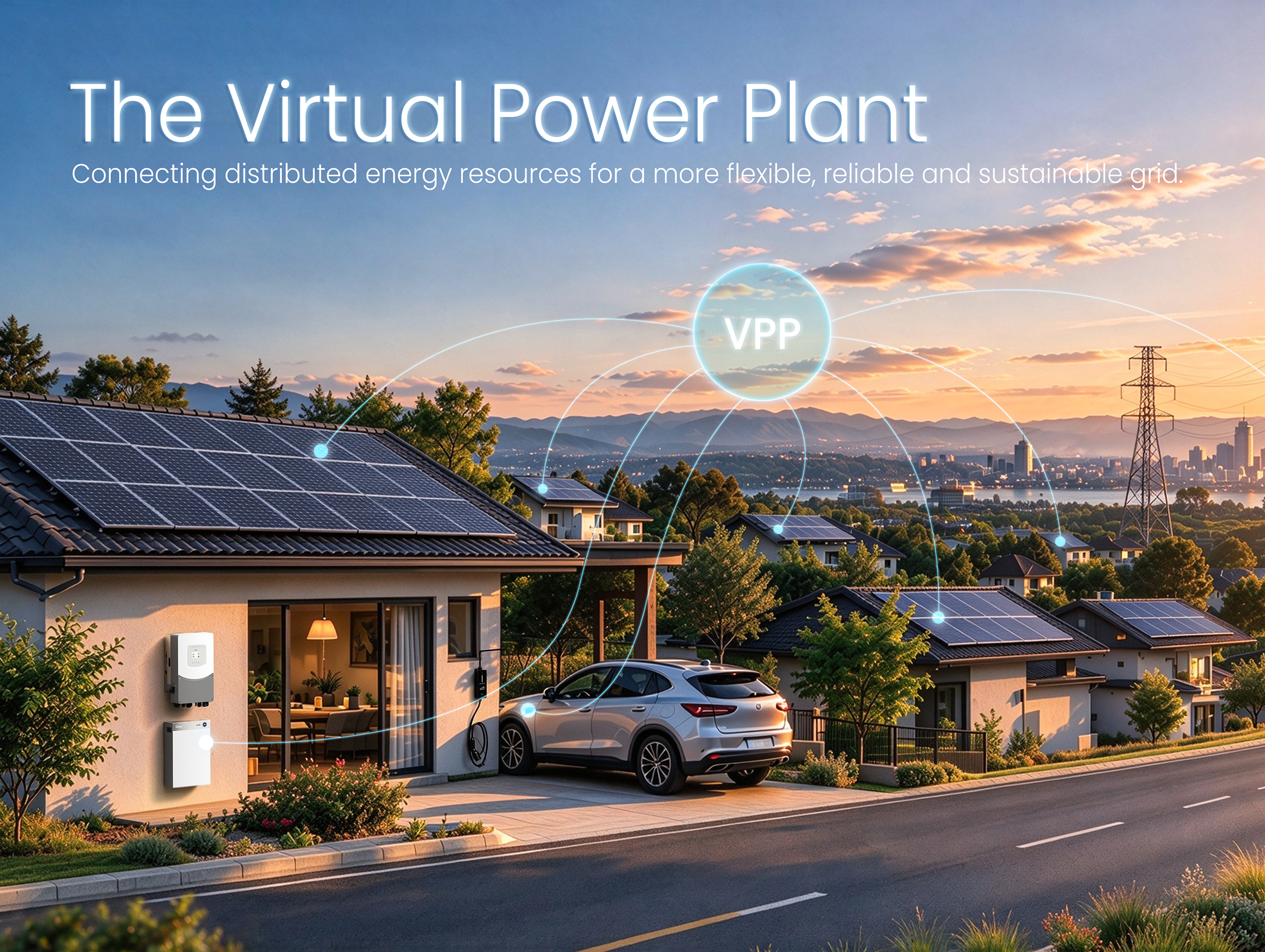 From Centralized Grids to Virtual Power Plants: The Next Evolution of the Power System
For more than a century, power systems around the world have relied on a centralized model. Large p...
-
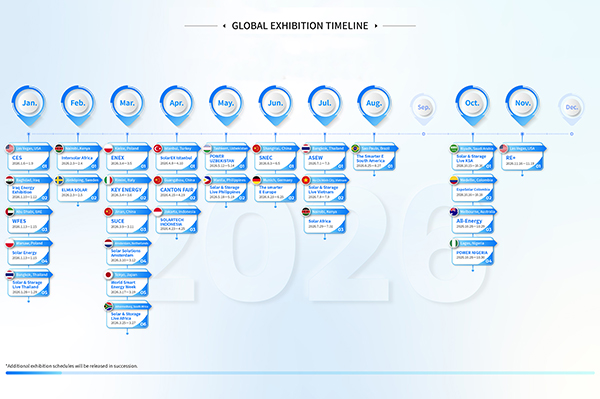 GLOBAL EXHIBITION TIMELINE
*Click to view larger image
-
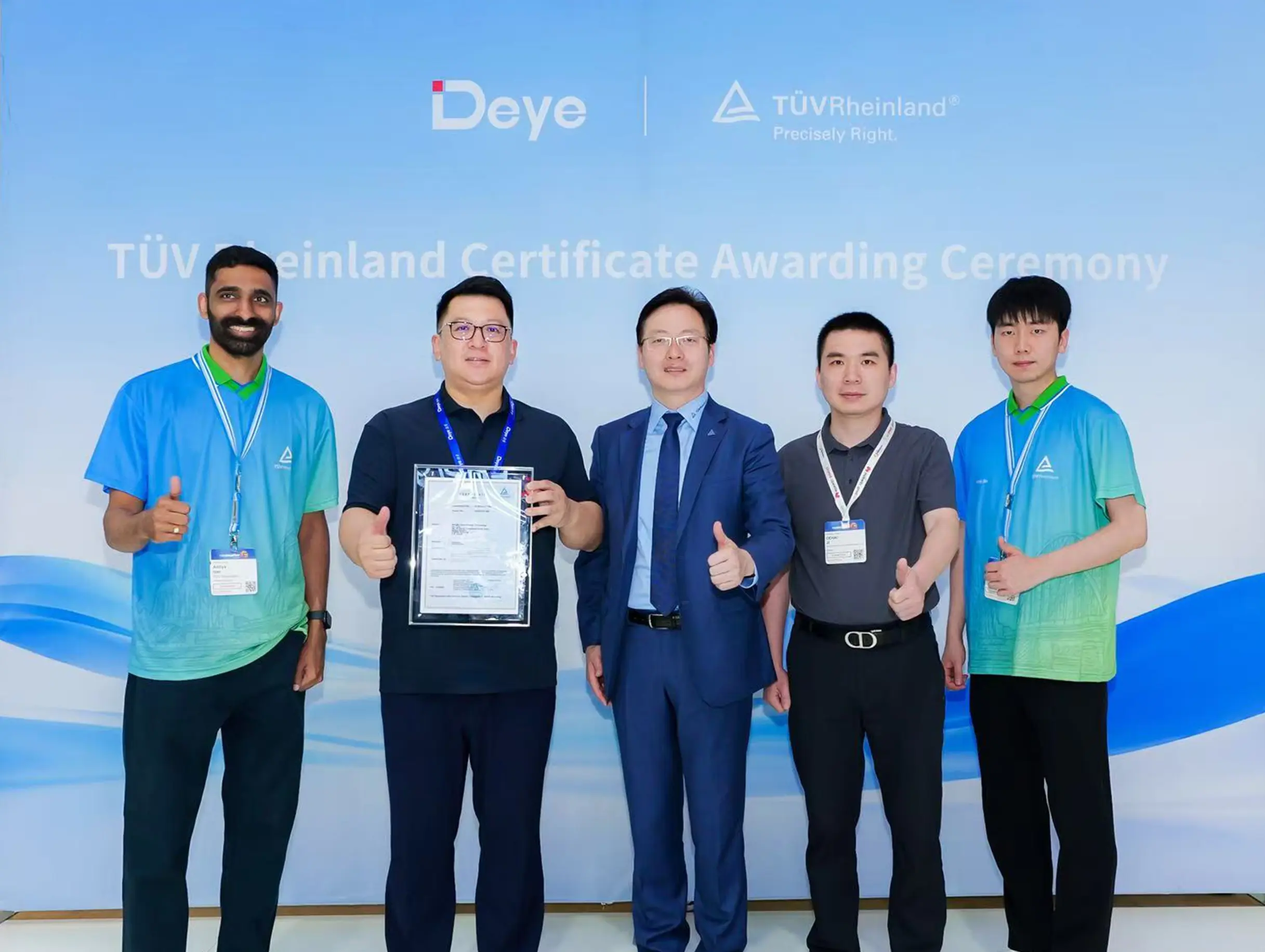 Deye Secures Multiple TÜV Rheinland Certifications at The smarter E Europe
On June 23, the opening day of The smarter E Europe 2026, Deye was officially awarded several presti...

Copyright@ 2024.Ningbo Deye Inverter Technology Co.,Ltd. All rights reserved. Solar Inverter Manufacturer
