
 Online Shop
 English
 China - 简体中文
 Global - English
 Brazil - Português
 Netherlands - Dutch
 Italy - Italiano
 Germany - Deutsch
 Spain - Español
 France - Français
 Vietnam - Tiếng Việt
 Poland - Polski
 Australia - English
 Japan - 日本語
Bai Shuying — After-Sales Support Supervisor, Solar Inverter Products

Smart Solar-Integrated EV Charging for Homes and Energy-Savvy Businesses
Electric mobility is no longer a future concept; it is a daily reality for households, businesses, and communities that want cleaner transport and lower operating costs. As electric vehicles become more common, the quality of the charging infrastructure becomes just as important as the vehicle itself. A charger is no longer simply a wall-mounted device that transfers power from the grid to a battery. It is becoming an intelligent energy gateway that decides when to charge, how much power to use, how to coordinate with solar generation, and how to reduce electricity costs without compromising safety or convenience.
The Smart EV Charger presented by Ningbo Deye Inverter Technology Co., Ltd. is designed for this new energy environment. It connects directly to the AC port of a compatible inverter and communicates with the inverter through LoRa technology. This architecture enables the charger to work as part of an integrated solar and energy management system rather than as an isolated load. Users can choose flexible operating modes such as plug-and-charge use, scheduled charging, and solar-energy-only charging. These functions help maximize the use of self-generated solar power and minimize reliance on higher-cost grid electricity.
With support for 7 kW, 11 kW, and 22 kW charging, single-phase and three-phase power options, IP66 outdoor protection, DC 6 mA fault detection, Type B leakage protection, real-time monitoring through Deye Cloud, and LoRa, Wi-Fi, and BLE communication, the charger is built for practical installation and long-term use. It addresses the needs of residential EV owners, solar homes, small commercial sites, and PV-BESS-EV charging applications where charging behavior must be coordinated with renewable energy generation.
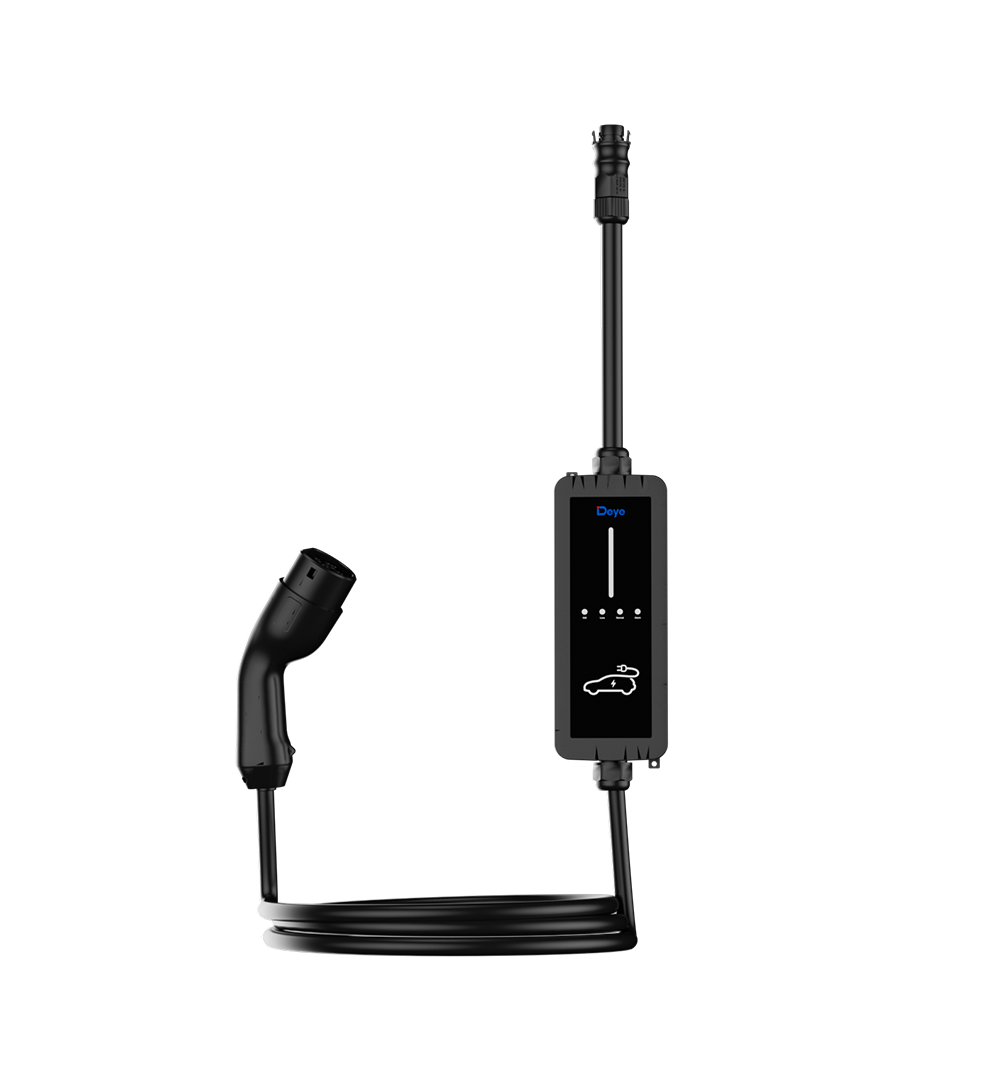
Smart EV Charger
A New Role for the EV Charger in Solar Energy Systems
Traditional EV chargers are often designed around one basic task: delivering AC power to an electric vehicle at a defined current. While this is useful, it does not fully solve the energy challenges faced by users with solar PV systems, hybrid inverters, or time-of-use electricity tariffs. Without intelligent coordination, an EV may charge during peak-rate periods, import unnecessary grid power, or fail to use available solar surplus. In markets where energy prices fluctuate throughout the day, this can significantly reduce the economic benefits of EV ownership.
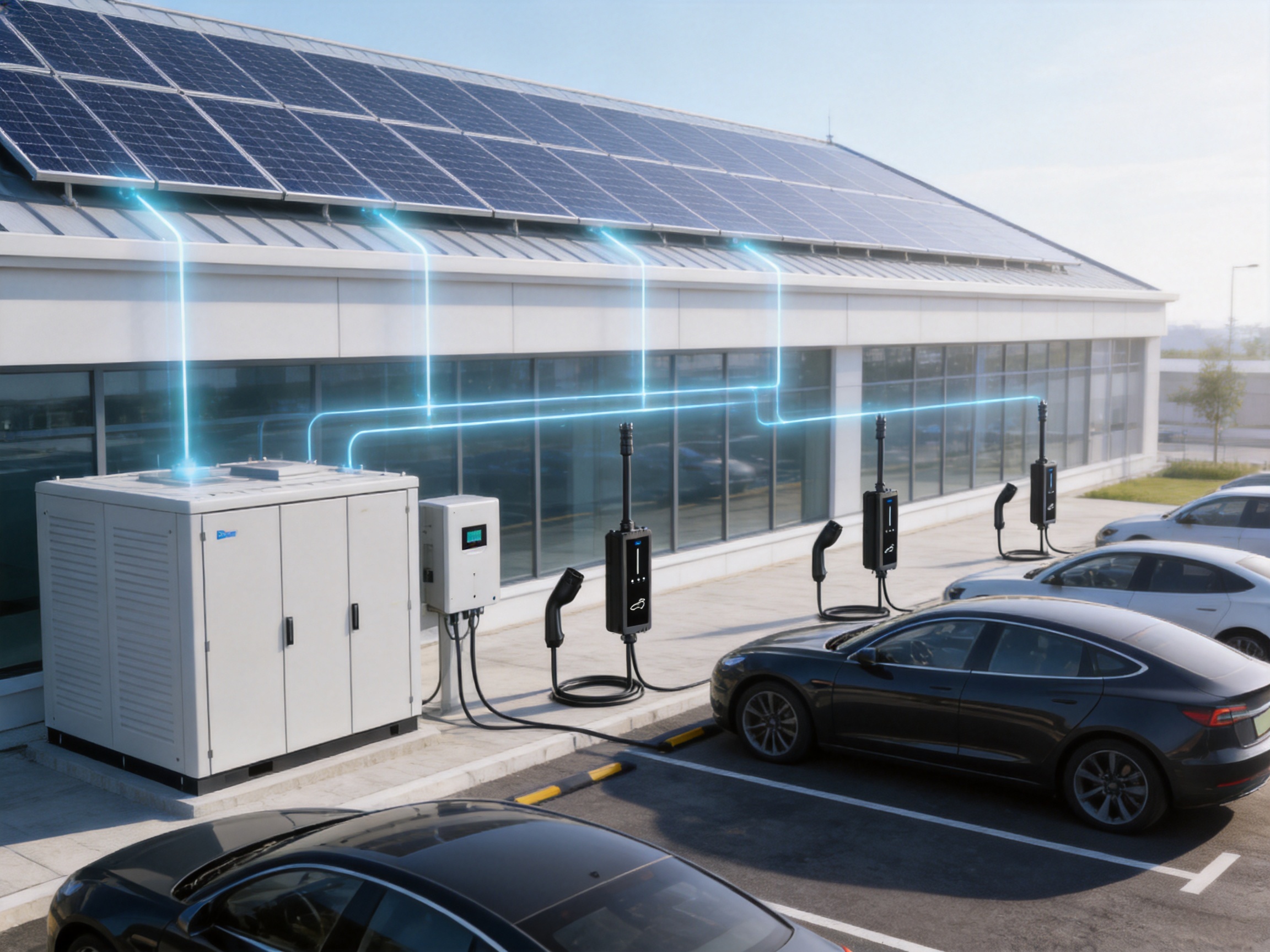
The Smart EV Charger takes a more integrated approach. Because it can be connected to an AC port of the inverter and controlled through inverter communication, it becomes part of the energy ecosystem. The inverter has access to power flow information, solar production status, load behavior, and sometimes battery operation. By enabling charger control within this environment, the system can support charging strategies that are more efficient and cost-conscious.
One important advantage is the solar-energy-only mode. In this mode, the charger can prioritize solar energy instead of drawing unnecessary electricity from the grid. For a user with rooftop PV, this means the electric vehicle can become a practical storage destination for daytime generation. Instead of exporting excess solar energy at a low tariff or curtailing generation, the household can use that energy to charge the car. This improves self-consumption and increases the value of the PV system.
Another important function is scheduled charging. Many regions offer lower electricity prices during off-peak hours. By scheduling charging at night or during specific low-cost windows, users can reduce their charging expense. The combination of scheduled charging and solar-only charging provides flexibility for different seasons and lifestyles. For example, a commuter may rely on solar charging during weekends and scheduled off-peak charging during weekdays.
Core Product Advantages
The charger’s competitive value comes from a combination of safety, communication, flexibility, and environmental durability. These characteristics are essential because EV charging involves sustained high-power operation, often outdoors, and often unattended. A good charger must therefore be safe, reliable, easy to control, and suitable for different electrical environments.
High Safety Standard for Daily Charging
Safety is one of the most important considerations in EV charging. The Smart EV Charger includes Type B leakage protection and DC 6 mA fault protection. DC residual current detection is particularly important in EV charging because electric vehicle power electronics can introduce DC leakage currents. If these currents are not detected properly, they may affect protective devices and increase electrical risk. By integrating DC 6 mA leakage current protection, the charger helps improve user safety and installation confidence.
The product also provides multiple layers of equipment protection, including over-temperature protection, low-temperature protection, over-voltage protection, under-voltage protection, short-circuit protection, overload protection, earth fault protection, and Type II surge protection. These protections are not marketing extras; they are essential for equipment that may operate for many hours at a time and must withstand changing grid and weather conditions.
For outdoor installations, the IP66 rating is a major advantage. It indicates strong protection against dust and powerful water jets, making the charger suitable for exterior walls, carports, driveways, and commercial parking areas. Many lower-grade chargers require more sheltered installation or additional protection, increasing project complexity and cost. A robust enclosure rating helps reduce installation restrictions and supports long-term reliability.
Multi-Power Charging for Different Needs
The charger supports 7 kW, 11 kW, and 22 kW charging configurations. This matters because user requirements vary widely. A typical residential user may be satisfied with single-phase 7 kW charging, while a property with three-phase supply may prefer 11 kW or 22 kW to reduce charging time. Small commercial sites may need faster turnaround for vehicles and may therefore benefit from 22 kW three-phase capability.
The SUN-EVSE11K01-EU-AC model offers 11 kW maximum output power with a 3L+N+PE connection mode. The SUN-EVSE22K01-EU-AC model offers 7 kW in single-phase operation and 22 kW in three-phase operation, with support for L+N+PE and 3L+N+PE connection modes. This range allows installers to select a suitable model according to local electrical supply conditions, user requirements, and project scale.
Smart Charging Modes
Charging behavior has a direct effect on energy cost. The Smart EV Charger supports plug-and-charge use for simple daily convenience and scheduled charging for planned energy management. It also supports solar-focused charging strategies when used as part of a compatible solar inverter system. This combination gives users a practical balance between simplicity and intelligence.
Plug-and-charge operation is ideal when the user wants immediate charging without complex settings. Scheduled charging is useful when electricity prices are lower at certain times. Solar-only charging helps maximize renewable energy utilization. Together, these modes make the charger suitable for different energy habits and different tariff structures.
Real-Time Monitoring and Control
The charger supports real-time power monitoring and control through Deye Cloud. This is particularly valuable because EV charging is one of the largest controllable loads in many homes. A vehicle charging at 7 kW, 11 kW, or 22 kW can represent a substantial portion of household or site demand. Visibility into charging power helps users understand consumption, manage energy cost, and make better decisions about solar usage.
Cloud-based monitoring also improves user experience. Instead of treating charging as a hidden background process, the user can view and control charging activity. For installers and service teams, digital monitoring can also simplify troubleshooting and system verification.
LoRa Communication for Low Latency and Long Range
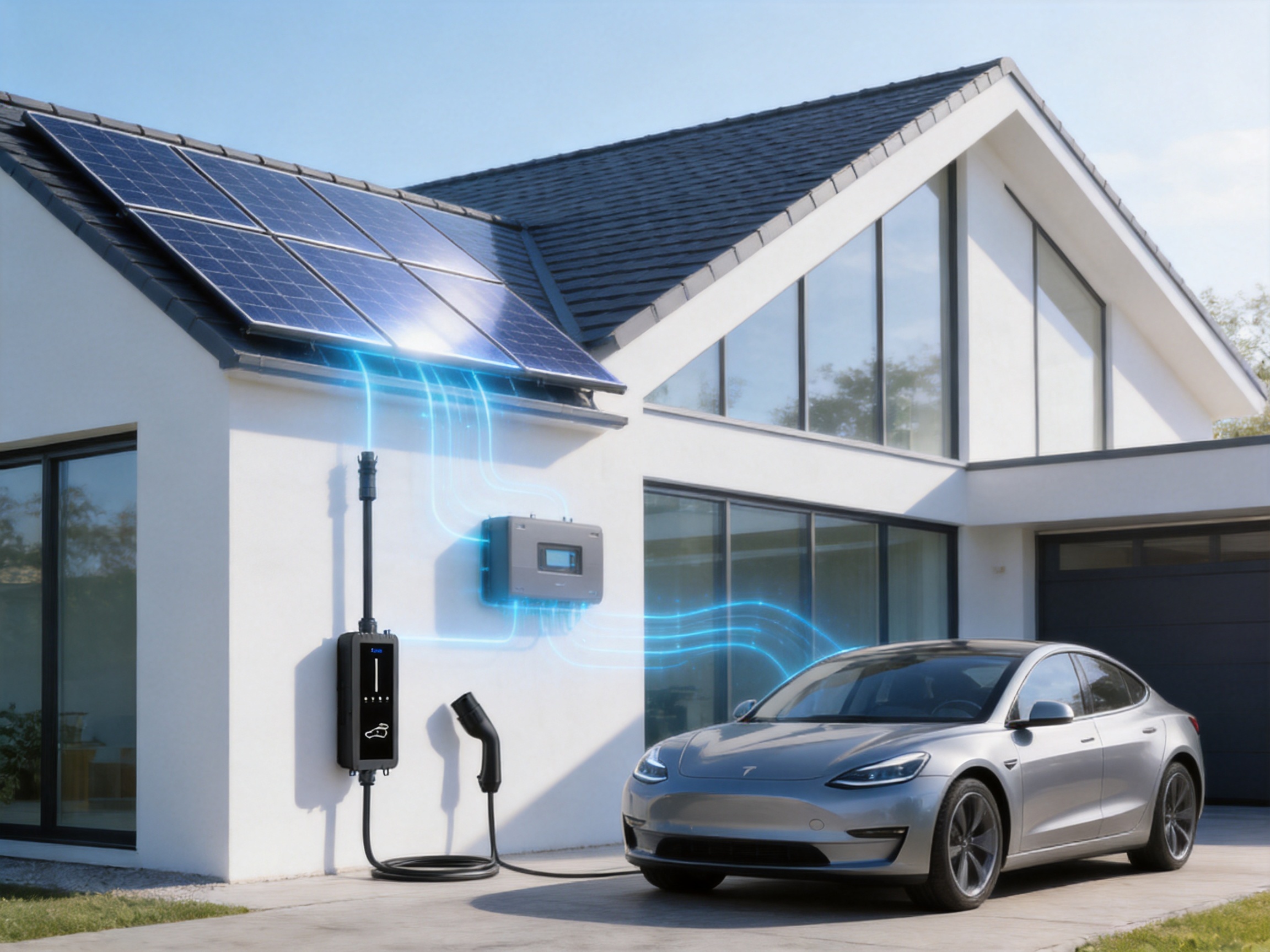
One of the distinctive advantages of the charger is LoRa communication with the inverter. LoRa is known for long-range, low-power communication and robust performance in challenging environments. In solar and EV charging installations, physical distance and building structure can create communication challenges. A charger may be installed in a garage, outside wall, parking area, or carport, while the inverter may be located elsewhere. Long-range communication helps maintain system coordination without requiring complicated wiring.
The product information also highlights low latency and offline operation. Low latency is important when the charger must respond to energy management instructions quickly. Offline operation is valuable because essential functions should not depend entirely on internet availability. A charger that can continue operating locally, while also supporting cloud monitoring when available, provides a stronger practical user experience.
Technical Overview
The following table summarizes key product parameters for the two listed models. It is intended to provide a clear view of the charger’s electrical capability, protection functions, general specifications, and communication interface.
| Parameter | SUN-EVSE11K01-EU-AC | SUN-EVSE22K01-EU-AC |
| Input Voltage and Range | 230/400 V | 230 V single phase, 230/400 V three phase |
| Connection Mode | 3L+N+PE | L+N+PE, 3L+N+PE |
| Input Current | 16 A | 32 A |
| Input Frequency and Range | 50 Hz, 45 Hz to 55 Hz; 60 Hz, 55 Hz to 65 Hz | 50 Hz, 45 Hz to 55 Hz; 60 Hz, 55 Hz to 65 Hz |
| Maximum Output Power | 11 kW | 7 kW single phase, 22 kW three phase |
| Starting Method | Plug and Play, Scheduled Charging | Plug and Play, Scheduled Charging |
| Leakage Current Protection | DC 6 mA | DC 6 mA |
| Surge Protection Level | Type II | Type II |
| Operating Temperature Range | -40 degrees Celsius to +55 degrees Celsius | -40 degrees Celsius to +55 degrees Celsius |
| Permissible Ambient Humidity | 5 percent to 95 percent, no condensation | 5 percent to 95 percent, no condensation |
| Permissible Altitude | Less than 3000 m | Less than 3000 m |
| Noise | Less than or equal to 25 dB | Less than or equal to 25 dB |
| Ingress Protection Rating | IP66 | IP66 |
| Cabinet Size | 104 x 264 x 57.5 mm | 104 x 264 x 57.5 mm |
| Weight | 3.7 kg | 3.7 kg |
| Gun Cable Length | 4.2 m | 4.2 m |
| Number of Charging Guns | 1 | 1 |
| MTBF | 100,000 hours | 100,000 hours |
| Communication Mode | LoRa, Wi-Fi, BLE | LoRa, Wi-Fi, BLE |
Advantages Over Conventional EV Chargers
The EV charging market includes many products that can deliver power reliably, but fewer are designed as integrated solar energy devices. The Smart EV Charger’s main advantage over conventional competitors is that it is intended to cooperate with the inverter and energy management environment. This difference affects cost savings, system intelligence, user convenience, and installation value.
Integrated Energy Control Instead of Isolated Charging
A basic charger may begin charging as soon as the vehicle is connected, regardless of solar generation or grid tariff. This can result in charging at expensive times or importing grid power while solar energy is underused. The Smart EV Charger is designed to operate with inverter communication, enabling more intelligent energy decisions. This is a meaningful advantage for users who own or plan to install solar PV and energy storage systems.
For a solar homeowner, the charger can help transform the electric vehicle from a random load into a controllable energy asset. This is especially important as EV battery capacities grow. Even a modest EV battery may store far more energy than a typical residential stationary battery. Using the vehicle as a destination for surplus PV power can therefore improve the economics of the whole energy system.
Better Communication Flexibility
Many chargers rely only on Wi-Fi or wired communication. Wi-Fi can be convenient, but it may be unreliable in garages, outdoor locations, or areas with weak signal strength. Wired communication can be stable but may increase installation work. By offering LoRa, Wi-Fi, and BLE, the Smart EV Charger provides multiple communication paths. LoRa is particularly valuable for long-range communication between charger and inverter, while Wi-Fi supports cloud connectivity and BLE can support local configuration or interaction.
Outdoor-Ready Design
IP66 protection gives the charger an advantage in outdoor installations. Competitors with lower IP ratings may need additional protective housing, sheltered placement, or more restrictive installation conditions. The charger’s outdoor readiness supports flexible placement near driveways and parking areas, where EV users actually need access.
Broad Electrical Compatibility
The availability of 11 kW and 22 kW models, plus single-phase and three-phase charging support in the 22 kW model, helps the product serve multiple markets and project types. A charger that can adapt to different electrical supplies reduces the need for separate product families and simplifies selection for installers and distributors.
Practical Safety Architecture
Safety features such as DC 6 mA leakage current protection, earth fault protection, over-voltage protection, under-voltage protection, overload protection, short-circuit protection, and temperature protection make the charger suitable for sustained everyday use. In competitive comparison, safety architecture should be evaluated not only by nominal charging power but also by the quality of protective design. High charging power without robust protection is not enough for long-term user confidence.
How the Charger Reduces Energy Costs
Energy cost optimization is one of the strongest reasons to choose an intelligent charger. EV charging may substantially increase household electricity consumption. If charging is unmanaged, the user may lose much of the cost advantage of driving electric. The Smart EV Charger helps reduce this problem through solar utilization and scheduling.
In solar-only operation, the charger can prioritize electricity generated by the PV system. This reduces grid imports and increases self-consumption. In many markets, self-consuming solar power is more valuable than exporting it, especially where export tariffs are lower than retail electricity rates. By using the EV battery as a flexible load, users can capture more value from their PV investment.
Scheduled charging provides another pathway to savings. If off-peak electricity rates are available, users can set charging to occur when power is cheaper. This function is especially useful for commuters who plug in the vehicle after returning home but do not need a full battery until the next morning. Instead of charging immediately during evening peak periods, the charger can delay charging until the programmed low-cost window.
The combination of both approaches is even more powerful. For example, the user may charge from solar energy during the day on weekends and use scheduled off-peak charging on work nights. A business with daytime solar generation may charge fleet vehicles during solar production hours, reducing operational fuel costs and improving the site’s sustainability profile.
Designed for PV-BESS-EV Charging Integration
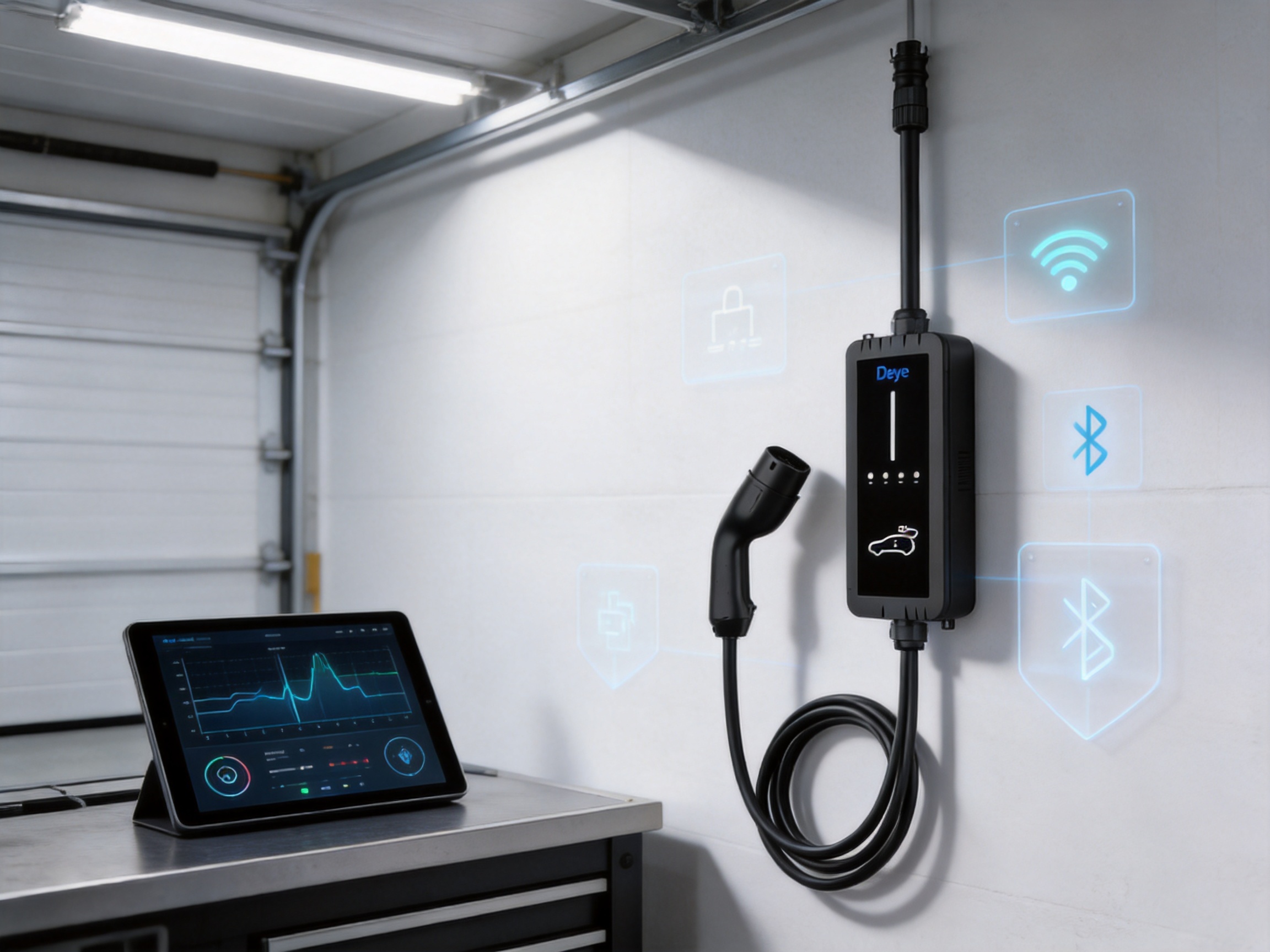
The energy system of the future is not built from isolated devices. It is built from coordinated assets: PV modules, hybrid inverters, batteries, EV chargers, cloud platforms, and intelligent control algorithms. Deye’s broader product ecosystem includes hybrid inverters, string inverters, microinverters, off-grid inverters, commercial and industrial ESS, micro hybrid ESS, accessories, monitoring solutions, PV optimizers, and EV chargers. This broad portfolio gives the company a strong foundation for integrated PV-BESS-EV solutions.
Within such a solution, the EV charger plays a crucial role. PV provides renewable generation. Battery energy storage can shift energy and provide backup capability. The inverter manages conversion and power flow. The EV charger adds a large, controllable load that can absorb solar production and support low-carbon transportation. When these devices work together, users can reduce grid dependence, lower operating costs, and improve resilience.
For commercial and industrial users, integrated charging can support workplace EV charging, visitor charging, and fleet electrification. For residential users, it can connect rooftop solar generation with daily mobility. For installers, an integrated ecosystem can simplify system design and improve compatibility compared with mixing unrelated devices from multiple manufacturers.
Manufacturing Strength Behind the Product
A reliable EV charger is not created only by a good specification sheet. It depends on engineering capability, component selection, production consistency, quality control, and long-term service support. Ningbo Deye Inverter Technology Co., Ltd. benefits from the manufacturing and technology foundation of a company established in 2000 and active in power electronics, energy storage, inverter systems, and intelligent energy solutions.
The company’s background in solar inverters is especially relevant. Inverters must handle demanding electrical conditions, high conversion efficiency requirements, grid compliance, communication protocols, thermal management, and long service life. These engineering disciplines transfer directly into EV charger design. A charger connected to an inverter-based energy system must be electrically robust, communication-ready, and safe under variable load conditions.
Deye’s product range includes 1 kW to 136 kW string inverters, 3 kW to 80 kW energy storage inverters, and 300 W to 2.2 kW microinverters. This breadth indicates experience across residential, commercial, industrial, and utility-scale applications. The company has also developed energy IoT capabilities through Deye Cloud and LoRa-based wireless energy management solutions. These capabilities support the Smart EV Charger’s role as a connected, managed energy device.
Advanced R&D Capability
Research and development are central to modern energy products. EV chargers must comply with safety standards, communication expectations, grid conditions, and user experience requirements. Deye’s inverter and ESS businesses have established strong R&D capabilities, which support product development in areas such as power conversion, embedded control, communication integration, thermal design, electromagnetic compatibility, and cloud connectivity.
For the Smart EV Charger, R&D strength is reflected in several details. LoRa communication with the inverter is not a generic feature; it requires coordinated software and hardware design. Solar-only charging requires the system to understand energy flow and respond appropriately. Real-time monitoring requires data acquisition, transmission, and user interface support. Protection features require careful electrical design and validation. These are all areas where power electronics R&D experience matters.
Manufacturing Process Discipline
High-quality charger manufacturing requires controlled processes from component sourcing to final testing. Although the outward appearance of an EV charger may look simple, the internal system must manage high current safely over many operating cycles. Production consistency is therefore critical.
Advanced manufacturing processes for this type of product commonly include incoming quality inspection of electronic components, printed circuit board assembly control, automated or semi-automated testing, enclosure inspection, insulation and leakage checks, communication verification, firmware programming, functional charging simulation, and final quality assurance. For a company with large-scale inverter manufacturing experience, these process disciplines are part of a broader industrial capability.
Thermal performance is another important manufacturing concern. Charging at 11 kW or 22 kW involves sustained current flow. Poor assembly, weak terminals, inadequate conductor sizing, or poor enclosure design can cause heating issues. The product’s over-temperature protection and wide operating temperature range from -40 degrees Celsius to +55 degrees Celsius reflect the need for both design and manufacturing control.
Quality Standards and Compliance
The charger is associated with a wide range of safety and electromagnetic compatibility standards, including IEC 61851-related charging standards and radio communication and EMC standards. Compliance with these standards is important because EV chargers interact with vehicles, grid connections, users, and wireless communication systems. Standards-based design reduces risk and supports market acceptance.
The listed standards include EN IEC 61851-1:2019, IEC 61851-1:2017, EN 300 220-2, EN 300 328, EN IEC 62311, EN 301 489 series standards, EN IEC 61000-6-1, EN IEC 61000-6-3, and EN IEC 61851-21-2. These references demonstrate attention to charging system safety, electromagnetic compatibility, radio equipment behavior, and human exposure considerations for wireless devices.
User Experience: Simple When Needed, Intelligent When Desired
One of the challenges in smart energy products is balancing advanced capability with everyday simplicity. A product may have powerful features, but if it is difficult to use, customers may disable those features or use the device only in the simplest mode. The Smart EV Charger addresses this by supporting plug-and-play operation while also enabling more advanced charging modes.
For a user who wants simplicity, the process can be as straightforward as connecting the vehicle and charging. For a user who wants cost optimization, scheduled charging can be configured. For a solar user, solar-energy-only operation can help align charging with PV generation. For users who want visibility, Deye Cloud provides monitoring and control. This layered user experience is important because EV owners have different levels of technical interest.
The quiet operation level of less than or equal to 25 dB also improves the user experience. Chargers are often installed near living spaces, garages, or parking areas close to offices. Low noise helps ensure that the charger does not become a disturbance during night charging or long charging sessions.
The compact cabinet size of 104 x 264 x 57.5 mm and weight of 3.7 kg support convenient installation. A 4.2 m gun cable length provides practical reach for vehicle connection. These physical characteristics matter because installation environments vary, and a charger that is compact, light, and outdoor-rated can be placed more flexibly.
Installation and Application Scenarios
The Smart EV Charger is suitable for multiple application scenarios. In residential solar homes, it can help owners charge with self-generated energy and reduce electricity bills. In homes without solar, scheduled charging can still help reduce costs where time-of-use tariffs are available. In small businesses, the 22 kW three-phase option can provide faster charging for staff, customers, or company vehicles.
In PV-BESS-EV charging systems, the charger can become part of a more complete energy strategy. A site may generate solar power during the day, store energy in a battery, and use controlled EV charging to manage demand. The charger’s inverter communication helps support this coordinated operation. Because it supports LoRa communication, installations with physical separation between energy equipment and parking areas can be easier to manage.
For installers, the product offers practical selection advantages. Two models cover common 11 kW and 22 kW charging needs. The 22 kW model supports both single-phase and three-phase power charging, increasing flexibility. The robust protection suite reduces safety concerns. The IP66 rating supports outdoor installation. Communication options improve integration and monitoring. These features can reduce design complexity and improve customer satisfaction.
Long-Term Reliability and Service Value
The product lists an MTBF of 100,000 hours. Mean time between failures is an important indicator because EV chargers are expected to serve for many years. While actual field performance depends on installation quality, environment, usage pattern, and maintenance, a high MTBF value reflects a design intention focused on durability.
Reliability is also supported by environmental tolerance. The operating temperature range of -40 degrees Celsius to +55 degrees Celsius allows use in diverse climates. The permissible humidity range of 5 percent to 95 percent with no condensation covers many typical installation environments. The altitude limit of less than 3000 m supports broad deployment.
Service support is strengthened by the company’s global reach. Deye products are sold in more than 140 countries and regions, indicating experience with diverse market requirements and customer needs. This global presence matters for distributors, installers, and end users who want long-term product continuity, technical documentation, and after-sales support.
Why the Product Fits the Future of Energy
The future of energy is decentralized, electric, and digital. Households and businesses are installing solar PV, adopting battery storage, buying electric vehicles, and using cloud platforms to monitor consumption. The charger that fits this future must do more than deliver electricity. It must coordinate with generation, respond to tariffs, support safe high-power operation, and provide useful data.
The Smart EV Charger matches this direction well. Its solar-focused charging helps increase renewable energy utilization. Its scheduled charging supports electricity bill reduction. Its communication with the inverter helps integrate the vehicle into the broader energy system. Its cloud monitoring provides transparency. Its safety protections and outdoor rating support dependable daily operation.
Compared with basic chargers, its value is not limited to charging speed. Charging speed is important, but intelligent charging can be even more valuable over time. A user may charge thousands of kilowatt-hours per year. Small improvements in timing, solar self-consumption, and energy visibility can create meaningful long-term savings. In this sense, the charger is not simply an accessory for an EV; it is a strategic component of an efficient energy lifestyle.
Frequently Asked Questions
What makes this charger different from a standard EV charger?
The main difference is energy integration. A standard charger may simply charge the vehicle when connected. This Smart EV Charger can work with a compatible inverter through LoRa communication, enabling charging strategies such as solar-energy-only charging and scheduled charging. This helps users make better use of solar power and reduce electricity costs.
Can the charger be installed outdoors?
Yes. The charger has an IP66 ingress protection rating, which supports outdoor use in demanding environments. It is designed to resist dust and water exposure, making it suitable for driveways, exterior walls, parking areas, and carports when installed according to applicable electrical requirements.
What charging power levels are supported?
The product family supports 7 kW, 11 kW, and 22 kW charging. The 11 kW model is designed for three-phase 16 A operation, while the 22 kW model can support 7 kW single-phase charging or 22 kW three-phase charging depending on the electrical supply.
Does the charger support solar-only charging?
Yes. When integrated with the appropriate solar inverter system, the charger can support solar-energy-only mode. This helps users maximize the use of solar power and reduce grid consumption.
How does scheduled charging help reduce electricity bills?
Scheduled charging allows users to charge during selected time periods. In areas with time-of-use electricity tariffs, users can schedule EV charging during low-cost periods, such as overnight off-peak hours. This can lower the average cost of charging the vehicle.
What communication methods are available?
The charger supports LoRa, Wi-Fi, and BLE communication. LoRa provides long-range communication with low latency, Wi-Fi supports cloud connectivity, and BLE can support local interaction or setup functions.
What safety protections are included?
The charger includes Type B leakage protection, DC 6 mA fault protection, over-temperature protection, low-temperature protection, over-voltage protection, under-voltage protection, short-circuit protection, overload protection, earth fault protection, and Type II surge protection.
Is the charger suitable for both homes and businesses?
Yes. Residential users can benefit from solar charging and scheduled charging, while small commercial users can benefit from higher charging power, three-phase capability, cloud monitoring, and integration with PV and energy storage systems.
Can the charger operate if internet service is unavailable?
The product information highlights offline operation. This means essential local charging functions can continue even when internet access is not available, while cloud-based monitoring and remote control depend on network connectivity.
Why is LoRa useful for EV charging?
LoRa is useful because chargers and inverters are not always installed close to each other. Long-range communication helps maintain coordination between the charger and the inverter without requiring complex communication wiring. It also supports stable energy management in real installation environments.
Conclusion
The Smart EV Charger from Ningbo Deye Inverter Technology Co., Ltd. represents the evolution of EV charging from basic power delivery to intelligent energy coordination. It is designed for users who want convenience, safety, solar utilization, and cost optimization in one product. With 7 kW, 11 kW, and 22 kW charging support, single-phase and three-phase compatibility, IP66 outdoor protection, DC 6 mA leakage protection, LoRa communication, cloud monitoring, and flexible charging modes, it offers a strong feature set for modern homes and businesses.
Its advantages over conventional competitors are especially clear in solar-integrated applications. By communicating with the inverter and supporting solar-only and scheduled charging modes, it helps users increase self-consumption, reduce electricity bills, and align EV charging with clean energy generation. Its safety architecture and environmental durability make it suitable for long-term daily use, while its communication options improve flexibility and installation value.
The product is also backed by a company with deep experience in inverter technology, energy storage systems, energy IoT, and global solar solutions. This manufacturing and R&D foundation strengthens confidence in the charger’s design, compatibility, and long-term role within integrated PV-BESS-EV systems. As electric vehicles and distributed solar energy continue to grow, intelligent chargers like this will become essential components of efficient, low-carbon energy infrastructure.
References
Ningbo Deye Inverter Technology Co., Ltd. Smart EV Charger Product Information and Technical Parameters.
Ningbo Deye Inverter Technology Co., Ltd. Smart EV Charger Datasheet, SUN-EVSE11K01-EU-AC and SUN-EVSE22K01-EU-AC.
Ningbo Deye Inverter Technology Co., Ltd. Smart EV Charger User Manual, SUN-EVSE11K01-EU-AC and SUN-EVSE22K01-EU-AC.
International Electrotechnical Commission. IEC 61851-1: Electric Vehicle Conductive Charging System, General Requirements.
European Telecommunications Standards Institute. EN 300 220, EN 300 328, and EN 301 489 Series Standards for Radio and Electromagnetic Compatibility.
International Electrotechnical Commission. IEC 61000 Series Standards for Electromagnetic Compatibility.
Product: Smart EV Charger
PREV:Four-MPPT Microinverters for High-Performance Single-Phase Solar Systems
NEXT:High-Efficiency 7–8 kW Single-Phase String Inverter for Modern Solar Power Systems
Share
Product recommendations
news recommendations
-
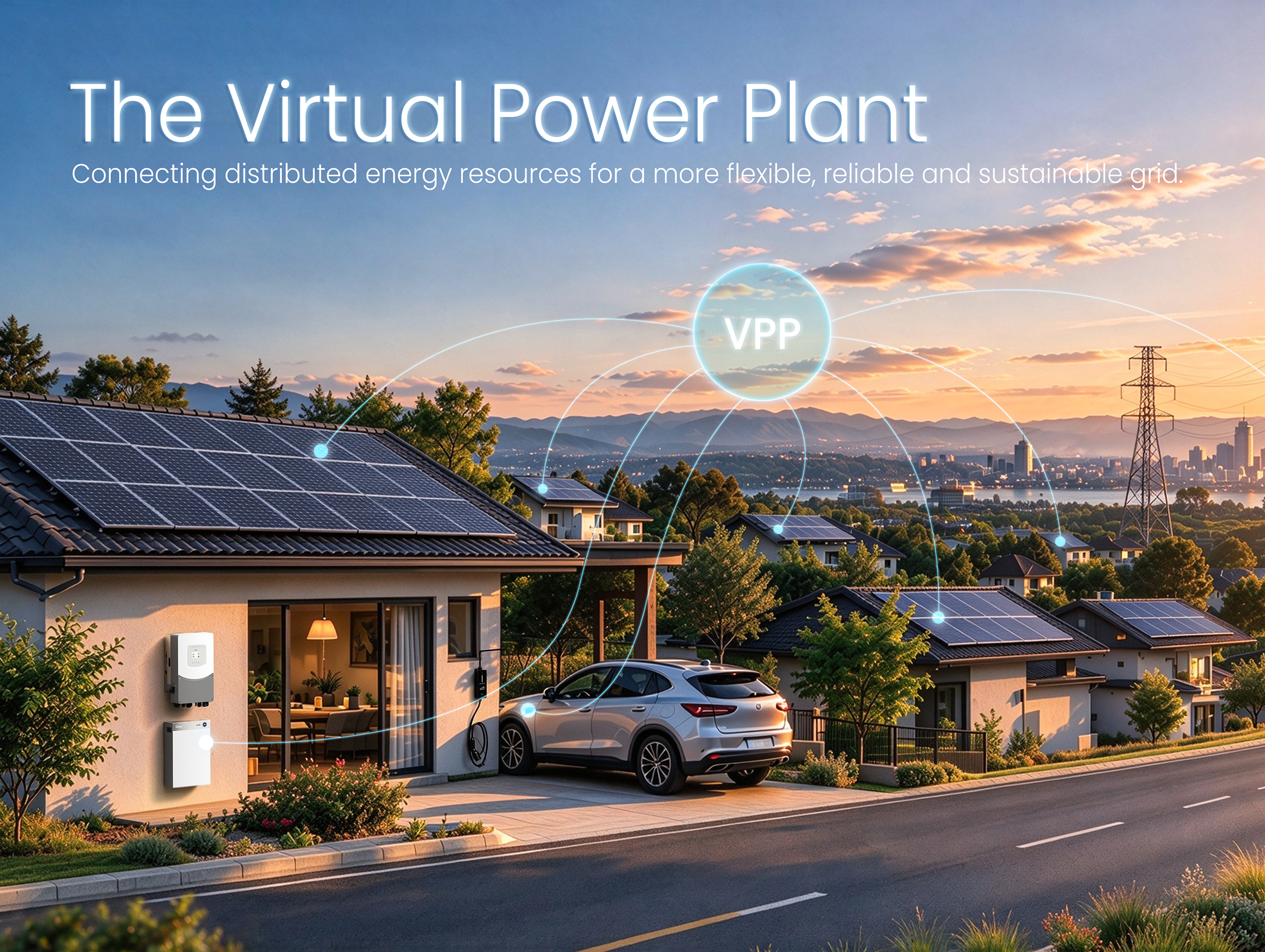 From Centralized Grids to Virtual Power Plants: The Next Evolution of the Power System
For more than a century, power systems around the world have relied on a centralized model. Large p...
-
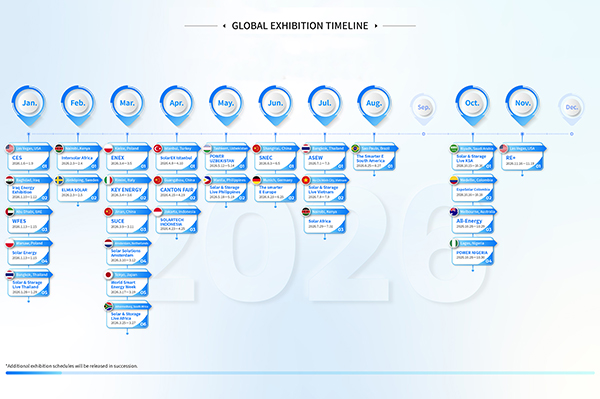 GLOBAL EXHIBITION TIMELINE
*Click to view larger image
-
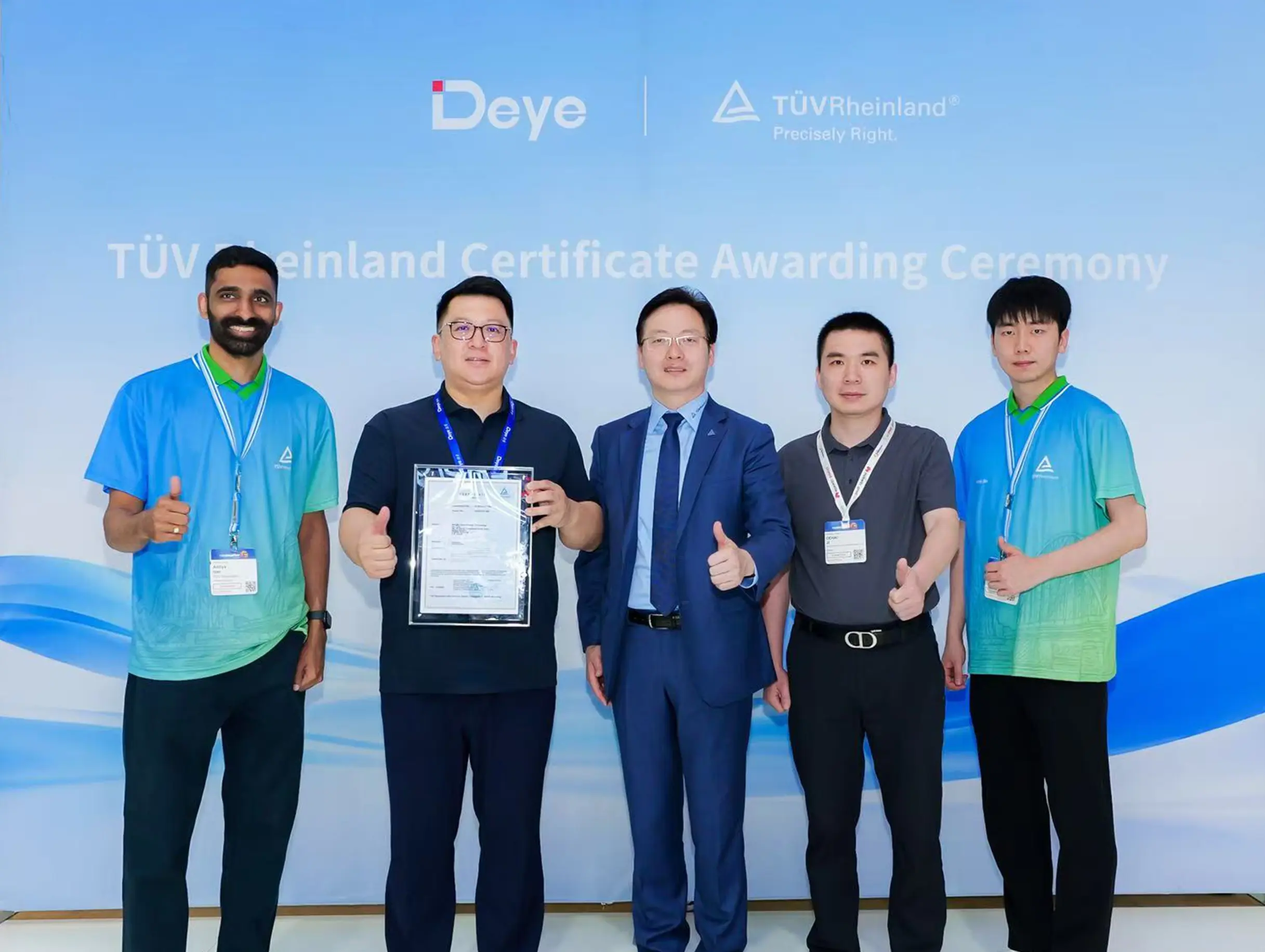 Deye Secures Multiple TÜV Rheinland Certifications at The smarter E Europe
On June 23, the opening day of The smarter E Europe 2026, Deye was officially awarded several presti...

Copyright@ 2024.Ningbo Deye Inverter Technology Co.,Ltd. All rights reserved. Solar Inverter Manufacturer
