
 Online Shop
 English
 China - 简体中文
 Global - English
 Brazil - Português
 Netherlands - Dutch
 Italy - Italiano
 Germany - Deutsch
 Spain - Español
 France - Français
 Vietnam - Tiếng Việt
 Poland - Polski
 Australia - English
 Japan - 日本語
Bai Shuying — After-Sales Support Supervisor, Solar Inverter Products

High-Efficiency 7–8 kW Single-Phase String Inverter for Modern Solar Power Systems
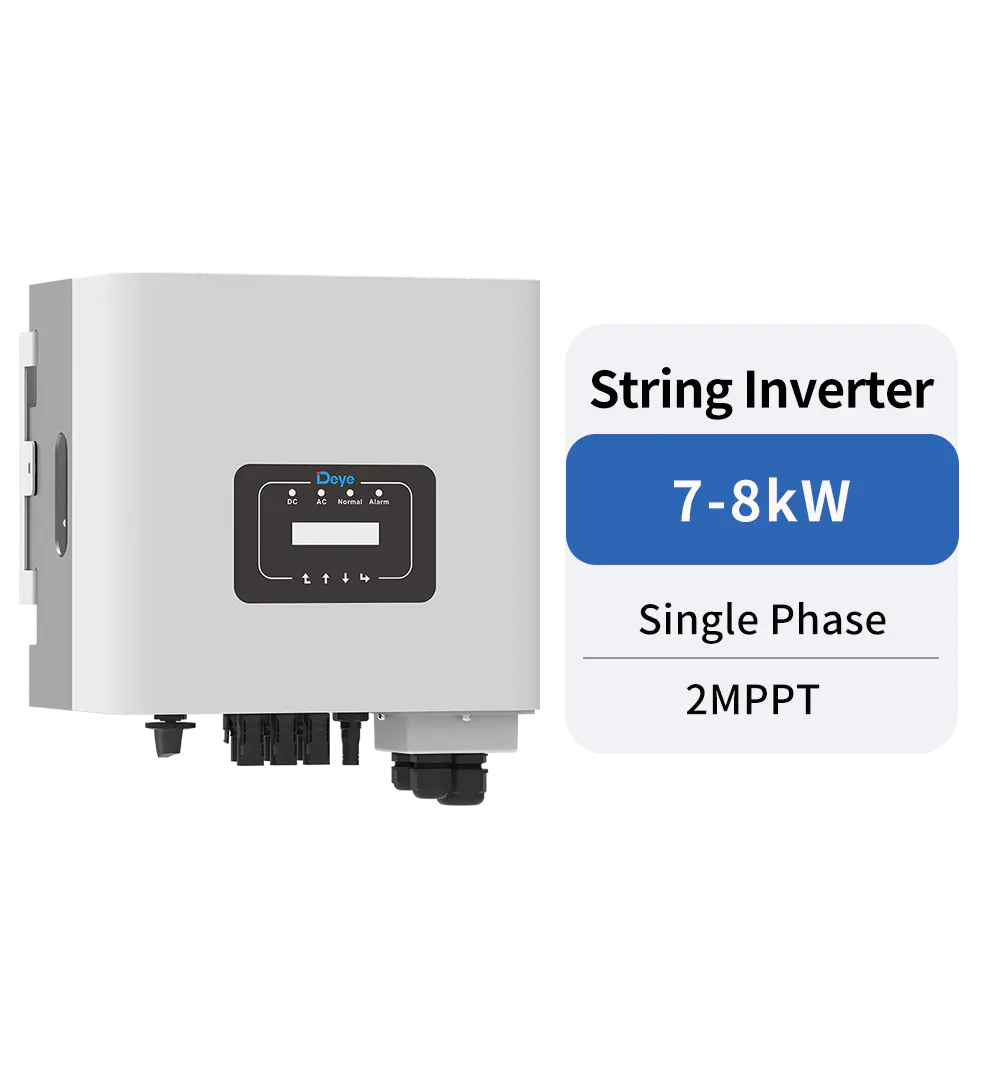
In residential and light commercial solar power systems, the inverter is the intelligent center that determines how effectively photovoltaic energy is converted, managed, protected, and delivered to the grid. The SUN-7/7.5/8K-G02P1-EU-AM2 single-phase string inverter series is designed for modern grid-tied solar applications that demand high conversion efficiency, flexible PV input design, smart monitoring, reliable protection, and simple installation. With rated AC output options of 7 kW, 7.5 kW, and 8 kW, this product family fits installations where homeowners, small businesses, and distributed energy projects need more power than a basic residential inverter can provide, while still requiring the practicality of a compact single-phase solution.
This inverter series combines 2 MPPT architecture, a low start-up voltage of 80 V, maximum efficiency up to 97.7%, wide output voltage adaptability, zero export capability, optional string intelligent monitoring, optional anti-PID functionality, and full equipment protection features. It is built for real-world solar conditions where roof orientations, shading patterns, regional grid codes, and user energy demands can vary significantly. Rather than functioning only as a DC-to-AC converter, it is engineered as a smart power interface between the PV array, building loads, and the utility grid.
Ningbo Deye Inverter Technology Co., Ltd. develops and manufactures PV inverter and energy storage technologies for global markets. Founded within the broader Deye technology manufacturing platform, the company benefits from integrated research and development, production, quality control, global service, and product portfolio depth. Its inverter range covers string inverters, hybrid inverters, energy storage inverters, microinverters, off-grid inverters, and system accessories, allowing the company to design products with practical knowledge from many solar application scenarios. This manufacturing and engineering background gives the 7–8 kW single-phase string inverter series a strong foundation in reliability, safety, and system-level compatibility.
Product Positioning and Application Value
The SUN-7/7.5/8K-G02P1-EU-AM2 series is intended for grid-connected PV systems that use single-phase AC output and require medium-to-high residential power capacity. The three models provide rated AC output active power of 7 kW, 7.5 kW, and 8 kW respectively. This makes the series especially suitable for larger homes, villas, small commercial rooftops, agricultural buildings, workshops, and distributed generation projects where a compact inverter must support a relatively substantial PV array.
One of the most important design advantages is the inverter’s ability to accept high PV input power compared with its rated AC output. The 7 kW model supports up to 10.5 kW of PV input power, the 7.5 kW model supports up to 11.3 kW, and the 8 kW model supports up to 12 kW. This oversizing capability helps solar designers increase daily energy yield, especially during mornings, evenings, cloudy periods, seasonal low-irradiance conditions, or locations where panels do not always operate at peak output. Competitor products with more restrictive DC input limits can reduce design flexibility and may deliver lower energy harvest over the year.
The inverter’s single-phase design also addresses a major market need. In many residential regions, the available grid connection is single-phase, but energy consumption continues to rise due to electric cooking, air conditioning, heat pumps, home offices, and electric vehicle charging. A 7–8 kW single-phase inverter can support higher solar generation without forcing the user into a more complex three-phase system. This is particularly valuable where single-phase service is common and where homeowners want to maximize self-consumption.
Core Technical Specifications
The following table summarizes key technical data for the SUN-7/7.5/8K-G02P1-EU-AM2 series. These values demonstrate the product’s combination of input flexibility, output power, efficiency, safety, and environmental durability.
| Parameter | SUN-7K-G02P1-EU-AM2 | SUN-7.5K-G02P1-EU-AM2 | SUN-8K-G02P1-EU-AM2 |
| Rated AC Output Active Power | 7 kW | 7.5 kW | 8 kW |
| Maximum PV Input Power | 10.5 kW | 11.3 kW | 12 kW |
| Maximum PV Input Voltage | 550 V | 550 V | 550 V |
| Start-up Voltage | 80 V | 80 V | 80 V |
| MPPT Voltage Range | 70–500 V | 70–500 V | 70–500 V |
| Number of MPPTs / Strings | 2 / 1+2 | 2 / 1+2 | 2 / 1+2 |
| Maximum Efficiency | 97.7% | 97.7% | 97.7% |
| Euro Efficiency | 97.2% | 97.2% | 97.2% |
| MPPT Efficiency | Greater than 99% | Greater than 99% | Greater than 99% |
| Ingress Protection Rating | IP65 | IP65 | IP65 |
| Cooling Method | Natural Cooling | Natural Cooling | Natural Cooling |
| Communication Interfaces | RS485 / RS232 / WiFi / LAN | RS485 / RS232 / WiFi / LAN | RS485 / RS232 / WiFi / LAN |
| Weight | 12.1 kg | 12.1 kg | 12.1 kg |
High Conversion Efficiency for Greater Energy Yield
Efficiency is one of the most visible ways to compare inverter performance. The SUN-7/7.5/8K-G02P1-EU-AM2 series reaches a maximum efficiency of up to 97.7% and a Euro efficiency of 97.2%. These figures are significant because they indicate that the inverter can convert a high percentage of harvested DC solar power into usable AC energy. In practical terms, a higher-efficiency inverter reduces conversion losses, improves lifetime energy production, and helps users achieve better economic returns from their PV investment.
The MPPT efficiency greater than 99% is equally important. Solar modules rarely operate under perfect uniform conditions. Irradiance changes continuously as clouds pass, temperatures fluctuate, and load conditions vary. Maximum Power Point Tracking technology constantly adjusts operating voltage and current to extract the highest possible power from the PV strings. A high MPPT efficiency helps the inverter respond accurately and quickly to changes in solar conditions, maintaining energy harvest throughout the day.
Compared with many ordinary residential inverters, the combination of 97.7% maximum efficiency and more than 99% MPPT efficiency provides a competitive advantage. Some competing models may advertise high peak efficiency but perform less effectively under partial load or variable irradiance. The Euro efficiency value is especially useful because it reflects weighted performance across different load conditions, which more closely resembles real European and global climate behavior. By maintaining strong weighted efficiency, this inverter series supports long-term generation stability instead of relying only on laboratory peak performance.
Dual MPPT Design for Flexible Rooftop Layouts
The inverter includes 2 MPP trackers and supports a string configuration of 1+2. This is a major advantage for installations where PV modules are divided across different roof faces, orientations, or shading conditions. For example, a home may have one group of modules facing east and another facing west, or a roof may include separate sections with different tilt angles. With two independent MPPTs, the inverter can manage these PV inputs separately, reducing mismatch losses and improving total energy production.
Many lower-cost or entry-level inverters may offer only one MPPT or less flexible current capacity. In those systems, modules with different orientations may be forced to operate at a compromised voltage point, lowering the output of the stronger string. The dual-MPPT structure of this product helps solar designers avoid that limitation. It allows better use of available roof area and makes the inverter more adaptable to complex building architecture.
The maximum operating PV input current is 18 A + 26 A, and the maximum input short-circuit current is 27 A + 39 A. These current ratings support compatibility with modern higher-current PV modules. As module technology evolves, larger wafers and higher power ratings often bring higher operating currents. An inverter with insufficient input current capability may restrict module selection or cause clipping under strong irradiance. This product’s input design gives installers more room to select contemporary modules and design high-yield systems.
Low Start-Up Voltage and Wide MPPT Range
The start-up voltage of 80 V is a notable advantage. A lower start-up voltage allows the inverter to begin operating earlier in the morning and continue working later in the afternoon, provided the PV array can supply sufficient energy. Over the lifetime of a PV system, these extra operating minutes can accumulate into meaningful additional energy production. This is especially helpful in regions with frequent cloudy weather, hazy mornings, winter sun angles, or shading at the beginning and end of the day.
The MPPT voltage range of 70–500 V also supports broad design flexibility. This wide operating window makes it easier for system designers to configure string lengths according to module voltage, temperature conditions, roof space, and local electrical codes. In cold weather, PV voltage rises; in hot weather, voltage falls. A wide MPPT range helps maintain efficient tracking across these seasonal variations.
Compared with competitors that require higher start-up voltages or operate across narrower voltage bands, this inverter can better adapt to varying PV string configurations. It reduces the risk of underperformance in non-ideal conditions and simplifies system engineering. Installers can design arrays with confidence, knowing that the inverter can accommodate a practical range of operating voltages.
Zero Export Application for Grid Compliance and Self-Consumption
Zero export capability is an increasingly important feature in modern solar markets. In some regions, grid operators restrict or prohibit the export of excess solar energy to the utility network. In other regions, export compensation is low, making self-consumption more financially attractive than feeding energy into the grid. A zero export function allows the PV system to dynamically limit output so that generation matches on-site consumption, reducing or eliminating backfeed.
The SUN-7/7.5/8K-G02P1-EU-AM2 series supports zero export applications, making it suitable for markets with strict grid connection rules. This capability gives installers and project developers a practical solution for customers who want solar power but must comply with local utility requirements. It also helps users optimize self-consumption strategies when combined with monitoring and load management.
Compared with inverters that require additional complicated third-party control systems to achieve export limitation, built-in zero export support simplifies deployment. It can reduce system integration complexity, shorten commissioning time, and improve operational reliability. For homeowners and small businesses, this means solar can be installed with greater confidence even where grid export policies are restrictive.
VSG Application and Grid-Friendly Operation
The inverter also supports VSG application. Virtual Synchronous Generator technology is associated with improved grid interaction by helping inverter-based resources behave more like conventional rotating generators in selected control aspects. As renewable penetration increases, grid operators increasingly pay attention to voltage stability, frequency behavior, reactive power control, and response to disturbances.
By supporting VSG application, the inverter is positioned not only as a power conversion device but also as a more grid-friendly distributed energy resource. This matters for installers and system owners because grid code requirements are becoming more sophisticated. An inverter that can support advanced grid functions is better prepared for future regulatory expectations and evolving utility standards.
The product’s power factor adjustment range from 0.8 leading to 0.8 lagging further strengthens its grid support capability. Reactive power control can help manage voltage conditions and comply with local grid requirements. Total current harmonic distortion is less than 3%, helping ensure clean AC output. DC injection current is less than 0.5% of rated current, supporting safe and compliant grid interconnection.
Wide Output Voltage Range and Regional Adaptability
The rated output voltage is 220/230 V, with an operating range of 0.85Un to 1.1Un, using L/N/PE connection. This wide output voltage adaptability is useful in regions where grid voltage can fluctuate due to local load changes, distribution network conditions, or rural infrastructure. An inverter that tolerates a wider voltage range can maintain operation more reliably and reduce unnecessary disconnections.
The rated output grid frequency and range support 50 Hz operation from 45–55 Hz and 60 Hz operation from 55–65 Hz. This dual-frequency compatibility enhances the inverter’s suitability for international markets. Many competing products are optimized mainly for one regional standard and may require separate variants or restricted applications. The broader frequency capability of this inverter series supports global deployment and simplifies product selection for distributors serving multiple markets.
The grid regulation list includes standards such as IEC 61727, IEC 62116, EN 50549, NRS 097, RD 140, UNE 217002, and G99. These references indicate alignment with major grid interconnection expectations in different markets. For buyers, installers, and engineering firms, compliance with recognized standards reduces technical risk and supports smoother approval processes.
Comprehensive Protection Architecture
Safety and reliability are critical in PV systems because inverters operate continuously, often outdoors, and must manage both high-voltage DC and grid-connected AC power. The SUN-7/7.5/8K-G02P1-EU-AM2 series includes a broad set of protection functions. These include DC reverse polarity protection, AC output overcurrent protection, AC output overvoltage protection, AC output short circuit protection, thermal protection, insulation impedance detection, DC component monitoring, anti-islanding protection, residual current detection, DC switch, and Type II surge protection on both DC and AC sides.
DC reverse polarity protection helps protect the inverter during installation if PV strings are accidentally connected incorrectly. AC overcurrent, overvoltage, and short circuit protection help safeguard the inverter and connected electrical infrastructure during abnormal grid or load conditions. Thermal protection reduces the risk of damage from excessive internal temperature. Insulation impedance detection is important for identifying insulation faults that could create safety hazards. Residual current detection contributes to electrical safety by monitoring leakage current. Anti-islanding protection ensures that the inverter disconnects from the grid during outages, helping protect utility workers and equipment.
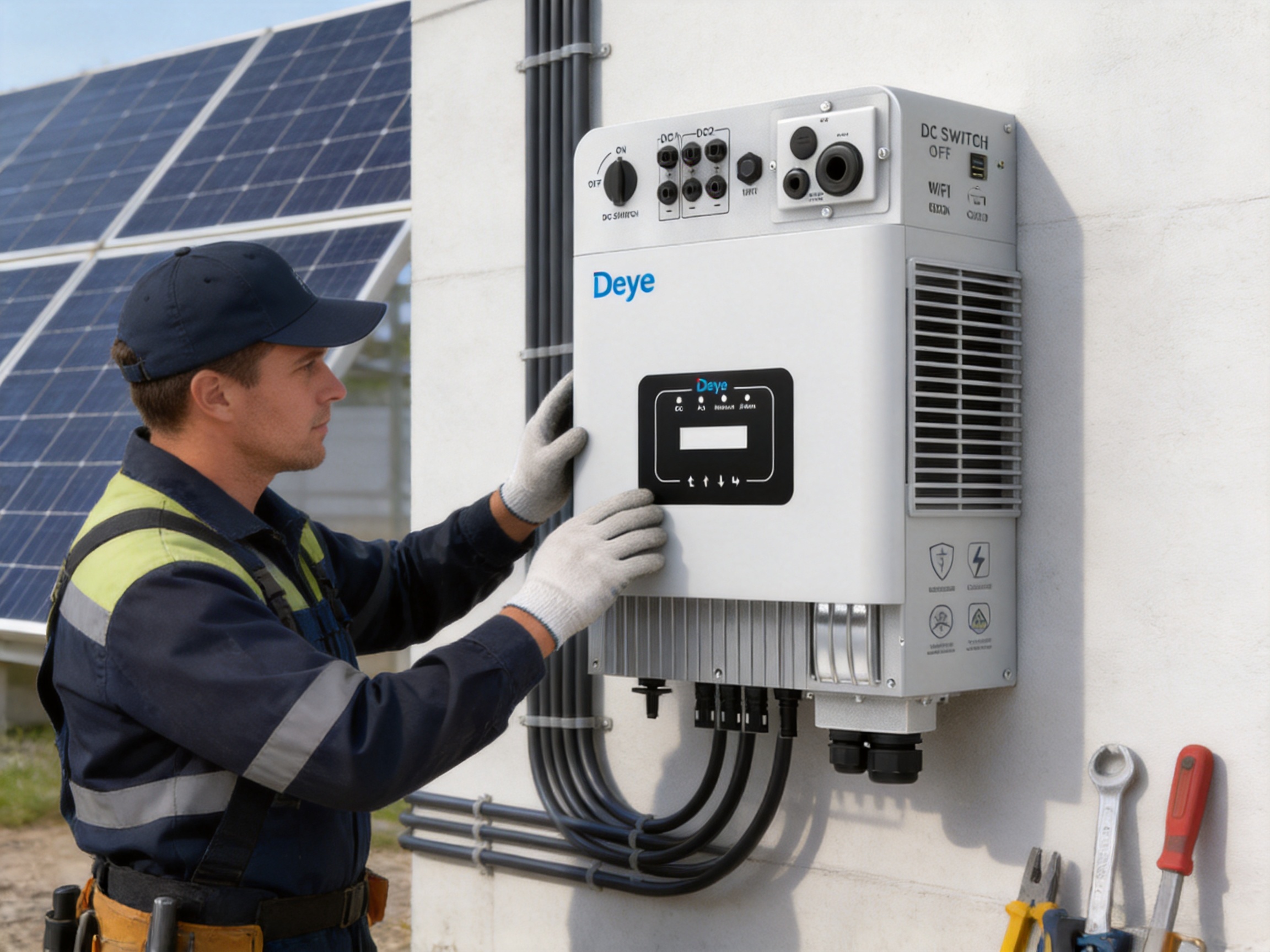
The integrated DC switch is another practical advantage. It allows safer maintenance and shutdown by isolating the PV input. Type II surge protection on both DC and AC sides helps defend against transient overvoltage events caused by lightning-induced surges or grid disturbances. In many installations, surge protection is essential for long-term reliability, especially in areas with frequent thunderstorms or unstable grid conditions.
Compared with lower-tier inverters that may provide only basic protection or require more external accessories, this comprehensive protection architecture improves system safety, reduces installation complexity, and supports durable operation. It also reflects a manufacturing philosophy focused on field reliability rather than merely meeting minimum specifications.
Optional AFCI and Anti-PID Functions
The product offers optional Arc Fault Circuit Interrupter functionality. AFCI is increasingly important in rooftop PV systems because DC arc faults can create fire risks if damaged cables, loose connectors, or deteriorated insulation are present. An inverter with AFCI capability can detect abnormal arc signatures and initiate protective action. Although local requirements vary, optional AFCI gives system designers flexibility to meet stricter safety standards or customer preferences.
The optional anti-PID function is another meaningful feature. Potential Induced Degradation can reduce PV module performance over time under certain voltage, humidity, and temperature conditions. Anti-PID technology helps mitigate this effect and preserve module output. In humid climates, coastal regions, and high-voltage PV arrays, this can be valuable for protecting long-term energy yield.
Some competing inverters do not offer these functions or provide them only in premium models. By making AFCI and anti-PID available as options, this product series can be configured for both cost-sensitive projects and enhanced-safety installations. This modular approach allows users to match product configuration with project risk, local regulations, and budget.
Durable Outdoor Design with IP65 Protection
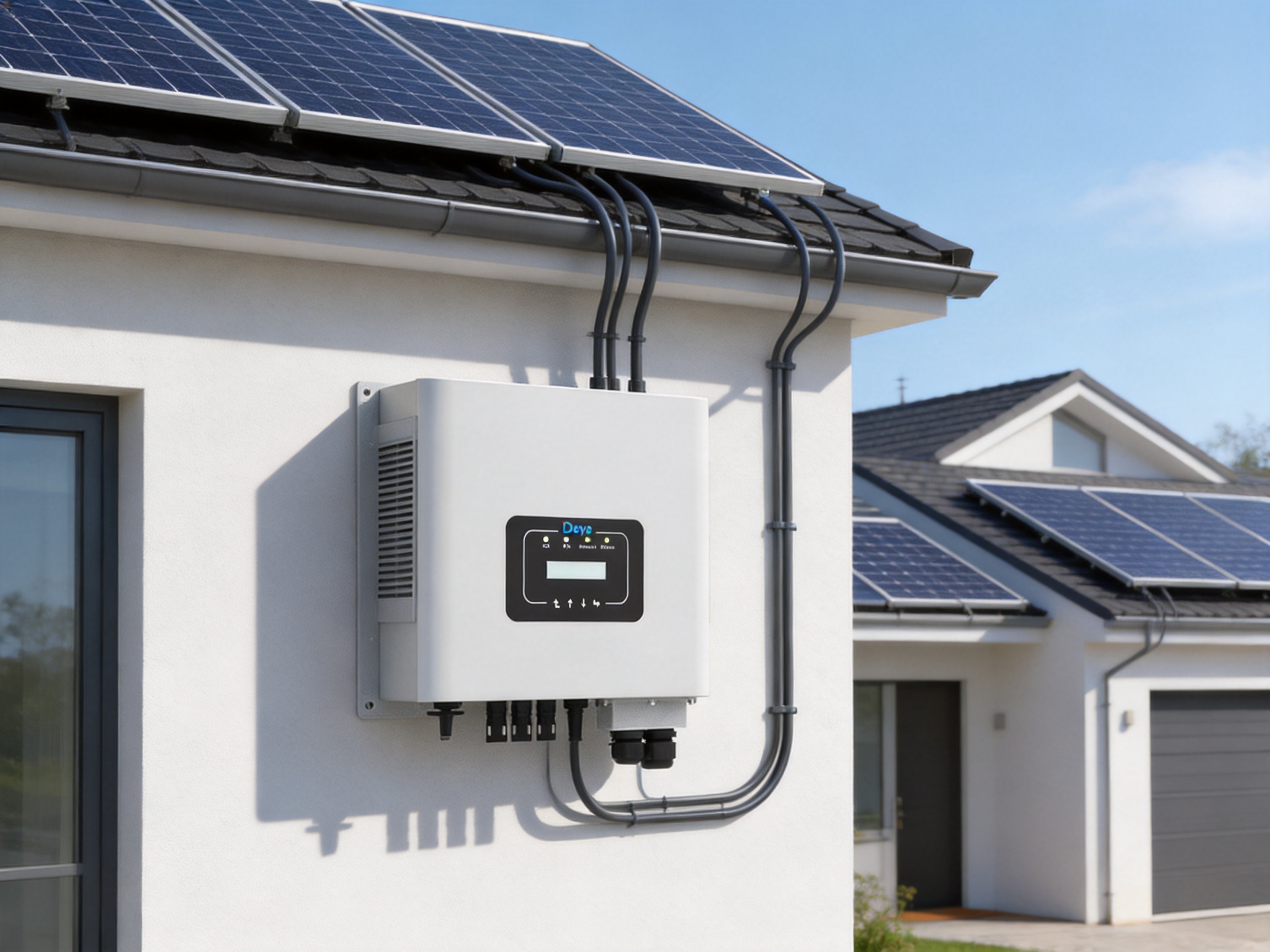
The inverter has an IP65 ingress protection rating, meaning it is protected against dust ingress and water jets. This enables outdoor installation in many residential and commercial environments. Since rooftop and exterior wall installations expose equipment to dust, rain, humidity, wind, and temperature changes, IP65 protection is a key requirement for dependable long-term use.
The operating temperature range is -25°C to +60°C, with derating above 45°C. This broad range allows the inverter to operate in cold winters and hot summers. The permissible ambient humidity is 0–100%, further supporting use in varied climates. The permissible altitude is 3000 m, making the inverter suitable for many highland and mountainous installations.
The cabinet size is 330 × 310 × 208.5 mm, excluding connectors and brackets, and the weight is 12.1 kg. This compact and lightweight design simplifies transport, mounting, and maintenance. Installers benefit from easier handling, while homeowners benefit from a product that occupies less wall space. Competitors with bulkier designs may require more installation labor or larger mounting areas.
Natural Cooling and Low Noise
The inverter uses natural cooling and has a noise level of no more than 35 dB. This is particularly important for residential installations, where equipment may be mounted near living spaces, balconies, garages, or exterior walls close to bedrooms. Natural cooling reduces mechanical fan noise and eliminates a common moving part that can wear out over time.
Fanless or naturally cooled designs often support lower maintenance requirements because there are fewer components exposed to dust accumulation or mechanical failure. Inverter fans can be a source of noise, service calls, and performance degradation in dusty environments. By using natural cooling, this product enhances user comfort and long-term reliability.
Compared with competitor models that rely on active cooling, this inverter provides a quieter and potentially more maintenance-friendly solution. The thermal design must be carefully engineered to dissipate heat effectively without forced airflow. Achieving high output power and high efficiency in a compact naturally cooled enclosure reflects strong internal design capability.
Communication Interfaces and Smart Monitoring
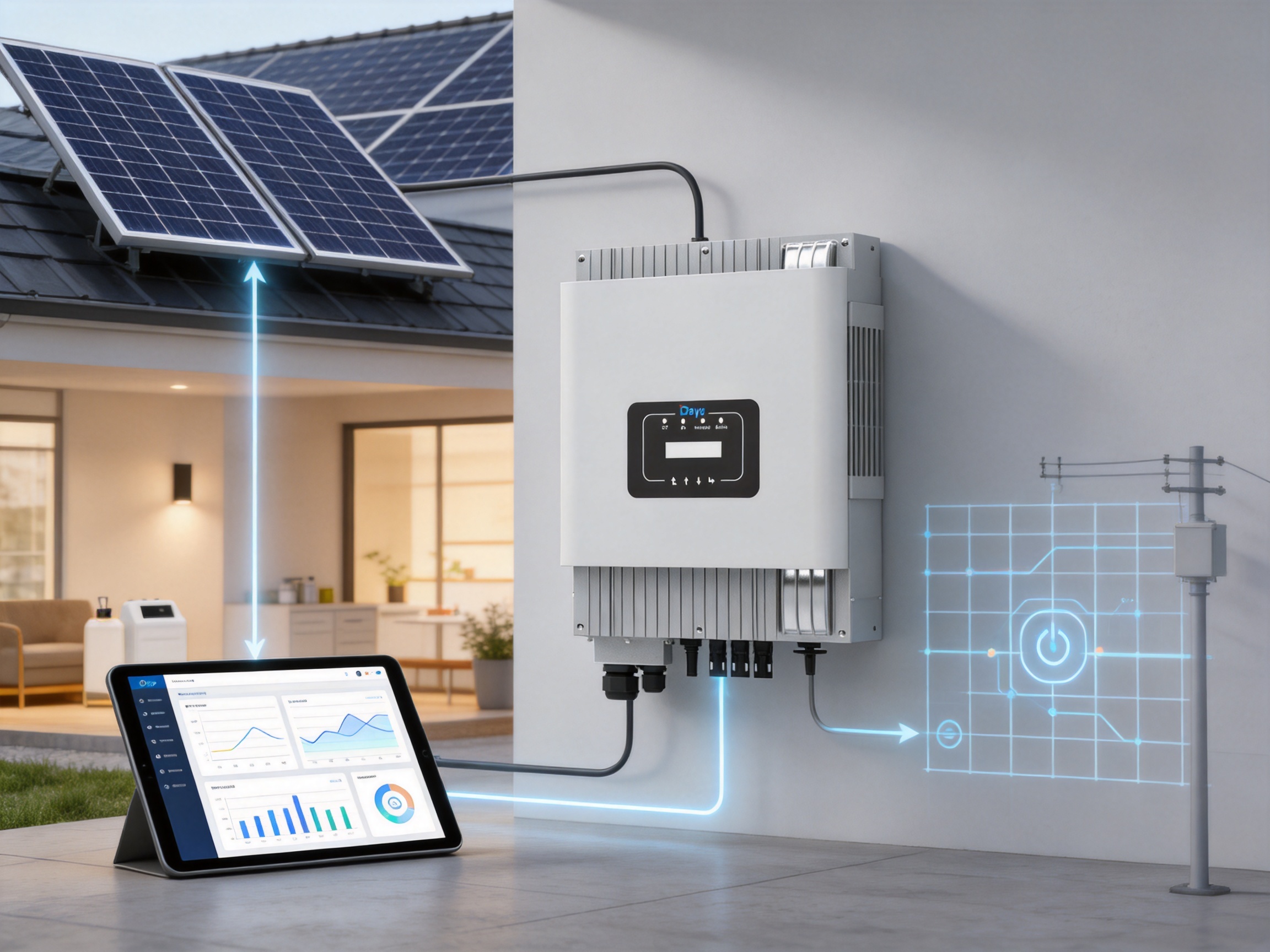
The inverter supports RS485, RS232, WiFi, and LAN communication interfaces. This broad communication capability allows flexible system monitoring, local configuration, remote data access, and integration with external energy management platforms. Monitoring is now a core expectation for solar owners because it provides visibility into energy production, system status, fault alerts, and performance trends.
WiFi and LAN connectivity are convenient for residential users who want internet-based monitoring through an application or cloud platform. RS485 and RS232 interfaces are useful for professional installers, commercial system integrators, and projects requiring wired communication or integration with meters and supervisory systems. This multi-interface design is more versatile than inverters that support only one communication method.
String intelligent monitoring is available as an optional feature. This enables more detailed insight into string-level performance, helping identify underperforming strings, shading issues, wiring problems, or module faults. In systems with multiple strings, intelligent monitoring can shorten troubleshooting time and improve maintenance efficiency. For owners, it means faster fault detection and less energy loss due to unnoticed performance issues.
Installation and Commissioning Advantages
A well-designed inverter should not only perform efficiently but also be easy to install and commission. The compact size, 12.1 kg weight, integrated protection features, wide voltage range, and multiple communication options all contribute to installation convenience. Installers can handle the unit more easily, connect PV strings with greater design freedom, configure monitoring according to site requirements, and commission the system with fewer external components.
The product’s low start-up voltage and broad MPPT voltage range reduce design constraints. This can help installers accommodate different module brands, roof layouts, and string lengths. The dual-MPPT configuration simplifies installations where panel groups have different orientations. The IP65 enclosure allows flexible placement outdoors, while natural cooling reduces the need to consider fan airflow paths or noise-sensitive areas.
For distributors and EPC companies, these advantages translate into lower training complexity and fewer installation errors. A product family with three power ratings but shared physical and electrical design characteristics also simplifies inventory planning. Installers can use similar procedures for the 7 kW, 7.5 kW, and 8 kW models, improving efficiency across multiple projects.
Advantages Over Competing Products
The inverter’s competitive strengths can be viewed from several angles: energy yield, system design flexibility, safety, grid support, monitoring, durability, and installation practicality. First, the 97.7% maximum efficiency and 97.2% Euro efficiency help reduce energy losses compared with less efficient alternatives. Because a solar system operates for many years, even small efficiency improvements can generate meaningful lifetime value.
Second, the dual-MPPT design, 70–500 V MPPT range, and 80 V start-up voltage provide practical design advantages. Competitors with higher start-up voltage may miss early and late generation opportunities. Competitors with fewer MPPTs may struggle with multi-orientation roofs. Competitors with narrower input windows may limit module selection. This inverter addresses these limitations with a flexible electrical architecture.
Third, the product’s high PV input allowance supports DC oversizing. The ability to connect up to 10.5 kW, 11.3 kW, or 12 kW of PV modules depending on model helps improve energy output under non-peak conditions. Competing inverters with lower DC/AC ratio tolerance may reduce the ability to optimize annual generation.
Fourth, the zero export and VSG application capabilities help the inverter adapt to modern grid environments. As utilities become more cautious about distributed generation, inverters must provide more than simple power injection. Export control, power factor adjustment, low harmonic distortion, and advanced grid support functions make this product more future-ready than basic grid-tie alternatives.
Fifth, the protection package is extensive. DC and AC surge protection, anti-islanding, residual current detection, insulation detection, thermal protection, DC component monitoring, short circuit protection, overcurrent protection, overvoltage protection, reverse polarity protection, and integrated DC switch all contribute to safety and reliability. Competitors that require external accessories or provide fewer built-in safeguards may increase system complexity and long-term risk.
Sixth, the inverter is compact, lightweight, quiet, and naturally cooled. These characteristics matter in residential settings where aesthetics, noise, and installation convenience are important. A low-noise inverter with no active fan is easier to accept in homes than a larger, louder unit requiring more maintenance attention.
Manufacturing Strengths Behind the Product
Advanced inverter performance depends not only on circuit design but also on manufacturing discipline. Ningbo Deye Inverter Technology Co., Ltd. operates within a comprehensive technology manufacturing environment that integrates research and development, design, production, sales, and service. This integration is important because inverter quality depends on coordination between engineering teams, component sourcing, production control, testing systems, certification management, and after-sales feedback.
The company’s broader technology background supports product development across PV inverters, energy storage systems, microinverters, hybrid inverters, off-grid inverters, environmental appliances, and energy IoT solutions. This diverse engineering base gives the company experience in power electronics, thermal management, enclosure design, communication systems, firmware control, grid interaction, and user monitoring platforms. The same expertise benefits the 7–8 kW single-phase string inverter series.
Modern inverter manufacturing requires strict control over printed circuit board assembly, power module installation, heat dissipation pathways, insulation distances, firmware loading, electrical calibration, and final functional testing. For a product operating at up to 550 V DC input and grid-connected AC output, production accuracy is essential. Advanced manufacturing processes typically include automated assembly steps, standardized torque control, high-voltage insulation testing, burn-in or load testing, safety verification, and quality traceability. These processes help ensure that each unit delivered to the field performs consistently.
The company’s global product sales across more than 140 countries and regions also strengthen product development. Field experience from different climates, grid conditions, installation practices, and customer requirements informs engineering improvements. A product designed for international deployment must handle high humidity, cold weather, high ambient temperatures, unstable grids, various communication needs, and diverse regulatory expectations. The SUN-7/7.5/8K-G02P1-EU-AM2 series reflects this global application mindset through its IP65 enclosure, wide temperature range, multiple grid standard references, and broad communication support.
Quality Control and Reliability Philosophy
Reliability is one of the most important purchasing factors for solar inverters. A PV module array may last for decades, but inverter reliability determines whether energy can actually be delivered day after day. The product’s 5-year warranty reflects the manufacturer’s confidence in its design and production quality. More importantly, the technical architecture shows attention to preventing common field failures.
Thermal management is central to reliability. High temperatures accelerate electronic component aging, especially capacitors and power semiconductors. The inverter’s natural cooling design must be supported by careful heat sink engineering, component placement, and high-efficiency power conversion to minimize heat generation. Its derating above 45°C protects internal components during extreme conditions, helping maintain safe operation rather than pushing hardware beyond thermal limits.
Electrical protection is another reliability layer. Surge protection helps reduce damage from voltage transients. Insulation impedance detection and residual current detection address potential safety issues before they become severe. Overcurrent and short circuit protection reduce risk during abnormal electrical events. These features support long-term dependable operation and reduce service burden for installers.
Quality control also extends to firmware and monitoring. Inverters increasingly rely on intelligent control algorithms for MPPT, grid synchronization, protection decisions, communication, and export limitation. Stable firmware development, testing, and updates are essential. A manufacturer with strong R&D capability and a broad inverter product ecosystem is better positioned to refine control algorithms and respond to evolving grid requirements.
System Design Scenarios
In a typical residential installation, the 7 kW model may be paired with a PV array up to 10.5 kW. This could be useful for a household with high daytime consumption, such as air conditioning, heat pumps, pumps, or work-from-home electrical loads. The inverter’s zero export function can help keep generation aligned with on-site consumption if the grid operator limits export.
In a larger home or small business, the 7.5 kW or 8 kW model can support higher generation needs. The 8 kW version accepts up to 12 kW PV input power, allowing designers to install additional modules where roof space permits. With dual MPPTs, panels can be divided between two roof orientations, such as east and west. This can flatten the daily generation curve, producing more useful energy in the morning and late afternoon rather than concentrating all generation at noon.
For rural or semi-rural buildings where grid voltage can fluctuate, the wide output voltage range and grid frequency adaptability help maintain stable operation. For regions with strong sun and high temperatures, the derating strategy and IP65 outdoor enclosure support safe deployment. For coastal or humid areas, optional anti-PID can help protect module performance, while the 0–100% humidity rating supports environmental resilience.
Economic Benefits for Owners
The financial value of a solar inverter is not limited to its purchase price. A low-cost inverter that loses more energy, fails more often, lacks monitoring, or cannot comply with grid requirements can become more expensive over the system lifetime. The SUN-7/7.5/8K-G02P1-EU-AM2 series supports economic value through efficient conversion, high PV input capability, flexible design, reduced maintenance noise and complexity, and smart operational features.
High efficiency directly increases usable electricity generation. Over many years, this improves self-consumption savings or export value where feed-in is allowed. DC oversizing helps increase energy yield during less-than-perfect conditions. Dual MPPTs reduce mismatch losses on complex roofs. Monitoring helps detect problems early, reducing hidden energy losses. Protection functions reduce the likelihood of costly failures.
Zero export functionality can also unlock projects that might otherwise be delayed or rejected due to grid restrictions. For a customer in a region with no export permission, a standard inverter without export control may not be suitable. This product’s export management capability can make solar adoption possible while preserving compliance.
Environmental and Energy Transition Value
Solar power systems are central to the global energy transition. By converting sunlight into usable electricity at the point of consumption, residential and small commercial PV systems reduce dependence on fossil-fuel electricity and decrease transmission losses. A high-efficiency inverter increases the environmental benefit of each installed PV module by wasting less energy during conversion.
The product’s quiet operation and compact size also make distributed solar more acceptable in everyday living environments. Technologies that fit naturally into homes and small buildings can accelerate adoption. When solar equipment is easy to install, monitor, and maintain, more users are likely to invest in clean energy.
The manufacturer’s wider portfolio in energy storage systems, hybrid inverters, microinverters, EV chargers, and monitoring solutions also supports the next phase of distributed energy. Solar generation increasingly interacts with batteries, electric vehicles, smart loads, and energy management systems. A company with expertise across these categories can design inverters that are compatible with broader energy ecosystems.
Q&A Section
What type of solar system is this inverter designed for?
It is designed for single-phase grid-connected solar PV systems, especially residential and light commercial installations requiring 7 kW, 7.5 kW, or 8 kW of rated AC output power.
What are the main efficiency values of the inverter?
The inverter series offers maximum efficiency up to 97.7%, Euro efficiency of 97.2%, and MPPT efficiency greater than 99%. These values support strong real-world energy harvest.
Why are two MPPTs useful?
Two MPPTs allow the inverter to manage two PV input groups independently. This is useful when solar modules are installed on different roof orientations, tilt angles, or shading conditions, helping reduce mismatch losses.
What is the benefit of the 80 V start-up voltage?
The low 80 V start-up voltage allows the inverter to begin operating earlier under low-light conditions and continue operating later in the day, improving total daily energy production.
Can the inverter support modern high-power PV modules?
Yes. The input current ratings of 18 A + 26 A and short-circuit current ratings of 27 A + 39 A improve compatibility with contemporary higher-current PV modules.
Does the inverter support zero export?
Yes. It supports zero export applications, making it suitable for regions where grid operators restrict energy export or where users want to maximize self-consumption.
What protection functions are included?
The inverter includes DC reverse polarity protection, AC overcurrent protection, AC overvoltage protection, AC short circuit protection, thermal protection, insulation impedance detection, DC component monitoring, anti-islanding protection, residual current detection, integrated DC switch, and Type II surge protection on both DC and AC sides.
Is the inverter suitable for outdoor installation?
Yes. It has an IP65 ingress protection rating and an operating temperature range of -25°C to +60°C, with derating above 45°C.
How noisy is the inverter?
The noise level is no more than 35 dB. Its natural cooling design helps keep operation quiet and reduces reliance on moving parts such as fans.
What communication methods are available?
The inverter supports RS485, RS232, WiFi, and LAN communication interfaces, allowing flexible monitoring and integration options.
How does it compare with typical competing products?
It offers a strong combination of high efficiency, dual MPPT flexibility, low start-up voltage, high PV input allowance, zero export capability, VSG application support, broad protection features, IP65 durability, quiet natural cooling, and multiple communication interfaces.
Who manufactures the inverter?
The product is manufactured by Ningbo Deye Inverter Technology Co., Ltd., a company with extensive experience in PV inverters, energy storage systems, monitoring platforms, and distributed energy solutions.
Conclusion
The SUN-7/7.5/8K-G02P1-EU-AM2 single-phase string inverter series is a strong solution for modern residential and light commercial solar installations. Its 7 kW, 7.5 kW, and 8 kW output options provide capacity for demanding energy users, while its high PV input power limits allow designers to build systems that produce more energy across real-world conditions. With 2 MPPTs, an 80 V start-up voltage, a 70–500 V MPPT range, and high input current capability, the inverter is well suited to complex rooftops and modern PV modules.
The product’s advantages extend beyond energy conversion. Zero export support helps meet grid restrictions and self-consumption goals. VSG application, power factor control, low harmonic distortion, and broad grid standard alignment support more advanced grid interaction. Comprehensive protection features, optional AFCI, optional anti-PID, IP65 enclosure, natural cooling, low noise, and multiple communication interfaces all contribute to a safe, durable, and user-friendly solar experience.
Behind the product is a manufacturer with integrated R&D, production, quality control, global service experience, and a broad portfolio across solar inverters, energy storage, EV charging, and monitoring technologies. This manufacturing strength matters because inverter reliability depends on disciplined engineering and consistent production. For installers, distributors, homeowners, and small businesses seeking a high-performance single-phase grid-tied inverter, this 7–8 kW series offers a compelling balance of efficiency, flexibility, safety, and long-term value.
References
Ningbo Deye Inverter Technology Co., Ltd. Product Datasheet for SUN-7/7.5/8K-G02P1-EU-AM2 Single Phase String Inverter.
Ningbo Deye Inverter Technology Co., Ltd. Product Manual for SUN-7/7.5/8K-G02P1-EU-AM2 Single Phase String Inverter.
International Electrotechnical Commission. IEC 61727: Photovoltaic Systems Characteristics of the Utility Interface.
International Electrotechnical Commission. IEC 62116: Utility-Interconnected Photovoltaic Inverters Test Procedure of Islanding Prevention Measures.
European Standard EN 50549: Requirements for Generating Plants to Be Connected in Parallel with Distribution Networks.
International Electrotechnical Commission. IEC/EN 62109-1 and IEC/EN 62109-2: Safety of Power Converters for Use in Photovoltaic Power Systems.
Product: SUN-7/7.5/8K-G02P1-EU-AM2
PREV:Smart Solar-Integrated EV Charging for Homes and Energy-Savvy Businesses
NEXT:Three Phase Low Voltage Hybrid Inverter for Resilient Solar Energy Storage
Share
Product recommendations
news recommendations
-
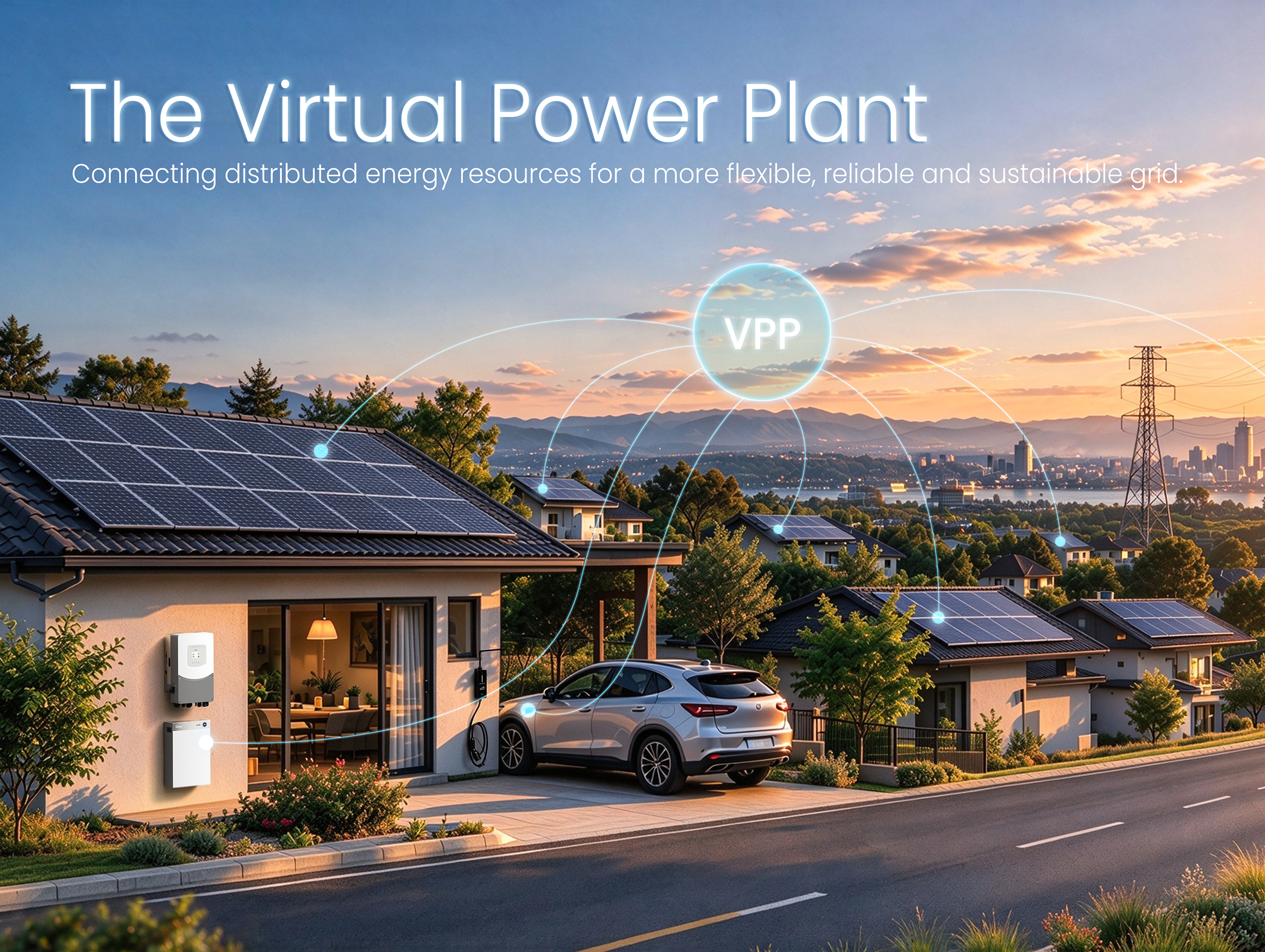 From Centralized Grids to Virtual Power Plants: The Next Evolution of the Power System
For more than a century, power systems around the world have relied on a centralized model. Large p...
-
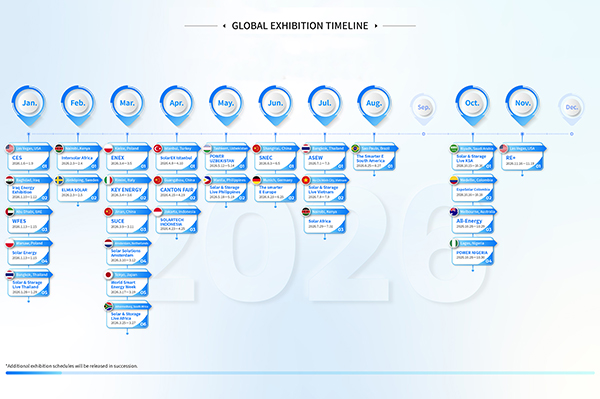 GLOBAL EXHIBITION TIMELINE
*Click to view larger image
-
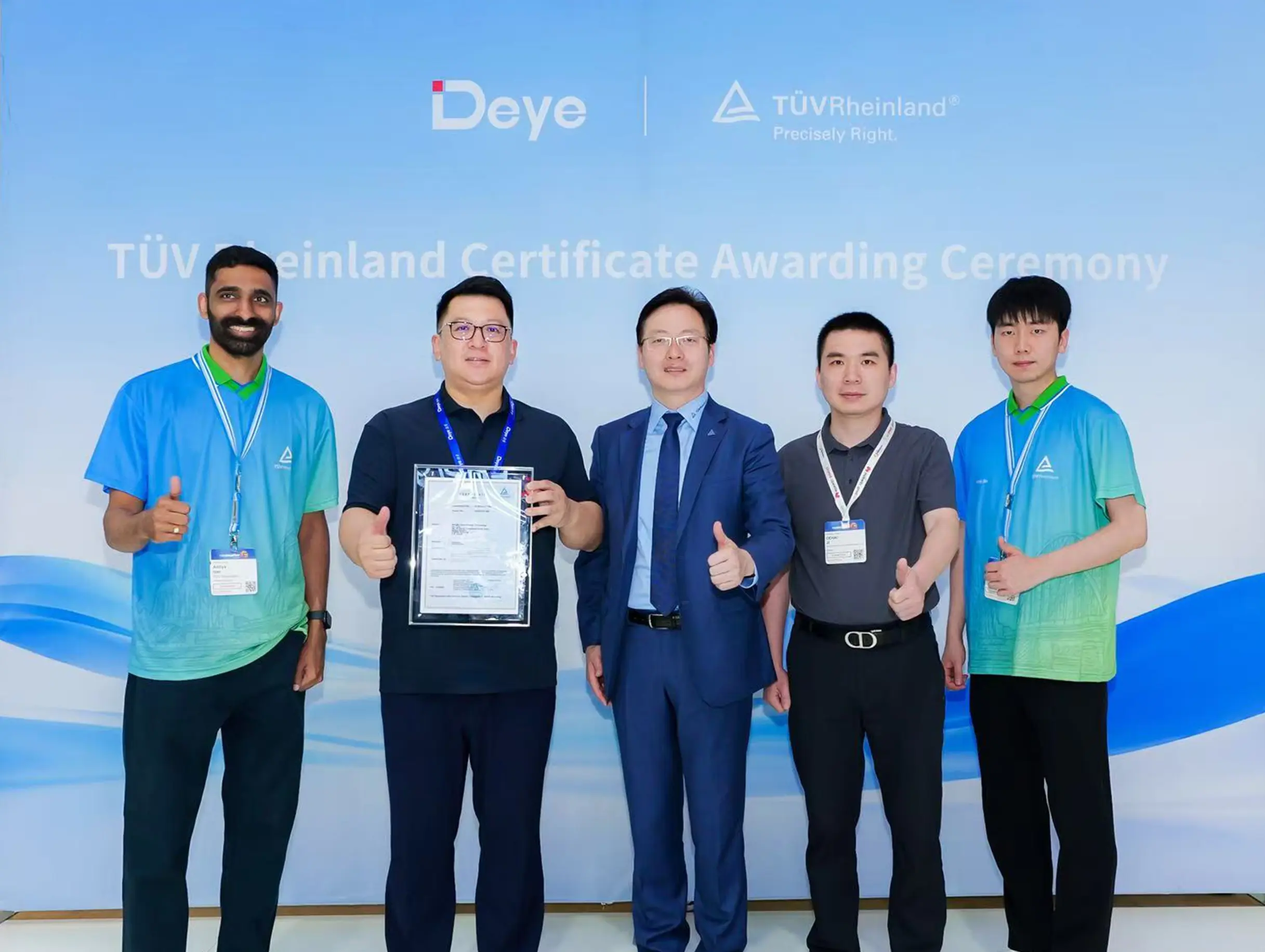 Deye Secures Multiple TÜV Rheinland Certifications at The smarter E Europe
On June 23, the opening day of The smarter E Europe 2026, Deye was officially awarded several presti...

Copyright@ 2024.Ningbo Deye Inverter Technology Co.,Ltd. All rights reserved. Solar Inverter Manufacturer
