
 Online Shop
 English
 China - 简体中文
 Global - English
 Brazil - Português
 Netherlands - Dutch
 Italy - Italiano
 Germany - Deutsch
 Spain - Español
 France - Français
 Vietnam - Tiếng Việt
 Poland - Polski
 Australia - English
 Japan - 日本語
Bai Shuying — After-Sales Support Supervisor, Solar Inverter Products

High-Performance Three-Phase String Inverters for Commercial Solar Plants
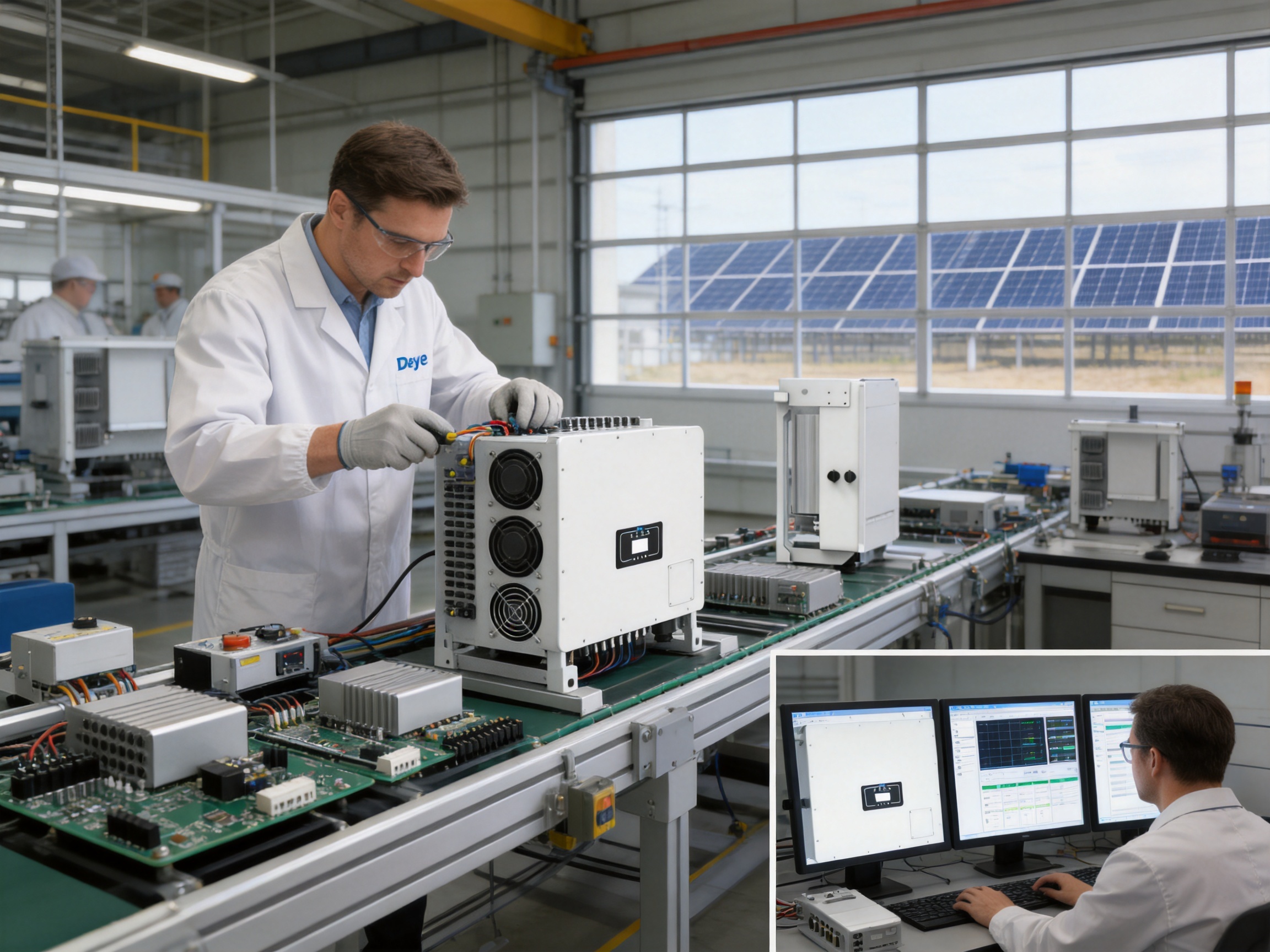
Commercial and industrial solar installations require more than high nominal output. They need stable grid interaction, flexible string design, dependable protection, accurate monitoring, efficient thermal management, and a structure that can continue operating under demanding environmental conditions. The SUN-60/70/75/80K-G04P3-EU-AM4 family is designed around these requirements, offering four three-phase string inverter models with rated active power from 60 kW to 80 kW.
The product family combines four maximum power point trackers, a broad photovoltaic voltage range, high conversion efficiency, Type II surge protection on both the DC and AC sides, optional intelligent string monitoring, and support for advanced grid functions such as zero export and virtual synchronous generator operation. These features make the series suitable for commercial rooftops, industrial facilities, agricultural buildings, distributed solar plants, and other medium- to large-scale grid-connected projects.
Rather than relying on a single high-power central conversion platform, the inverter family uses distributed string-level conversion. This architecture can simplify system design, improve energy harvesting from unevenly oriented arrays, and limit the effect of localized shading, soiling, or module mismatch. The four available power ratings also enable system designers to select a capacity that more closely matches the project’s generation target and grid connection requirements.
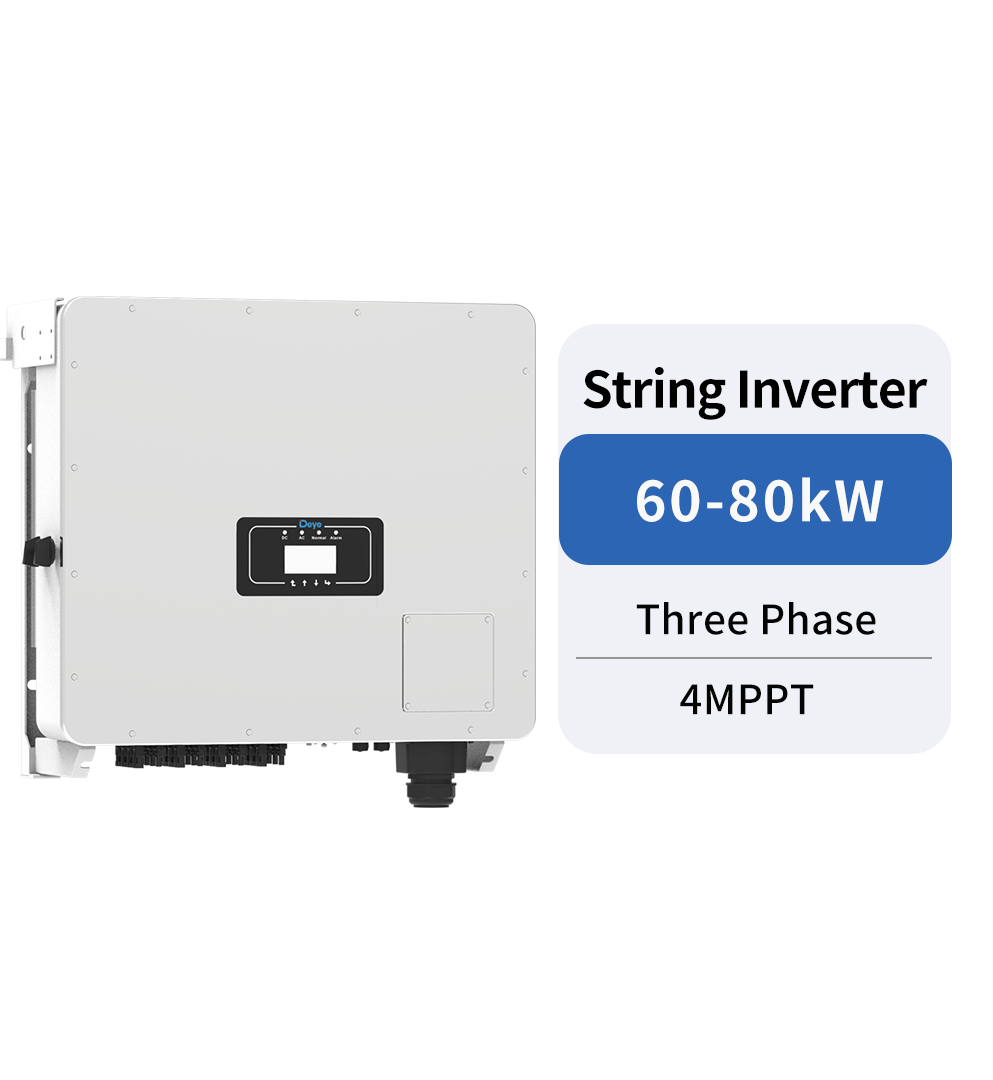
SUN-60/70/75/80K-G04P3-EU-AM4
Product Family Overview
The SUN-60/70/75/80K-G04P3-EU-AM4 series consists of the SUN-60K-G04P3-EU-AM4, SUN-70K-G04P3-EU-AM4, SUN-75K-G04P3-EU-AM4, and SUN-80K-G04P3-EU-AM4. All four models share the same primary platform and general enclosure dimensions, while their power, current, and recommended photovoltaic input capabilities vary according to the rated output.
| Model | Rated AC Active Power | Maximum PV Input Power | Maximum AC Apparent Power | Maximum Efficiency |
|---|---|---|---|---|
| SUN-60K-G04P3-EU-AM4 | 60 kW | 90 kW | 66 kVA | Up to 98.60% |
| SUN-70K-G04P3-EU-AM4 | 70 kW | 105 kW | 77 kVA | Up to 98.70% |
| SUN-75K-G04P3-EU-AM4 | 75 kW | 112.5 kW | 82.5 kVA | Up to 98.70% |
| SUN-80K-G04P3-EU-AM4 | 80 kW | 120 kW | 88 kVA | Up to 98.70% |
One of the principal advantages of this family is the ability to oversize the photovoltaic array relative to the inverter’s rated AC output. Depending on the selected model, the maximum PV input power ranges from 90 kW to 120 kW. This allows the system designer to install additional module capacity to improve energy production during periods of weak irradiance, early morning, late afternoon, or suboptimal weather, while the inverter controls its AC output according to its rated capacity and operating limits.
Array oversizing must always be evaluated against the complete electrical design, including module characteristics, string voltage at the lowest expected temperature, current limits, clipping expectations, local regulations, and the inverter manufacturer’s installation instructions. Used correctly, however, this capability can improve the annual utilization of the AC conversion equipment.
Four MPPT Channels for More Flexible Array Design
The series provides four maximum power point trackers, or MPPTs. MPPT technology continuously adjusts the operating voltage of a photovoltaic array so that the connected modules deliver the highest available power under changing irradiance and temperature conditions. Multiple trackers are especially valuable in commercial projects where the array may be divided among different roof orientations, tilt angles, or areas affected by shade.
A single tracker serving a large mixed array can force all connected strings to operate around a common electrical point. If some modules face east and others face west, or if one section is partially shaded, that common operating point may not be optimal for every string. Four independent MPPT channels allow the system to separate more of these operating conditions and reduce the energy penalty associated with array diversity.
The inverter supports an MPPT voltage range of 200 V to 1,000 V, a maximum PV input voltage of 1,100 V, and a start-up voltage of 250 V. These values provide a broad design window for commercial module configurations. The rated PV input voltage is specified as 600 V for the SUN-60K model and 720 V for the SUN-70K, SUN-75K, and SUN-80K models.
The string input arrangement is also designed for high-power commercial applications. The specifications identify four MPPTs and either three strings per tracker or four strings per tracker, depending on the model configuration. The maximum operating PV input current is listed as 40 A plus 40 A plus 40 A plus 40 A, while the maximum input short-circuit current is 60 A plus 60 A plus 60 A plus 60 A. These current capabilities are important when selecting high-current photovoltaic modules and when designing parallel string connections.
Benefits in Complex Commercial Installations
Four MPPTs can provide several practical benefits. First, they give engineering teams more freedom when dividing strings across a roof or ground-mounted structure. Second, they can help minimize mismatch losses between arrays with different orientations. Third, they can make it easier to keep string lengths electrically consistent within each MPPT group. Finally, they can support more precise fault analysis because the operating data is associated with a smaller portion of the array.
Compared with lower-power string inverters that may offer fewer trackers, this architecture is particularly useful for large rooftops with skylights, ventilation equipment, parapets, fire-access corridors, or multiple roof pitches. It can also reduce the need to force a complex roof layout into an overly simple string design.
High Conversion Efficiency and Energy Yield
Conversion efficiency determines how much of the photovoltaic energy is delivered to the AC grid after DC power is converted into usable three-phase electricity. The product family reaches a maximum efficiency of up to 98.70%, with the SUN-60K model specified at up to 98.60% and the other models at up to 98.70%. Euro efficiency is specified at up to 98.10%, and MPPT efficiency is greater than 99%.
Maximum efficiency is typically reached under favorable operating conditions, while Euro efficiency is intended to represent a weighted performance profile across different load levels. For project evaluation, both values are useful. Maximum efficiency demonstrates the capability of the power conversion stage, while weighted efficiency gives a more practical indication of performance over a broader daily operating cycle.
High efficiency reduces conversion losses and can contribute to greater annual energy delivery. It may also reduce heat generation inside the enclosure, helping the cooling system maintain stable operating temperatures. However, actual yield depends on many factors beyond the inverter’s published efficiency, including module temperature, irradiance, array orientation, cable losses, grid availability, clipping, soiling, shading, and system downtime.
The combination of high efficiency and multiple MPPT channels gives the series two complementary energy-harvesting advantages. The MPPT architecture helps the inverter find the best operating point for different array sections, while the conversion stage minimizes the energy lost when DC electricity is transformed into AC electricity.
Grid-Compatible Three-Phase Output
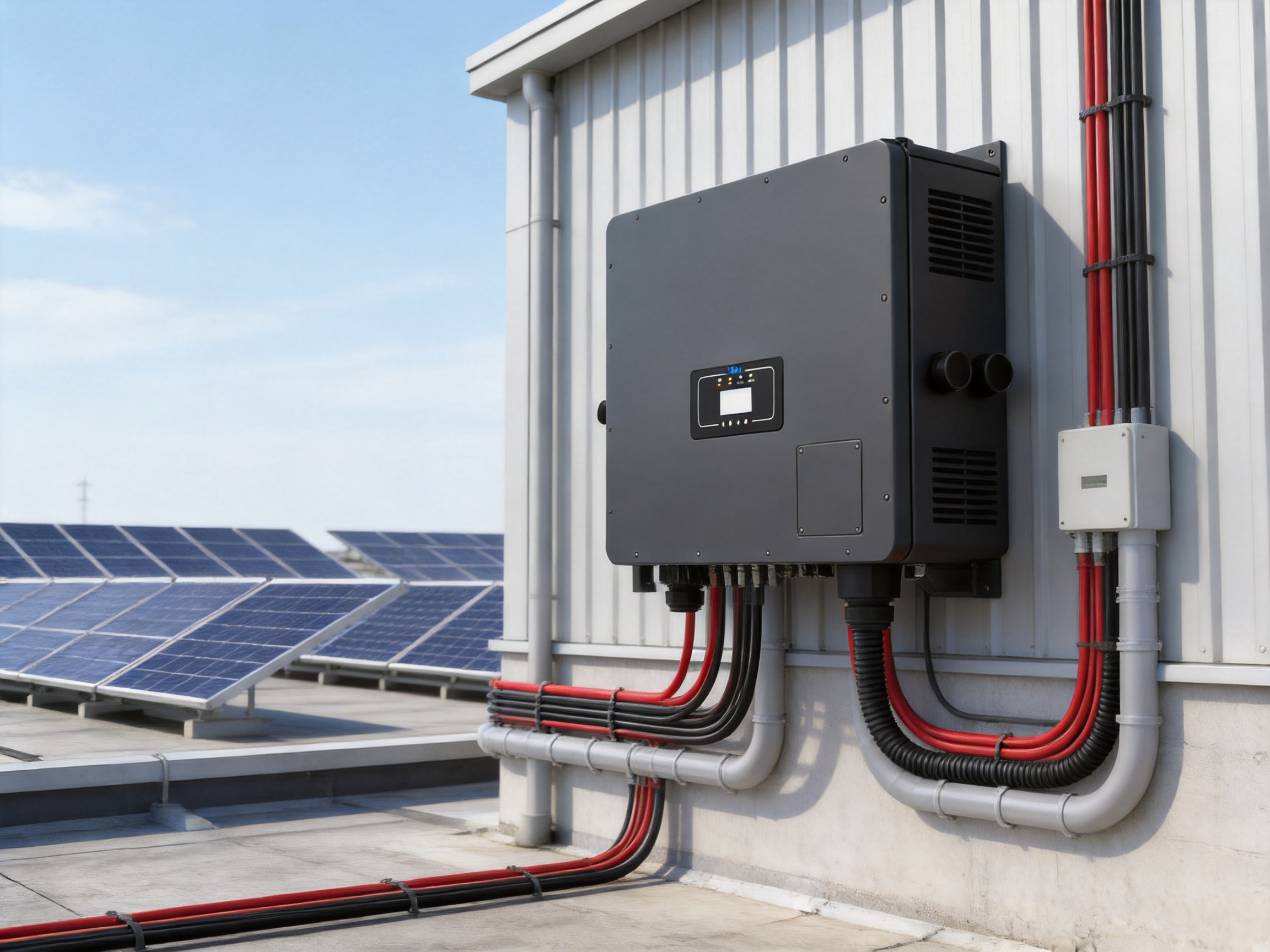
The inverter family is intended for three-phase grid-connected applications and uses a 3L+N+PE grid connection form. It supports rated output configurations of 220/380 V and 230/400 V, with a voltage range of 0.85 Un to 1.1 Un. The rated grid frequency may be 50 Hz or 60 Hz, with operating ranges of 45 Hz to 55 Hz and 55 Hz to 65 Hz respectively.
Rated AC output current varies by model and voltage configuration. The SUN-60K model has a rated output current of 90.9 A or 87 A, while the SUN-70K model is rated at 106.1 A or 101.5 A. The SUN-75K model is rated at 113.6 A or 108.7 A, and the SUN-80K model is rated at 121.2 A or 115.9 A. Maximum output current is higher, reaching 133.3 A or 127.5 A for the SUN-80K model.
| Model | Rated AC Current | Maximum AC Current | Typical Commercial Application |
|---|---|---|---|
| SUN-60K-G04P3-EU-AM4 | 90.9 A / 87 A | 100 A / 95.7 A | Medium commercial rooftops and distributed plants |
| SUN-70K-G04P3-EU-AM4 | 106.1 A / 101.5 A | 116.7 A / 111.6 A | Commercial and light industrial installations |
| SUN-75K-G04P3-EU-AM4 | 113.6 A / 108.7 A | 125 A / 119.6 A | Industrial rooftops and larger distributed systems |
| SUN-80K-G04P3-EU-AM4 | 121.2 A / 115.9 A | 133.3 A / 127.5 A | High-capacity commercial and industrial arrays |
Commercial facilities often have more demanding grid requirements than small residential systems. They may need controlled reactive power, export limitation, or grid-support functions. The series provides a power factor adjustment range from 0.8 leading to 0.8 lagging. This capability can help system operators meet utility requirements and manage reactive power behavior at the point of connection.
The stated total current harmonic distortion is less than 3%, and DC injection current is less than 0.5% of rated current. Low harmonic distortion helps maintain power quality, although the final performance of a complete installation also depends on the grid impedance, transformer characteristics, cable design, other connected loads, and local interconnection requirements.
Zero Export and Virtual Synchronous Generator Applications
Many commercial property owners want to use solar generation without exporting surplus power to the utility grid. This may be required by local regulations, grid connection agreements, or a facility’s energy management strategy. The product information identifies zero export application support, allowing the inverter to be incorporated into a controlled system that limits power sent to the grid.
A zero-export installation generally requires appropriate metering, communication, commissioning, and control logic. The inverter alone does not eliminate the need for a properly designed energy management system. When correctly configured, the system can adjust photovoltaic output in response to the facility’s consumption and the measured power exchanged with the grid.
The inverter also supports VSG application. Virtual synchronous generator functionality is intended to provide behavior that resembles selected characteristics of a conventional synchronous generator, such as controlled response to grid conditions. This can be valuable in modern power systems where a growing share of generation comes from inverter-based renewable sources.
These functions give the series a broader application range than a basic grid-following inverter without advanced control options. They support projects that require more active interaction with the electrical network, while still allowing the inverter to operate as a conventional three-phase photovoltaic conversion unit when appropriate.
Protection Features for Long-Term Operation
Protection is a central consideration in commercial photovoltaic design because systems operate outdoors, often at high DC voltages and substantial current levels. The series includes a broad set of electrical and operational protection functions intended to reduce equipment risk and support safe system operation.
DC reverse polarity protection helps prevent damage when photovoltaic conductors are connected with incorrect polarity. AC output overcurrent protection, AC output overvoltage protection, and AC short-circuit protection address abnormal conditions on the grid side. Thermal protection monitors temperature-related risks, while insulation impedance detection helps identify insulation problems between the PV circuit and ground.
DC component monitoring is included to identify undesirable direct-current components in the AC output. Residual current detection provides another layer of protection by monitoring leakage-related conditions. Anti-islanding protection is also included. This is essential for grid-connected inverters because the equipment must stop energizing a disconnected utility circuit when the grid is unavailable, subject to the applicable local requirements and settings.
| Protection or Safety Function | Availability | Purpose in a Solar Installation |
|---|---|---|
| DC reverse polarity protection | Included | Helps protect the DC input stage against incorrect polarity |
| AC output overcurrent protection | Included | Responds to excessive current on the AC side |
| AC output overvoltage protection | Included | Helps address abnormal AC voltage conditions |
| Insulation impedance detection | Included | Monitors insulation conditions in the PV circuit |
| Anti-islanding protection | Included | Supports safe disconnection from an unavailable utility grid |
| AFCI | Optional | Can help detect selected arc-fault conditions when specified and enabled |
| DC and AC surge protection | Type II | Helps protect against transient overvoltage events |
| DC switch | Included | Provides local DC isolation capability |
Type II surge protection is provided on both the DC and AC sides. This is an important distinction for rooftop and ground-mounted systems exposed to lightning-related transients and switching events. Surge protection must still be coordinated with the site’s external lightning protection, grounding, cable routing, and regional installation standards.
An arc fault circuit interrupter is available as an option. Project developers should confirm whether AFCI is required by the applicable electrical code, utility rules, insurance conditions, or project specifications. Optional safety features should be selected during procurement rather than added after installation whenever possible.
Outdoor Enclosure and Thermal Management
The inverter has an IP65 ingress protection rating, making it suitable for appropriately designed outdoor installations. IP65 indicates protection against dust ingress and water jets from specified directions; it does not mean the inverter can be placed in any location without regard to drainage, direct exposure, ventilation, or installation clearances.
The operating temperature range is specified as -25°C to +60°C, with derating above 45°C. Derating is a normal strategy in high-power electronic equipment. When ambient temperature rises, the inverter may reduce its output to keep internal components within safe thermal limits. Correct placement, adequate airflow, avoidance of heat sources, and observance of clearance requirements are therefore important for maintaining maximum production.
The series uses intelligent air cooling. This approach can provide effective heat removal for a high-power string inverter while avoiding the complexity of liquid cooling in a standard distributed PV application. Intelligent control can adjust cooling behavior according to temperature and load, helping balance thermal performance, energy consumption, and acoustic behavior.
Noise is specified at no more than 55 dB. This is relevant for commercial buildings located near offices, residential areas, schools, or other noise-sensitive environments. Even with a moderate noise rating, installers should consider wall mounting, equipment-room acoustics, nighttime operating conditions, and the distance from occupied areas.
The permitted ambient humidity range is 0% to 100%, and the permitted altitude is up to 4,000 meters. At high altitude, air density and cooling performance can change, so the project team should verify any required power derating or installation adjustments in the final technical documentation.
Compact Mechanical Design
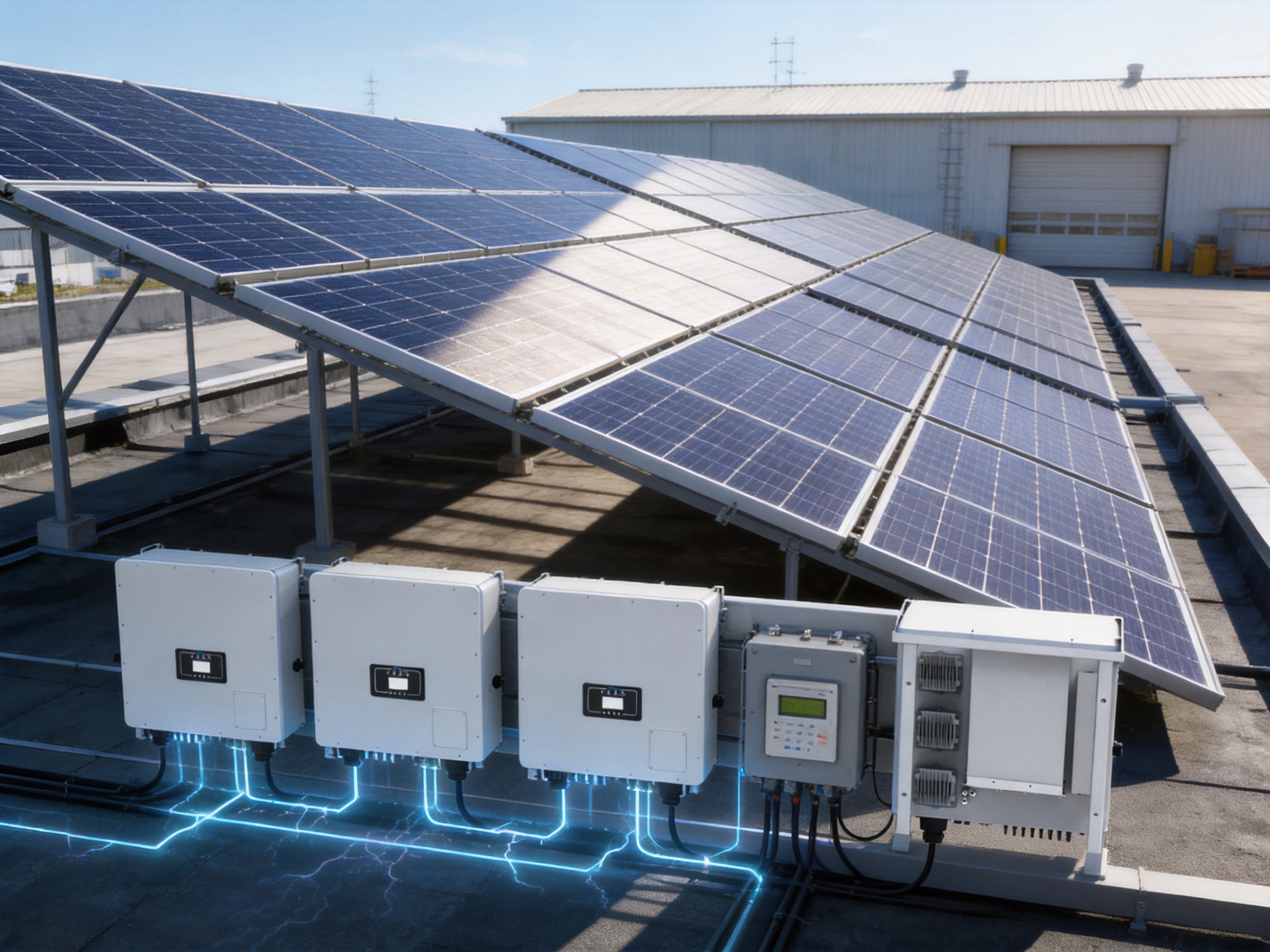
The cabinet dimensions are 698 mm wide, 613 mm high, and 236.5 mm deep, excluding connectors and brackets. The listed weight is 53.7 kg. For a 60 kW to 80 kW three-phase inverter, this form factor can help reduce the physical footprint of the inverter station and simplify arrangement on a commercial site.
A compact enclosure can lower the amount of wall or equipment-yard space needed, which is particularly useful on urban rooftops and industrial properties where space is limited. It can also make it easier to create a consistent inverter layout with organized DC cable paths, AC distribution equipment, and communications wiring.
Nevertheless, high-power equipment should be installed by qualified personnel using appropriate lifting and mounting procedures. The mounting structure must support the inverter’s weight and account for wind, vibration, seismic conditions where applicable, and the mechanical requirements of the building or support frame.
Monitoring and Communications
Communication interfaces include RS485 and RS232. Monitoring options include GPRS, Wi-Fi, Bluetooth, 4G, and LAN. This range allows the inverter to be adapted to different site communication architectures, from a simple local commissioning connection to a larger commercial monitoring platform.
Remote monitoring can help operators review energy production, identify alarms, assess operating conditions, and compare the performance of different inverter units. For commercial asset owners, this information supports preventive maintenance and helps reduce the time required to diagnose underperformance.
String intelligent monitoring is available as an option. Conventional monitoring may show total inverter output and broad alarm conditions, while string-level monitoring can provide more detailed information about individual string behavior. This can help identify disconnected strings, abnormal current, soiling, shading, fuse problems, or gradual mismatch that might otherwise remain hidden within the total array output.
Monitoring quality depends on more than hardware. It also depends on sensor placement, communication reliability, data resolution, software configuration, cybersecurity practices, and the responsiveness of the service team. Project owners should define data retention, user access, alarm escalation, and communication backup requirements during the design phase.
Installation Flexibility and System Planning
The wide MPPT voltage range and four-tracker architecture can support a variety of commercial module arrangements. Designers can create separate string groups for different roof faces or use the available trackers to manage portions of an array with different cable lengths and operating characteristics.
The maximum input voltage of 1,100 V enables the use of longer strings than older low-voltage PV systems, subject to module voltage, local temperature, and code calculations. Longer strings may reduce the number of home-run cables and lower DC wiring losses. However, string voltage must be checked at the lowest anticipated temperature because open-circuit voltage increases as module temperature falls.
The current specifications are equally important. Modern photovoltaic modules may have higher operating and short-circuit currents than earlier module generations. The maximum operating input current of 40 A per MPPT grouping and short-circuit current specification of 60 A per grouping provide a basis for evaluating compatibility, but the exact parallel-string arrangement must be calculated from the selected module datasheet and the inverter installation manual.
For a commercial project, designers should review at least the following factors:
- Module open-circuit voltage at the site’s minimum design temperature.
- Module short-circuit current and operating current under the expected irradiance conditions.
- The number of strings assigned to each MPPT.
- DC cable size, voltage drop, connector compatibility, and routing.
- Expected clipping caused by PV array oversizing.
- AC conductor sizing, protection, isolation, and transformer requirements.
- Grid voltage, frequency, power factor, and reactive power requirements.
- Environmental conditions, including temperature, humidity, dust, salt, and altitude.
- Communication architecture and monitoring responsibilities.
Advantages Compared with Conventional Alternatives
The main competitive advantage of the series is the balance between high power density and string-level design flexibility. A small residential inverter may be easy to install but is not suitable for a large commercial array because many units would be required. A traditional central inverter may offer high power from one platform, but its single conversion block can make the system more sensitive to failures or array-wide operating limitations. The four-MPPT architecture occupies a useful middle ground.
Compared with a lower-power string inverter, each unit can handle a larger portion of a commercial array, reducing the number of inverter units, AC connections, communication addresses, and mounting points. Compared with a basic large string inverter, the series adds advanced options such as zero export, VSG application, intelligent string monitoring, optional AFCI, and anti-PID functionality.
The product’s high maximum efficiency, broad voltage window, and 1,100 V maximum PV input voltage are also important differentiators when evaluated against older commercial inverter platforms. A wide operating range can reduce design constraints and help accommodate modern high-power modules.
Another advantage is the inclusion of Type II surge protection on both sides of the inverter. Surge protection is not a substitute for a complete site protection strategy, but integrated DC and AC protection can simplify equipment selection and reduce the risk of omitting a critical protection element during system design.
The series also provides a comparatively broad environmental specification. Operation from -25°C to +60°C, permitted altitude up to 4,000 meters, IP65 protection, and intelligent air cooling support a wide range of project locations. The actual suitability of any site still depends on installation conditions and local environmental hazards.
Important Comparison Considerations
Product comparisons should not rely on maximum efficiency alone. A fair comparison should examine weighted efficiency, MPPT count, current capability, maximum DC voltage, maximum AC current, protection functions, monitoring, serviceability, certification, warranty, and grid-code compatibility.
It is also important to compare the total balance-of-system cost. An inverter with a lower purchase price may require additional external surge protection, monitoring devices, string combiner equipment, or more complex wiring. Conversely, a higher-feature inverter may deliver value through fewer units, simpler commissioning, improved diagnostics, and better compatibility with the project’s energy management strategy.
Site-specific factors remain decisive. A commercial rooftop with multiple orientations may benefit greatly from four MPPTs, while a simple south-facing ground array may place greater emphasis on cost, transformer integration, or service logistics. The most suitable inverter is the one that matches the electrical and operational needs of the project rather than the one with the highest isolated specification.
Optional Anti-PID Function
Potential-induced degradation, commonly known as PID, can affect photovoltaic modules under certain combinations of voltage, humidity, temperature, module construction, and system grounding conditions. The product family offers an anti-PID function as an option.
Anti-PID functionality can be valuable in projects using module technologies or environmental conditions where PID risk has been identified. The decision should be based on the module manufacturer’s recommendations, the system voltage design, the site climate, and the applicable inverter configuration. It should not be treated as a universal replacement for module quality, correct grounding, suitable system design, and regular performance monitoring.
When selected, the function should be commissioned according to the relevant technical instructions. Project owners should also maintain records of module type, inverter settings, grounding arrangement, and any anti-PID equipment used so that future maintenance teams understand the system configuration.
Manufacturing and Engineering Strengths
The manufacturer is a comprehensive technology enterprise integrating research and development, design, production, sales, and service. This integrated structure is important for an inverter manufacturer because product performance depends on coordination between power electronics, firmware, mechanical design, thermal engineering, manufacturing quality, testing, field service, and documentation.
According to the supplied company information, the organization was founded in 2000 and became listed on the Shanghai Stock Exchange in April 2021. Its product portfolio covers photovoltaic inverters, energy storage systems, microinverters, and environmental appliances. The inverter range includes string inverters from 1 kW to 136 kW, energy storage inverters from 3 kW to 80 kW, and microinverters from 300 W to 2.2 kW.
This breadth gives the manufacturer experience across multiple power levels and application categories. A company working across residential, commercial, industrial, and utility-related energy systems can develop a broader understanding of compatibility, grid behavior, communication, thermal management, and installation requirements.
Research and Development Integration
Advanced manufacturing begins before production. It starts with product architecture, component selection, simulation, firmware development, and design verification. The SUN-60/70/75/80K-G04P3-EU-AM4 platform reflects an engineering approach that integrates high-current DC inputs, multi-channel MPPT control, three-phase AC conversion, protection circuits, communications, cooling, and grid-support functions within one enclosure.
Such integration requires coordination among hardware and software teams. MPPT algorithms must work with the power stage and current sensors. Thermal controls must respond to semiconductor loading. Protection functions must detect faults quickly without creating unnecessary interruptions. Communication interfaces must provide useful data while maintaining reliable operation in electrically noisy environments.
The manufacturer’s stated focus on research, design, production, sales, and service allows feedback from field installations to inform later product improvements. In a rapidly changing solar market, this feedback loop is important because photovoltaic modules, grid requirements, communication standards, and energy management practices continue to evolve.
Production Quality and Process Control
High-power inverters require repeatable manufacturing processes. Production quality involves incoming component inspection, controlled assembly, electrical connection verification, firmware loading, calibration, insulation testing, functional testing, and final inspection. The exact internal process is not detailed in the supplied materials, so project purchasers should request the manufacturer’s current quality documentation and factory acceptance procedures when required.
From a procurement perspective, a strong manufacturing process should address critical areas such as torque control for high-current connections, correct routing of signal and power wiring, thermal interface consistency, enclosure sealing, connector verification, and traceability of serial numbers and major components. These controls help reduce variation between units and make future service more efficient.
Testing should cover normal conversion operation as well as protective behavior. A commercial inverter must be evaluated under different voltage, current, temperature, grid, and fault conditions. Verification of anti-islanding, overcurrent response, insulation monitoring, surge protection coordination, and communication behavior is especially important for a product intended for large distributed generation systems.
Standards and Compliance Orientation
The supplied product information lists grid regulations including IEC 61727, IEC 62116, CEI 0-21, EN 50549, NRS 097, RD 140, UNE 217002, OVE-Richtlinie R25, G99, and VDE-AR-N 4105. It also lists safety and electromagnetic compatibility standards including IEC/EN 61000-6-1, IEC/EN 61000-6-2, IEC/EN 61000-6-3, IEC/EN 61000-6-4, IEC/EN 62109-1, and IEC/EN 62109-2.
These references indicate that the platform is designed with international grid, safety, and EMC requirements in mind. Compliance for a particular project must still be confirmed for the exact model, firmware version, country, voltage configuration, and current certification status. Local authorities and utilities may require additional documents, witnessed tests, or settings verification before grid connection.
A manufacturer with broad regional experience can provide value by supporting the documentation process, helping installers understand grid-code settings, and maintaining technical files for different markets. This is especially important for commercial projects where commissioning delays can affect construction schedules and revenue forecasts.
Serviceability and Lifecycle Value
The inverter carries a stated five-year warranty. Warranty terms should be reviewed in full, including the start date, registration requirements, geographic coverage, exclusions, repair or replacement procedures, shipping responsibilities, and the availability of extended warranty options.
Lifecycle value also depends on serviceability. A distributed string architecture can make fault isolation more straightforward because the affected inverter or monitored string may be identified without shutting down an entire central conversion block. If one inverter requires service, the remaining units may continue operating, subject to the site design and safety procedures.
Remote monitoring can further reduce diagnostic time. Operators can review alarms and production trends before dispatching technicians. Spare parts planning, firmware management, connector availability, and installer training should be included in the project’s operation and maintenance strategy.
The manufacturer’s broad global business and product portfolio may support a substantial service network, but service performance is ultimately regional. Before purchase, developers should confirm the local distributor, technical support contact, replacement process, expected response time, and availability of trained service personnel.
Recommended Applications
The SUN-60/70/75/80K-G04P3-EU-AM4 series is well suited to commercial and industrial projects where three-phase output and significant PV capacity are required. Potential applications include factory roofs, warehouses, logistics centers, office complexes, schools, retail facilities, agricultural buildings, parking structures, and distributed ground-mounted systems.
Facilities with substantial daytime electricity consumption may benefit from the inverter’s zero-export capability when surplus generation must be controlled. Facilities with multiple roof orientations may benefit from four MPPTs. Projects in regions with demanding grid-support requirements may benefit from the adjustable power factor and VSG application capability.
The product can also be considered for systems that require detailed operational visibility. Optional intelligent string monitoring may be useful for large rooftops where access is difficult, where maintenance costs are high, or where the asset owner wants to compare the performance of different array sections.
Design and Commissioning Guidance
Before installation, the engineering team should confirm that the selected inverter model matches the array’s maximum voltage and current. The cold-weather open-circuit voltage must remain below the inverter’s maximum PV input voltage, while the operating voltage must remain within the MPPT range for the expected conditions.
AC design should account for rated and maximum output current, conductor ampacity, voltage drop, protection coordination, disconnect requirements, transformer capacity, and the facility’s main switchboard. The grid connection form of 3L+N+PE should be coordinated with the site’s grounding and neutral arrangements.
Installers should provide sufficient clearance around the inverter for airflow, maintenance access, cable bending radius, and safe isolation. Locations with direct heat accumulation, persistent water exposure, corrosive contaminants, or restricted airflow should be avoided unless specifically approved by the manufacturer.
Commissioning should include polarity checks, insulation measurements, connector inspection, AC voltage verification, communication tests, protection verification, and grid-code parameter confirmation. Where zero export is used, the meter orientation, phase sequence, communication path, and export-control response should be tested under realistic load conditions.
Where monitoring is enabled, each inverter should be assigned a clear identifier and connected to the site’s monitoring platform. Alarm thresholds and notification responsibilities should be agreed with the owner before handover. A complete commissioning record should include serial numbers, firmware versions, settings, test results, and photographs of the installed equipment.
Operational Benefits for Asset Owners
For an asset owner, the value of a commercial inverter is measured over years rather than at the moment of purchase. The product family’s high efficiency can support energy yield, while four MPPTs can help the system respond to complex array conditions. Protection functions can reduce exposure to common electrical faults, and optional monitoring can improve visibility of performance problems.
The range of 60 kW, 70 kW, 75 kW, and 80 kW models also supports more precise capacity planning. A developer can select a unit based on the desired AC capacity, array size, interconnection limit, and expected production profile. This may help avoid unnecessary overcapacity or excessive use of smaller units.
In a multi-inverter commercial plant, distributed conversion can also provide operational resilience. A fault affecting one inverter does not necessarily stop generation from the full array. The result is not complete immunity from downtime, but it can limit the scope of an individual equipment failure.
Q&A
What type of inverter is this product?
It is a three-phase grid-connected string inverter family designed for commercial and industrial photovoltaic systems. The available models provide rated active power from 60 kW to 80 kW.
How many MPPTs does each inverter have?
Each model has four maximum power point trackers. This supports more flexible array design and can help manage different roof orientations, tilt angles, and partial shading conditions.
What is the maximum PV input voltage?
The maximum PV input voltage is 1,100 V. The MPPT voltage range is 200 V to 1,000 V, and the start-up voltage is 250 V. Final string design must consider the module’s temperature-dependent voltage.
Can the inverter be used with oversized PV arrays?
Yes. The listed maximum PV input power ranges from 90 kW for the 60 kW model to 120 kW for the 80 kW model. The allowable oversizing ratio and operating conditions must be verified against the current technical manual and project design.
Does the inverter support zero export?
The product information identifies zero export application support. A complete zero-export system normally requires compatible metering, communication, configuration, and commissioning at the point of connection.
What is VSG application support?
VSG means virtual synchronous generator. This function allows the inverter to provide selected grid-support behavior that resembles aspects of synchronous generator operation. The applicable settings and availability should be confirmed for the project’s market and grid code.
What protection features are included?
Included features include DC reverse polarity protection, AC output overcurrent and overvoltage protection, AC short-circuit protection, thermal protection, insulation impedance detection, DC component monitoring, anti-islanding protection, residual current detection, Type II DC and AC surge protection, and a DC switch.
Is AFCI included as standard?
AFCI is listed as optional. The project team should determine whether it is required by local regulations, utility rules, insurance provisions, or the project specification.
What monitoring options are available?
The communication interfaces include RS485 and RS232. Monitoring options include GPRS, Wi-Fi, Bluetooth, 4G, and LAN. Intelligent string monitoring is also available as an option.
Can the inverter be installed outdoors?
The enclosure has an IP65 rating and is designed for outdoor-capable applications when installed according to the manufacturer’s instructions. Proper clearance, drainage, airflow, temperature control, and protection from severe environmental exposure remain necessary.
What is the operating temperature range?
The specified operating temperature range is -25°C to +60°C, with output derating above 45°C. Installation location and ventilation can influence actual performance.
What is the warranty period?
The listed warranty period is five years. Purchasers should review the complete warranty terms and confirm regional service arrangements before final procurement.
What standards are associated with the product?
The supplied data lists several international and regional grid regulations, including IEC 61727, IEC 62116, EN 50549, G99, and VDE-AR-N 4105, as well as IEC/EN safety and EMC standards. Exact compliance must be confirmed for the selected model and project jurisdiction.
Conclusion
The SUN-60/70/75/80K-G04P3-EU-AM4 family is designed to address the practical requirements of modern commercial solar generation. Its four MPPTs provide string-design flexibility, while its broad voltage range and high current capability support contemporary high-power photovoltaic modules. Maximum efficiency of up to 98.70%, MPPT efficiency above 99%, and selectable power ratings from 60 kW to 80 kW support efficient and scalable system planning.
Advanced application features, including zero export and VSG operation, expand the product beyond basic energy conversion. Integrated Type II DC and AC surge protection, anti-islanding, insulation monitoring, thermal protection, residual current detection, and optional AFCI contribute to a comprehensive protection strategy.
The manufacturer’s integrated research, design, production, sales, and service structure provides a strong foundation for developing and supporting complex power electronics. Its broad inverter and energy storage portfolio, international market experience, listed standards, and product range strengthen its position as a supplier for residential, commercial, industrial, and utility-related energy applications.
For developers and installers, the best results will come from matching the inverter to the project’s exact electrical, environmental, regulatory, and operational conditions. With correct string design, careful commissioning, suitable monitoring, and an effective maintenance plan, this inverter family can serve as a robust platform for high-capacity distributed solar generation.
References
Deye Inverter Technology. SUN-60/70/75/80K-G04P3-EU-AM4 Product Datasheet.
Deye Inverter Technology. SUN-60/70/75/80K-G04P3-EU-AM4 Installation and Operation Manual.
International Electrotechnical Commission. IEC 62109-1 and IEC 62109-2: Safety of Power Converters for Use in Photovoltaic Power Systems.
International Electrotechnical Commission. IEC 61727: Photovoltaic Systems—Characteristics of the Utility Interface.
International Electrotechnical Commission. IEC 62116: Utility-Interactive Photovoltaic Inverters—Test Procedure of Islanding Prevention Measures.
EN 50549. Requirements for the Connection of Generating Plants in Parallel with Distribution Networks.
International Electrotechnical Commission. IEC 61000 Series: Electromagnetic Compatibility Requirements.
Manufacturer-provided corporate information concerning research and development, manufacturing, product portfolio, international operations, and service capabilities.
Product: SUN-60/70/75/80K-G04P3-EU-AM4
PREV:Smart Plug for Intelligent Solar Load Control and Energy Monitoring
NEXT:Four-MPPT Microinverters for High-Performance Single-Phase Solar Systems
Share
Product recommendations
news recommendations
-
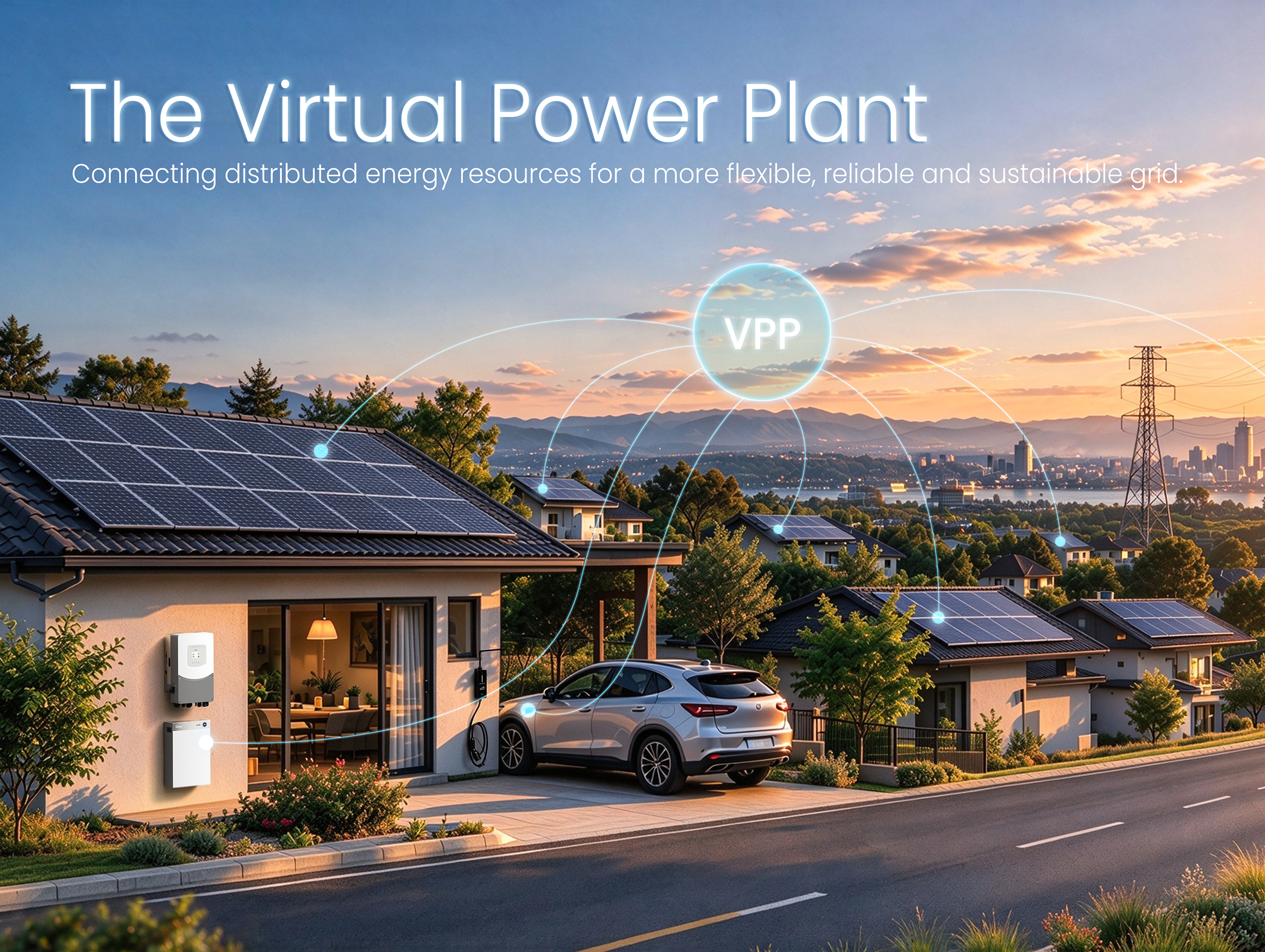 From Centralized Grids to Virtual Power Plants: The Next Evolution of the Power System
For more than a century, power systems around the world have relied on a centralized model. Large p...
-
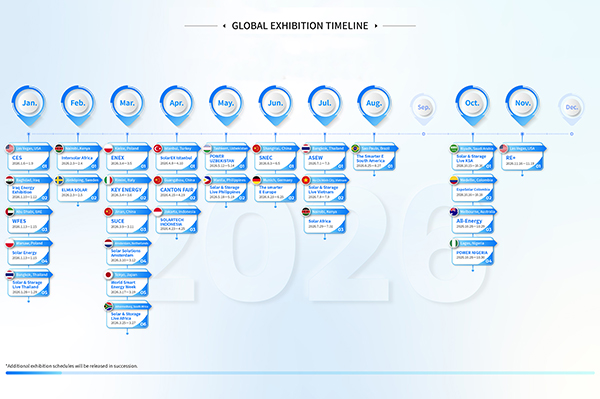 GLOBAL EXHIBITION TIMELINE
*Click to view larger image
-
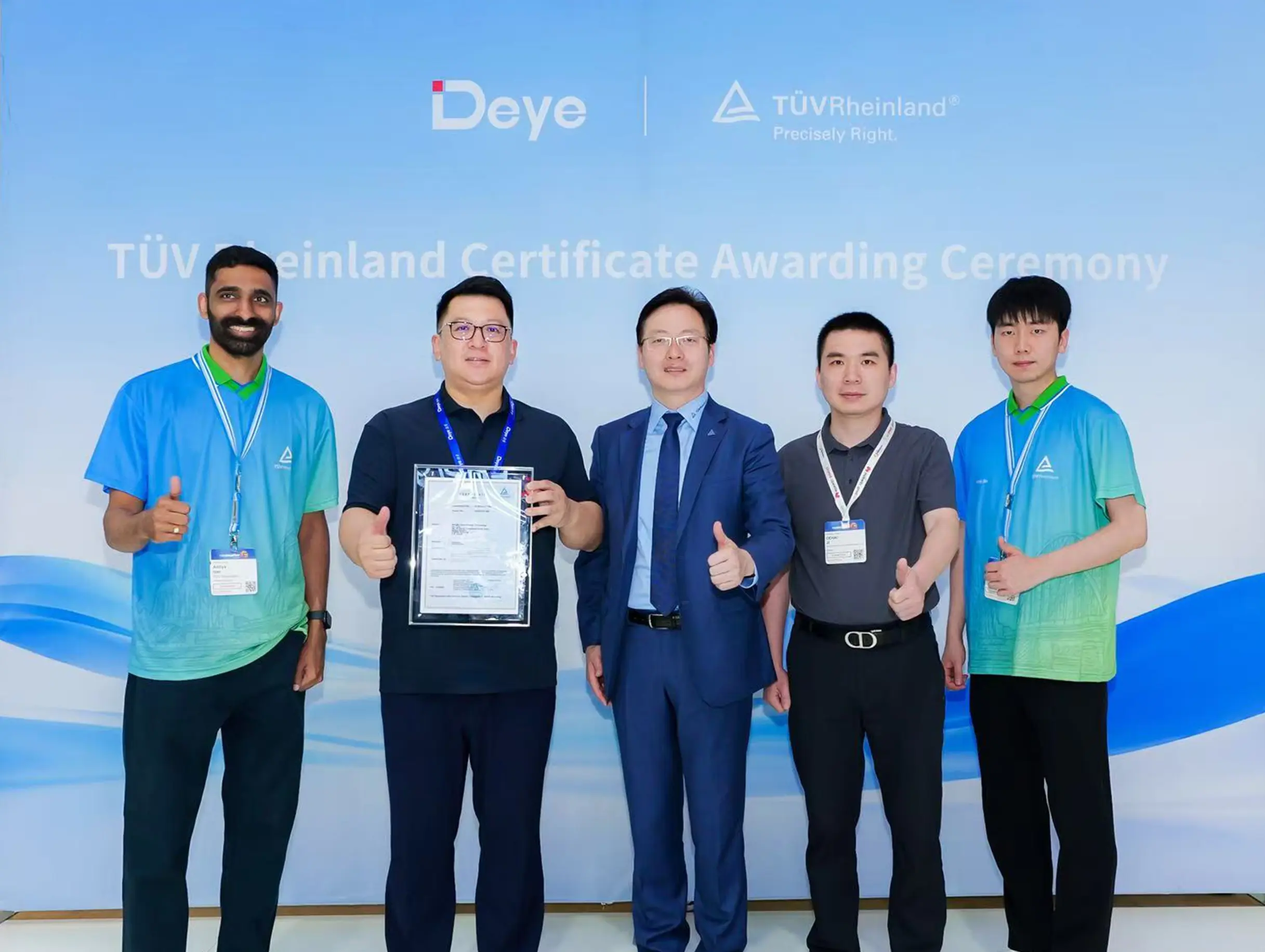 Deye Secures Multiple TÜV Rheinland Certifications at The smarter E Europe
On June 23, the opening day of The smarter E Europe 2026, Deye was officially awarded several presti...

Copyright@ 2024.Ningbo Deye Inverter Technology Co.,Ltd. All rights reserved. Solar Inverter Manufacturer
