
 Online Shop
 English
 China - 简体中文
 Global - English
 Brazil - Português
 Netherlands - Dutch
 Italy - Italiano
 Germany - Deutsch
 Spain - Español
 France - Français
 Vietnam - Tiếng Việt
 Poland - Polski
 Australia - English
 Japan - 日本語
Zhuo Yiran — Senior After-Sales Service Engineer, Energy Storage Systems

High-Efficiency Low-Voltage Three-Phase String Inverter for Commercial Solar PV Systems
The SUN-33/35/40/45/50K-G04P3-EU-AM4-LV is a three-phase low-voltage string inverter series designed for commercial and industrial solar photovoltaic systems that require high conversion efficiency, flexible PV string design, reliable grid support, and practical monitoring capability. Covering rated AC output power levels from 33 kW to 50 kW, the series is especially suitable for 127/220 V and 133/230 V three-phase systems, offering installers and project owners a professional solution for rooftops, factories, warehouses, agricultural facilities, public buildings, and distributed commercial PV plants.
Unlike basic string inverters that may be limited by narrow voltage windows, fewer MPPT channels, or insufficient monitoring options, this inverter series combines four independent MPP trackers, maximum efficiency up to 98.7%, wide output voltage adaptability, zero export functionality, virtual synchronous generator application support, optional string intelligent monitoring, and optional anti-PID protection. These features make the product a strong choice for projects where energy yield, system safety, and grid compatibility are equally important.
SUN-33/35/40/45/50K-G04P3-EU-AM4-LV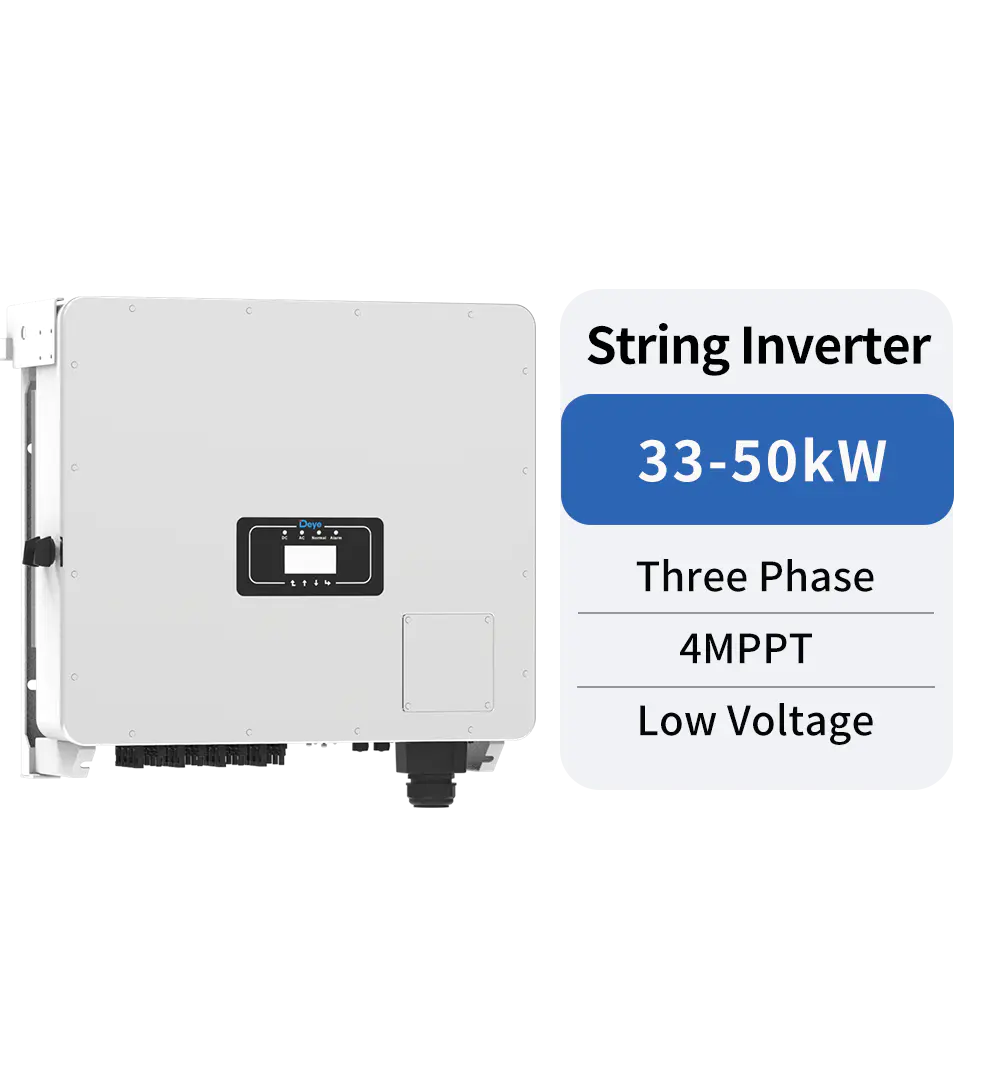
Product Overview
The SUN-33/35/40/45/50K-G04P3-EU-AM4-LV series belongs to the three-phase low-voltage string inverter category. It is available in five power classes: 33 kW, 35 kW, 40 kW, 45 kW, and 50 kW. This range allows solar professionals to select the right inverter capacity according to PV array size, building load demand, grid connection requirements, and installation layout.
The series supports a maximum PV input voltage of 800 V and an MPPT voltage range of 200 V to 700 V, with a rated PV input voltage of 500 V. The start-up voltage is 250 V, allowing the inverter to begin operation under suitable irradiance conditions while maintaining stable power conversion during daily solar generation cycles. With four MPPT channels and strong input current capacity, the inverter is able to handle complex roof orientations, multiple array sections, and different string configurations more effectively than many conventional low-voltage inverters.
The rated AC output side is designed for low-voltage three-phase systems, supporting 127 V/220 V and 133 V/230 V grid environments. The grid connection form is 3L/N/PE, and the rated output grid frequency supports both 50 Hz and 60 Hz networks with specified operating ranges. This makes the series relevant for international markets where low-voltage three-phase commercial systems are common.
In terms of performance, the series offers maximum efficiency up to 98.7% and MPPT efficiency above 99%. For commercial installations, this efficiency level matters because even a small improvement in conversion performance can translate into meaningful additional energy generation over the life of the PV plant. When combined with intelligent cooling, multiple protections, and optional advanced monitoring functions, the inverter becomes a complete power conversion platform rather than merely a basic grid-tie device.
Key Technical Specifications
The following table summarizes major specifications of the inverter series. Values may vary by model and project configuration, but the table shows the core capabilities that define the product family.
| Item | SUN-33K-G04P3-EU-AM4-LV | SUN-35K-G04P3-EU-AM4-LV | SUN-40K-G04P3-EU-AM4-LV | SUN-45K-G04P3-EU-AM4-LV | SUN-50K-G04P3-EU-AM4-LV |
| Rated AC Output Active Power | 33 kW | 35 kW | 40 kW | 45 kW | 50 kW |
| Maximum PV Input Power | 49.5 kW | 52.5 kW | 60 kW | 67.5 kW | 75 kW |
| Maximum PV Input Voltage | 800 V | 800 V | 800 V | 800 V | 800 V |
| MPPT Voltage Range | 200-700 V | 200-700 V | 200-700 V | 200-700 V | 200-700 V |
| Number of MPP Trackers | 4 | 4 | 4 | 4 | 4 |
| Maximum Operating PV Input Current | 40+40+40+40 A | 40+40+40+40 A | 40+40+40+40 A | 40+40+40+40 A | 40+40+40+40 A |
| Rated Output Voltage | 127/220 V, 133/230 V | 127/220 V, 133/230 V | 127/220 V, 133/230 V | 127/220 V, 133/230 V | 127/220 V, 133/230 V |
| Maximum Efficiency | 98.6% | Up to 98.7% | Up to 98.7% | Up to 98.7% | Up to 98.7% |
| Ingress Protection | IP65 | IP65 | IP65 | IP65 | IP65 |
| Cooling Method | Intelligent air cooling | Intelligent air cooling | Intelligent air cooling | Intelligent air cooling | Intelligent air cooling |
Designed for Low-Voltage Three-Phase Commercial Systems
One of the most important characteristics of this inverter series is its compatibility with low-voltage three-phase systems. Many commercial and industrial buildings operate with distribution networks around 127/220 V or 133/230 V. In such environments, using an inverter that is purpose-built for the local voltage level can simplify system design, reduce transformation complexity, and improve installation practicality.
Some competing inverters are optimized mainly for higher voltage three-phase grids and may require additional electrical adaptation when used in low-voltage applications. By supporting 127/220 V and 133/230 V directly, the SUN-33/35/40/45/50K-G04P3-EU-AM4-LV series provides a more straightforward solution for low-voltage distributed PV systems. This is particularly valuable in markets where commercial rooftops, farms, small industrial facilities, and retail sites are commonly connected to low-voltage three-phase networks.
The wide rated output voltage range of 0.85UN to 1.1UN supports grid adaptability. In real commercial installations, voltage conditions can fluctuate due to building loads, transformer distance, seasonal demand, and local grid behavior. A wider operating range helps the inverter remain stable under practical grid conditions while meeting protection and grid compliance requirements.
Four MPPT Channels for Greater Design Flexibility
PV system design is rarely ideal. Commercial rooftops often include different tilt angles, multiple orientations, skylights, ventilation units, parapets, nearby structures, and partial shading at different times of day. In such scenarios, a single or dual MPPT inverter may limit system performance because strings with different operating conditions can interfere with each other when connected to the same tracker.
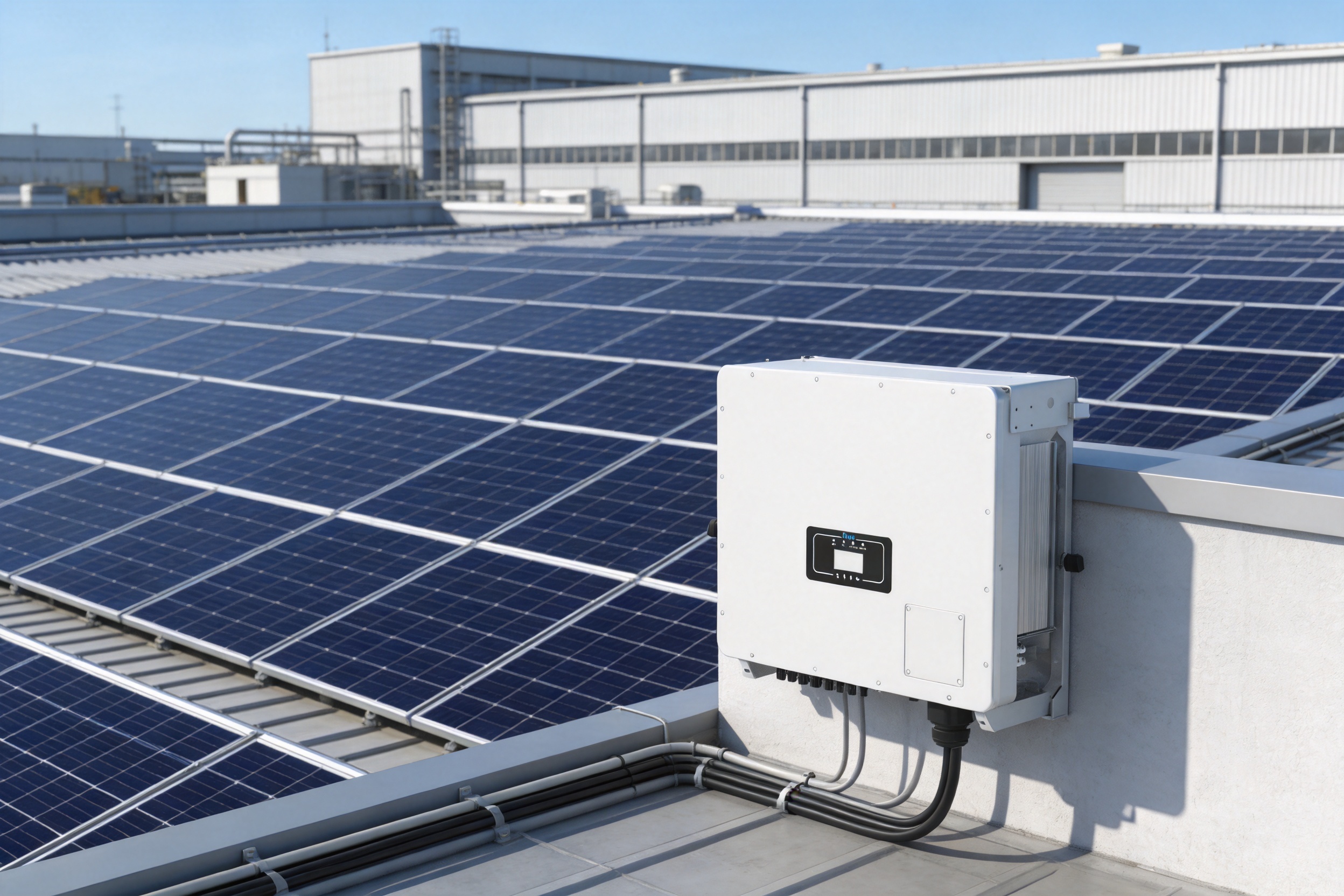
The four-MPPT architecture of this inverter series gives designers more freedom. Each MPPT can independently track the optimal power point of a separate group of PV strings. This improves energy harvest when PV arrays are divided across different roof planes or when string lengths and irradiance profiles vary. With maximum operating PV input current of 40 A per tracker and short-circuit current capacity of 60 A per tracker, the inverter is well suited to modern high-current PV modules.
Compared with many older commercial string inverters, which may have fewer MPPT channels and lower current capacity, the four-tracker design offers a clear advantage. It can reduce mismatch losses, support more complex array layouts, and make better use of available rooftop space. In competitive commercial PV projects, the ability to place modules wherever usable roof area exists can improve total system capacity and return on investment.
High Conversion Efficiency and Long-Term Energy Yield
Maximum efficiency up to 98.7% is a major performance advantage of the series. Inverter efficiency determines how much of the DC energy generated by PV modules is converted into usable AC energy. For a commercial PV system operating for many years, even a fraction of a percentage point can represent a significant amount of electricity.
The MPPT efficiency above 99% is also important. High MPPT efficiency means the inverter can accurately locate and maintain the optimal operating point of the PV array under changing sunlight, temperature, and load conditions. During morning ramp-up, cloudy weather, partial shading, and afternoon decline, effective MPPT control helps the PV system capture more available energy.
When evaluating competing products, project developers should look beyond rated power alone. Two inverters with the same nominal capacity can produce different annual energy yields if their conversion efficiency, MPPT performance, thermal behavior, and derating characteristics differ. The SUN-33/35/40/45/50K-G04P3-EU-AM4-LV series is designed to minimize energy loss through efficient power conversion and intelligent operation, helping system owners improve long-term financial performance.
Oversizing Capability for Better DC Utilization
The series supports substantial maximum PV input power relative to rated AC output power. For example, the 50 kW model supports up to 75 kW of PV input power, while the 40 kW model supports up to 60 kW. This allows DC oversizing strategies that are common in commercial PV design.
DC oversizing can increase energy production during low-irradiance periods, mornings, evenings, and cloudy conditions. While some clipping may occur during peak irradiance, the overall annual yield can often improve when PV array sizing is optimized. The ability to connect more PV capacity to a given inverter rating gives system designers flexibility to balance equipment cost, roof utilization, and energy yield.
Competitor products with lower DC input allowances may restrict this design approach. If the inverter cannot accept enough PV input power or current, the project may require additional inverter capacity, increasing cost and complexity. The high PV input power capability of this series can reduce system design constraints and allow more efficient use of inverter assets.
Zero Export Application for Self-Consumption Projects
Many commercial solar installations are designed primarily for self-consumption. In these cases, the site owner wants to generate electricity for internal use while preventing or limiting power export to the public grid. This requirement may arise because of local regulations, utility interconnection rules, tariff structures, or transformer limitations.
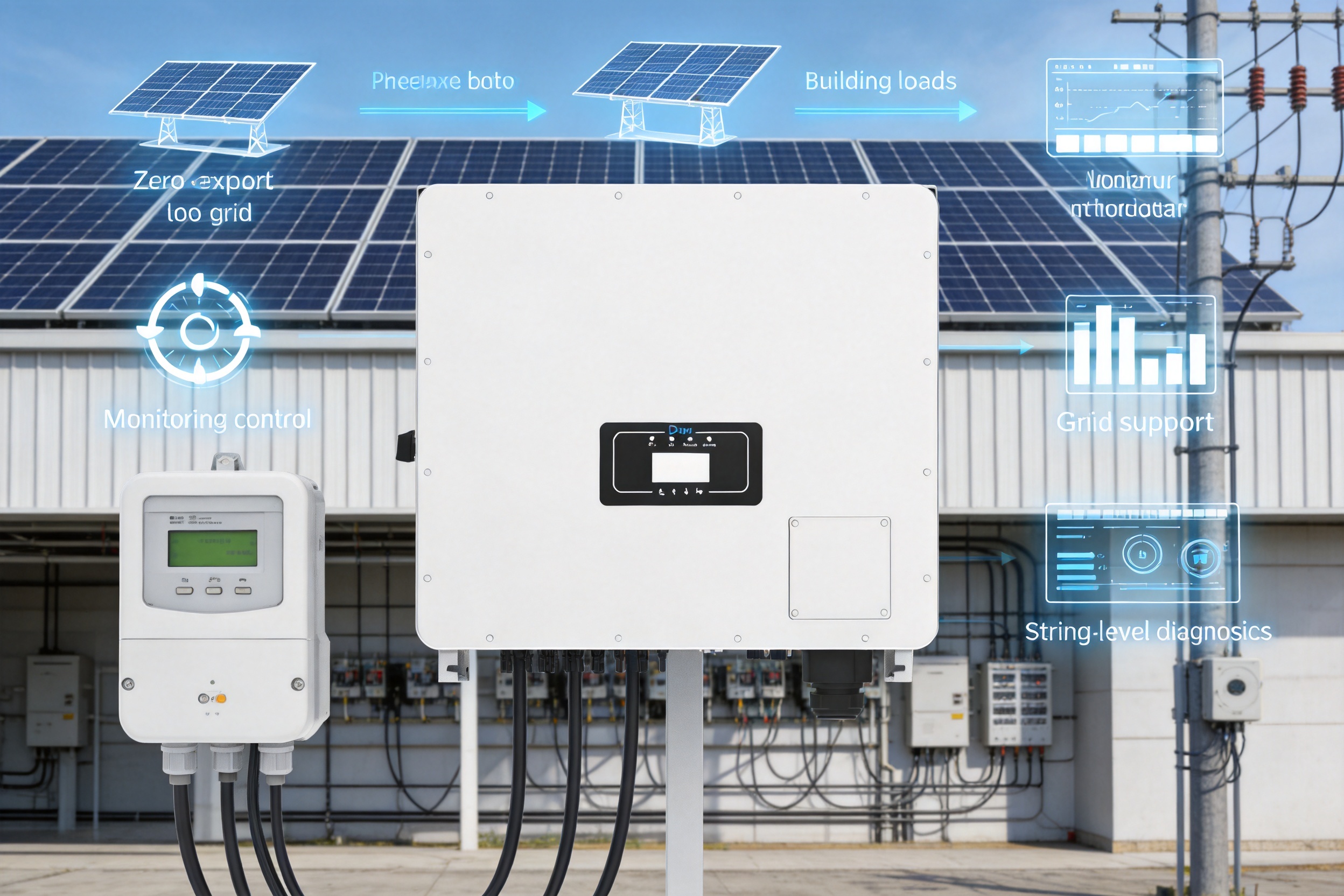
The inverter series supports zero export application, enabling PV systems to match generation with on-site consumption more effectively. With appropriate metering and control configuration, the system can reduce or avoid reverse power flow. This is valuable for factories, shopping centers, farms, schools, hotels, and other facilities that want the economic benefits of solar energy without complex export agreements.
Compared with basic inverters that require external control layers or lack refined export management, integrated zero export capability simplifies project implementation. It can help EPC contractors deliver compliant self-consumption PV systems while giving end users better control over energy flows.
VSG Application for Advanced Grid Support
The series also supports virtual synchronous generator application. VSG functionality is increasingly relevant as distributed renewable energy penetration grows. Traditional synchronous generators naturally provide rotational inertia and grid support characteristics. Power electronic inverters, by contrast, must provide similar support through advanced control algorithms.
VSG application enables the inverter to participate more intelligently in grid behavior. While specific implementation depends on project configuration and grid requirements, the availability of VSG support indicates that the product is designed for modern grid-interactive PV systems rather than simple energy injection alone.
This differentiates the inverter from older products that may only focus on basic grid-tie operation. As utilities introduce stricter standards for distributed generation, advanced grid support features can improve project acceptance and future readiness. For commercial and industrial owners, choosing an inverter with grid support capability can protect the long-term value of the PV investment.
Optional String Intelligent Monitoring
Commercial PV systems can contain many strings. Without detailed monitoring, faults or underperforming strings may remain unnoticed for long periods, reducing generation and revenue. Optional string intelligent monitoring provides a practical tool for identifying abnormal string behavior, improving maintenance efficiency, and supporting performance analysis.
For asset owners and operation teams, string-level insight can shorten troubleshooting time. If one string has lower current than expected, technicians can investigate module damage, connector issues, soiling, shading, fuse problems, or wiring faults. Early detection reduces energy loss and helps maintain system reliability.
Many lower-cost competing inverters provide only basic inverter-level data, which may not reveal string-specific problems. In contrast, optional string intelligent monitoring gives professional PV operators more granular visibility. This can be especially important for larger rooftop systems where manual inspection of every string is time-consuming and costly.
Optional Anti-PID Function for Module Protection
Potential induced degradation, commonly known as PID, can reduce PV module output under certain voltage, humidity, temperature, and system conditions. Anti-PID functionality is therefore valuable for maintaining long-term module performance, especially in large commercial systems where module degradation can cause substantial lifetime energy losses.
The SUN-33/35/40/45/50K-G04P3-EU-AM4-LV series offers optional anti-PID function. This gives system designers and owners the flexibility to include additional protection where environmental or system conditions make PID a concern. The option is particularly useful in humid climates, high-voltage PV arrays, and installations where long-term performance preservation is a priority.
Compared with products that do not offer anti-PID capability, this series provides a stronger foundation for long-term asset protection. It supports not only immediate power conversion but also the durability of the complete PV system.
Comprehensive Electrical Protection
Safety is central to commercial inverter selection. This inverter series includes a broad set of protection functions, including DC reverse polarity protection, AC output overcurrent protection, AC output overvoltage protection, AC output short-circuit protection, thermal protection, insulation impedance detection, DC component monitoring, anti-islanding protection, residual current detection, surge protection, and a DC switch.
These protections contribute to safe operation under abnormal conditions. DC reverse polarity protection helps reduce risk during installation errors. AC overcurrent and short-circuit protection support safe response to grid-side faults. Thermal protection helps prevent damage under high temperature or ventilation issues. Insulation impedance detection and residual current detection support electrical safety by monitoring leakage and insulation performance.
The inclusion of Type II surge protection on both DC and AC sides is also important. Commercial PV systems are exposed to transient overvoltage events caused by lightning activity, switching operations, and grid disturbances. Surge protection helps protect inverter electronics and associated equipment, improving system resilience.
Arc Fault Circuit Interrupter functionality is optional. AFCI can help detect arc fault conditions that may arise from damaged cables, loose connectors, or installation defects. For projects where fire safety requirements are strict, optional AFCI can be an important feature.
IP65 Protection for Outdoor and Harsh Environments
The inverter has an IP65 ingress protection rating, meaning it is designed to resist dust and water ingress in outdoor environments. Commercial rooftop and outdoor installations often expose equipment to rain, dust, humidity, wind, and temperature changes. A robust enclosure is therefore essential for dependable operation.
IP65 protection gives installers more flexibility in equipment placement. While good installation practice still requires proper mounting, ventilation, and compliance with local codes, the rating supports outdoor deployment and reduces the need for elaborate sheltering in many applications.
Competitor products with lower ingress protection may require additional cabinets or more protected locations, increasing cost and reducing installation flexibility. By integrating strong environmental protection, this inverter series supports faster deployment and long-term reliability.
Intelligent Air Cooling and Thermal Management
The series uses intelligent air cooling. Thermal management is a critical factor in inverter reliability because power electronics generate heat during operation. Excessive temperature can reduce efficiency, trigger derating, or shorten component life. Intelligent cooling helps regulate internal temperature according to operating conditions.
The operating temperature range is from -25°C to +60°C, with derating above 45°C. This range is suitable for many commercial environments, from cold climates to hot rooftop installations. In practice, intelligent cooling helps the inverter maintain stable operation while balancing acoustic performance, component protection, and energy conversion.
The specified noise level is less than or equal to 55 dB(A), making the inverter appropriate for commercial settings where equipment noise should be controlled. For rooftops, plant rooms, industrial yards, and utility areas, this noise level supports practical integration into built environments.
Flexible Communication and Monitoring Options
Modern PV systems require data. Energy production, fault status, operating voltage, current, temperature, grid condition, and alarm records are essential for maintaining performance and verifying savings. The inverter provides RS485 and RS232 communication interfaces, with optional monitoring modes including GPRS, Wi-Fi, Bluetooth, 4G, and LAN.
This communication flexibility allows the inverter to fit different project types. A small commercial rooftop may use Wi-Fi or LAN monitoring. A remote agricultural installation may benefit from 4G or GPRS. Bluetooth can assist local commissioning and inspection. RS485 supports industrial communication architecture and integration with data loggers or energy management systems.
Compared with products that offer only one communication method, this inverter series is more adaptable. It can be configured according to site connectivity, monitoring requirements, and owner preference. For EPC companies managing projects across different regions, flexible monitoring options reduce standardization challenges.
Grid Compliance and Standards
The inverter series is designed with reference to recognized grid and safety standards, including NBR 16149, NBR 16150, EN 50549, RD 140, IEC/EN 61000-6-1/2/3/4, IEC/EN 62109-1, and IEC/EN 62109-2. Compliance with such standards is essential for grid-connected PV equipment because it supports safety, electromagnetic compatibility, and interconnection acceptance.
For project developers, standards alignment reduces regulatory uncertainty. When an inverter is designed according to established grid and safety frameworks, approval processes can be smoother, and the final installation is more likely to meet utility requirements. For end users, compliance provides confidence that the equipment has been engineered for safe grid interaction.
In markets where distributed generation requirements are becoming more sophisticated, grid regulation compatibility is a major competitive advantage. Products that lack appropriate certification or standard alignment may face delays, redesign costs, or rejection by local authorities.
Advantages Over Conventional Competitor Products
The SUN-33/35/40/45/50K-G04P3-EU-AM4-LV series offers several advantages over conventional low-voltage commercial inverters. First, the four-MPPT design improves array flexibility. Many competing products in similar power ranges may provide fewer MPPT channels, which can reduce yield when roof layouts are complex. Four trackers make it easier to divide strings by orientation, tilt, shading pattern, or module group.
Second, the high maximum input current per MPPT supports modern high-power PV modules. As module current has increased in recent years, older inverter designs can become limiting. An inverter with insufficient current capacity may force designers to reduce parallel strings or use less efficient configurations. The 40 A per MPPT operating input current gives designers more practical freedom.
Third, maximum efficiency up to 98.7% places the series among high-performance commercial string inverters. While headline power ratings may look similar across brands, efficiency affects lifetime energy yield. Higher efficiency improves project economics and reduces conversion losses.
Fourth, the product supports zero export and VSG applications. These functions address modern project needs: self-consumption control and grid support. Many basic inverters are suitable only for standard export PV systems and may require additional external equipment to meet advanced requirements.
Fifth, optional string intelligent monitoring and optional anti-PID functionality make the series more suitable for professional commercial asset management. These features help owners protect generation performance and detect issues early.
Sixth, the IP65 enclosure, comprehensive protections, and intelligent cooling make the inverter a durable and reliable choice for challenging environments. Competitor units that lack comparable protection may create higher maintenance risk or require additional installation measures.
Commercial and Industrial Application Scenarios
The series is well suited to commercial rooftops where available space is distributed across several roof planes. A factory may have east-facing and west-facing roof sections, plus shaded areas near ventilation structures. With four MPPT channels, strings from different sections can be managed separately, improving total yield.
Warehouses and logistics centers can also benefit. These facilities often have large roof areas and substantial daytime loads. By combining PV generation with zero export control, the site can use solar energy directly for lighting, cooling, charging equipment, conveyor systems, and general operations.
Agricultural facilities are another strong application. Farms, processing buildings, irrigation systems, and cold storage sites may have three-phase low-voltage power and variable load profiles. The inverter’s low-voltage compatibility and communication options support distributed energy generation in such settings.
Public buildings such as schools, hospitals, municipal facilities, and sports centers can use the series to reduce operating costs and demonstrate sustainability. The inverter’s safety protections, standards alignment, and monitoring options are valuable where public infrastructure requires dependable equipment.
Retail and hospitality facilities may also adopt this inverter series. Shopping centers, supermarkets, hotels, and service stations often consume significant daytime electricity. A 33 kW to 50 kW inverter range allows scalable system design for facilities that want solar energy without excessive complexity.
Manufacturing Strength Behind the Product
Ningbo Deye Inverter Technology Co., Ltd. is part of a technology manufacturing enterprise with roots dating back to 2000. The company integrates research and development, design, production, sales, and service, which gives it control across the product lifecycle. This integrated structure is important in inverter manufacturing because quality depends not only on design but also on component selection, process control, testing, and after-sales support.
The company has established strong capabilities in PV inverters, energy storage systems, and related intelligent energy solutions. Its inverter product portfolio includes string inverters, hybrid inverters, microinverters, off-grid inverters, energy storage products, monitoring accessories, PV optimizers, EV chargers, and commercial energy storage systems. This broad portfolio creates technical synergy. Experience gained in hybrid systems, energy storage, microinverters, and grid-connected string inverters can strengthen product development across categories.
Advanced inverter manufacturing requires precision assembly, thermal design, power electronics expertise, firmware development, grid compliance testing, environmental validation, and quality assurance. The company’s scale and specialization help support consistent production and global delivery. For commercial customers, this matters because inverter reliability depends on both design excellence and manufacturing discipline.
The company’s products are sold in more than 140 countries and regions, demonstrating broad market acceptance. Global deployment provides feedback from diverse climates, grid conditions, installation practices, and regulatory environments. This experience supports continuous improvement and helps the company refine products for real-world conditions rather than laboratory performance alone.
Research and Development Capability
Strong R&D capability is one of the most important competitive strengths behind the inverter series. Solar inverter technology is evolving quickly. Modern products must handle higher PV module currents, changing grid codes, energy management requirements, cybersecurity expectations, remote monitoring needs, and integration with storage and EV charging systems.
The company’s R&D capability supports advanced functions such as multi-MPPT control, zero export management, VSG application, monitoring integration, thermal optimization, and protection algorithms. These features require both hardware and software expertise. Power semiconductors, magnetic components, control boards, sensors, enclosures, communication modules, and firmware must operate together as a stable system.
For customers, the value of R&D strength is seen in practical performance: higher efficiency, easier commissioning, stable grid connection, better monitoring, and fewer operational interruptions. A manufacturer with broad R&D resources can also respond more effectively to changing grid standards and market requirements.
Quality Control and Reliability Engineering
Commercial PV systems are long-term investments, often expected to operate for decades. The inverter is one of the most technically complex parts of the system, and its reliability directly affects energy yield and maintenance cost. Quality control therefore plays a central role in product value.
Reliable inverter production typically involves incoming material inspection, automated or controlled assembly processes, electrical testing, insulation testing, thermal checks, firmware verification, communication testing, safety validation, and final performance inspection. While specific factory procedures may vary, a manufacturer with integrated production capability is better positioned to maintain consistent quality and traceability.
Reliability engineering also includes careful thermal design, component derating, protection coordination, enclosure sealing, and validation under environmental stress. The SUN-33/35/40/45/50K-G04P3-EU-AM4-LV series reflects this approach through IP65 protection, intelligent cooling, comprehensive electrical protections, and a wide operating temperature range.
Service, Support, and Global Project Confidence
For commercial PV projects, product support is nearly as important as product performance. Installers and owners need technical documents, installation guidance, monitoring assistance, warranty support, and service channels. The company provides market and service contact channels and supports international customers through its global business network.
A five-year warranty is specified for the inverter series. Warranty coverage gives customers a baseline of confidence, while professional support helps resolve technical issues during commissioning and operation. For EPC contractors, reliable manufacturer support can reduce project risk and improve customer satisfaction.
The company’s global presence also helps ensure that products are designed for diverse market needs. Grid voltages, frequency requirements, communication expectations, and certification demands differ from region to region. A manufacturer active in many countries has stronger incentive and capability to build adaptable products.
Installation Considerations
Successful use of the inverter begins with proper design and installation. PV string voltage should remain within the inverter’s permitted input range under expected temperature conditions. Designers must calculate open-circuit voltage at low temperature and operating voltage at high temperature to ensure safe and efficient operation.
String current must also be checked against the inverter’s maximum operating PV input current and short-circuit current ratings. Modern high-current modules can be an excellent match when properly configured, but designers must respect electrical limits. The number of strings per MPPT should follow model-specific guidance and applicable codes.
On the AC side, cable sizing, protection devices, grounding, neutral configuration, and grid connection must comply with local regulations. The rated output voltage and frequency settings should match the project’s grid conditions. Surge protection, isolation, and residual current considerations should be included in the system design.
Thermal installation is also important. Although the inverter has intelligent air cooling and a wide operating temperature range, proper spacing and ventilation help maintain performance. Installers should avoid locations where direct heat accumulation, poor airflow, or contamination could affect operation.
Operation and Maintenance Value
During operation, the inverter’s monitoring capability supports performance management. Operators can review generation data, check alarms, compare inverter output, and evaluate trends over time. Optional string monitoring further improves maintenance precision by identifying string-level issues.
Routine maintenance should include visual inspection, checking cable connections, cleaning external surfaces if needed, verifying ventilation, reviewing alarm logs, and confirming communication status. For outdoor installations, periodic inspection after storms or extreme weather events can help identify mechanical or electrical issues early.
The inverter’s protection features reduce risk, but they do not replace good maintenance practice. A well-designed maintenance program helps ensure that the PV system continues to generate efficiently throughout its operating life.

Economic Benefits for Project Owners
The economic value of the SUN-33/35/40/45/50K-G04P3-EU-AM4-LV series comes from several combined factors. High efficiency improves energy production. Four MPPT channels reduce mismatch losses. DC oversizing capability can increase annual yield. Zero export support enables self-consumption projects. Monitoring options reduce maintenance uncertainty. Robust protection and IP65 construction support reliability.
For commercial users, electricity savings often depend on matching solar generation with daytime consumption. The inverter’s zero export capability supports this model, helping facilities consume their own PV energy and reduce grid purchases. In regions with demand charges or complex tariffs, system designers may combine inverter monitoring data with broader energy management strategies.
Long-term reliability also has economic value. Inverter downtime reduces generation and can require service visits. A product designed with comprehensive protection, intelligent cooling, and strong manufacturing support can help reduce operational risk.
Sustainability and Energy Transition Role
Commercial and industrial solar PV plays a major role in the global energy transition. By installing rooftop and distributed PV systems, businesses can reduce electricity costs, lower carbon emissions, improve energy independence, and demonstrate environmental responsibility. Inverters are central to this transition because they convert solar energy into grid-compatible power.
The SUN-33/35/40/45/50K-G04P3-EU-AM4-LV series supports this role by enabling efficient, flexible, and grid-aware solar generation. Its low-voltage three-phase design helps expand PV adoption in sites where higher-voltage inverter solutions are less convenient. Its advanced control features support both self-consumption and modern grid requirements.
As energy systems become more decentralized, products that combine efficiency, monitoring, protection, and grid support will become increasingly important. This inverter series is positioned for that future.
Q&A Section
What type of solar project is this inverter series designed for?
The series is designed for three-phase low-voltage commercial and industrial solar PV systems. It is suitable for rooftops, factories, warehouses, farms, public buildings, retail facilities, and other distributed PV applications requiring 33 kW to 50 kW inverter capacity.
What voltage systems does it support?
It supports 127/220 V and 133/230 V three-phase systems, with a grid connection form of 3L/N/PE. This makes it especially useful for low-voltage commercial distribution networks.
Why are four MPPT trackers important?
Four MPPT trackers allow different PV string groups to operate independently. This improves energy harvest on rooftops with different orientations, tilt angles, shading conditions, or string layouts.
What is the maximum efficiency of the inverter?
The series offers maximum efficiency up to 98.7%, with MPPT efficiency above 99%. High efficiency helps improve long-term energy yield and project economics.
Can the inverter be used for zero export systems?
Yes. The inverter supports zero export application when configured with appropriate metering and control equipment. This is useful for self-consumption projects where reverse power flow to the grid must be limited or avoided.
Does the inverter support modern grid functions?
Yes. The series supports VSG application, which helps address advanced grid-support requirements in modern distributed energy systems.
What protections are included?
The inverter includes DC reverse polarity protection, AC output overcurrent protection, AC overvoltage protection, AC short-circuit protection, thermal protection, insulation impedance detection, DC component monitoring, anti-islanding protection, residual current detection, Type II surge protection on DC and AC sides, and a DC switch. AFCI is optional.
Is the inverter suitable for outdoor installation?
Yes. The inverter has an IP65 ingress protection rating, supporting outdoor use when installed according to applicable instructions and local electrical codes.
What monitoring options are available?
The inverter supports RS485 and RS232 communication interfaces. Optional monitoring modes include GPRS, Wi-Fi, Bluetooth, 4G, and LAN, allowing flexible project integration.
How does this product compare with conventional competitors?
Compared with many conventional low-voltage commercial inverters, this series offers four MPPT channels, high current capacity, high efficiency, zero export support, VSG application, optional string intelligent monitoring, optional anti-PID function, IP65 protection, and comprehensive safety features.
Conclusion
The SUN-33/35/40/45/50K-G04P3-EU-AM4-LV series is a high-performance low-voltage three-phase string inverter solution for commercial and industrial PV systems. Its 33 kW to 50 kW power range, 127/220 V and 133/230 V compatibility, four MPPT channels, high input current capacity, maximum efficiency up to 98.7%, and broad protection design make it a strong option for modern distributed solar projects.
The inverter’s advantages are not limited to power conversion. Zero export application, VSG support, optional string intelligent monitoring, optional anti-PID function, flexible communication, and IP65 environmental protection all contribute to practical project value. These features help installers design better systems, help owners improve long-term energy yield, and help operators maintain reliable performance.
Behind the product is the manufacturing and R&D strength of Ningbo Deye Inverter Technology Co., Ltd., a company with broad experience in PV inverters, energy storage systems, monitoring, microinverters, off-grid products, hybrid solutions, and energy IoT. Its global market presence, integrated manufacturing capabilities, and focus on solar and energy storage technologies support the reliability and competitiveness of the inverter series.
For commercial and industrial users seeking a low-voltage three-phase string inverter that combines efficiency, flexibility, protection, and advanced grid functionality, the SUN-33/35/40/45/50K-G04P3-EU-AM4-LV series provides a compelling solution for the next generation of distributed solar power systems.
References
1. Product datasheet for SUN-33/35/40/45/50K-G04P3-EU-AM4-LV three-phase low-voltage string inverter series.
2. Installation and operation manual for SUN-33/35/40/45/50K-G04P3-EU-AM4-LV inverter series.
3. IEC/EN 62109-1, Safety of power converters for use in photovoltaic power systems, general requirements.
4. IEC/EN 62109-2, Safety of power converters for use in photovoltaic power systems, particular requirements for inverters.
5. IEC/EN 61000-6 series, Electromagnetic compatibility standards for residential, commercial, industrial, and light-industrial environments.
6. EN 50549, Requirements for generating plants to be connected in parallel with distribution networks.
7. NBR 16149 and NBR 16150, Brazilian standards related to photovoltaic grid connection requirements.
Product: SUN-33/35/40/45/50K-G04P3-EU-AM4-LV
PREV:600–1000W Single-Phase Microinverter for Safer, Smarter, Module-Level Solar Generation
NEXT:No next article
Share
Product recommendations
news recommendations
-
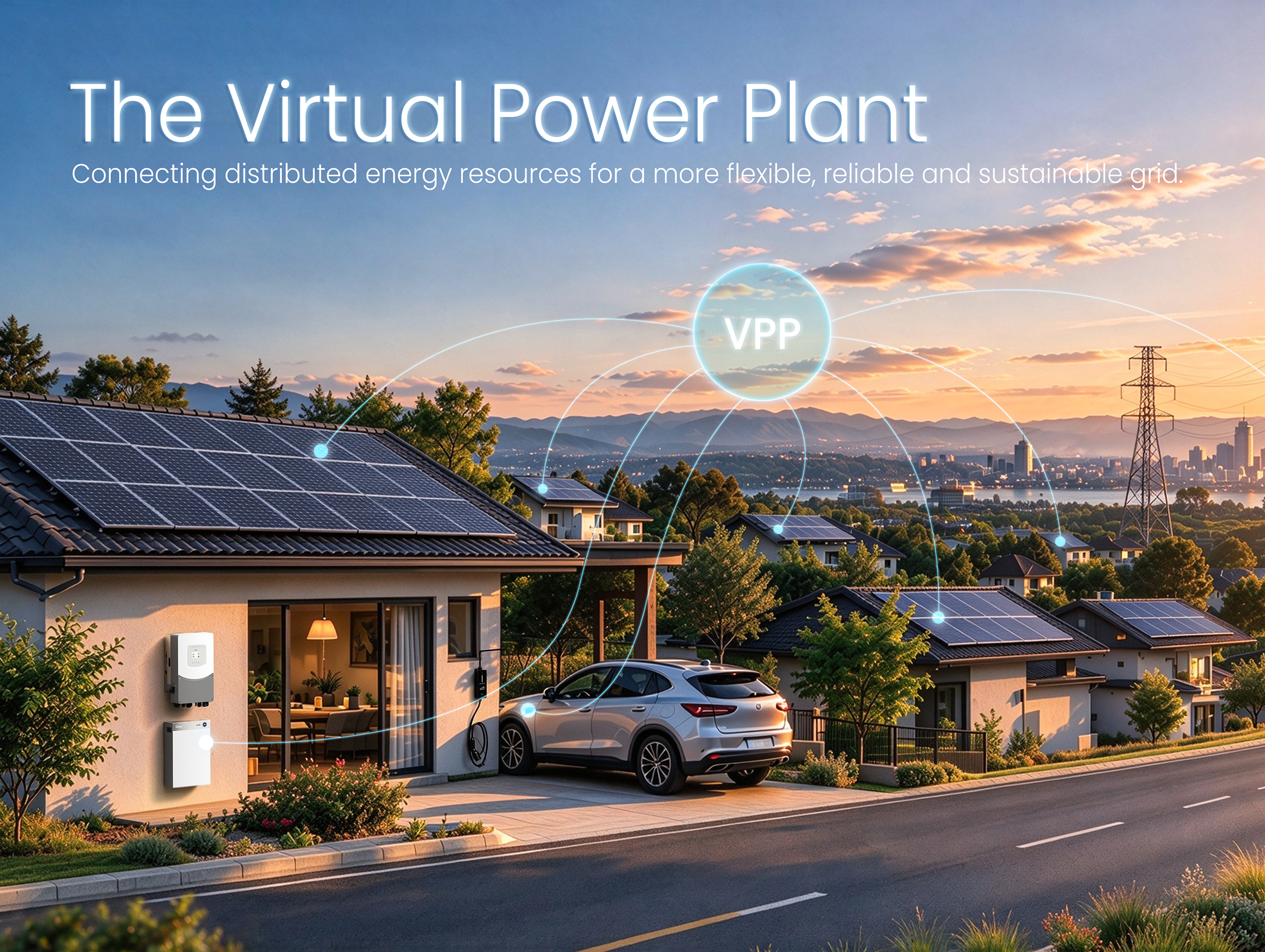 From Centralized Grids to Virtual Power Plants: The Next Evolution of the Power System
For more than a century, power systems around the world have relied on a centralized model. Large p...
-
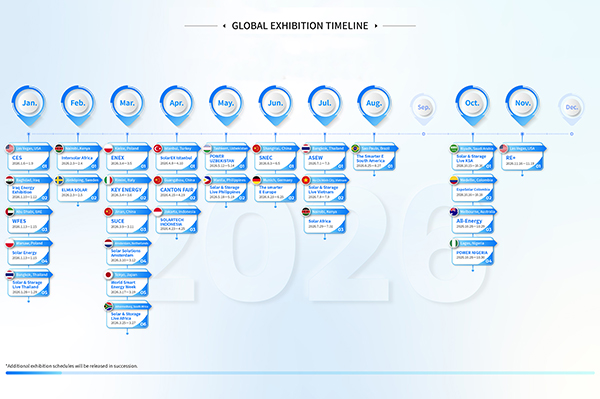 GLOBAL EXHIBITION TIMELINE
*Click to view larger image
-
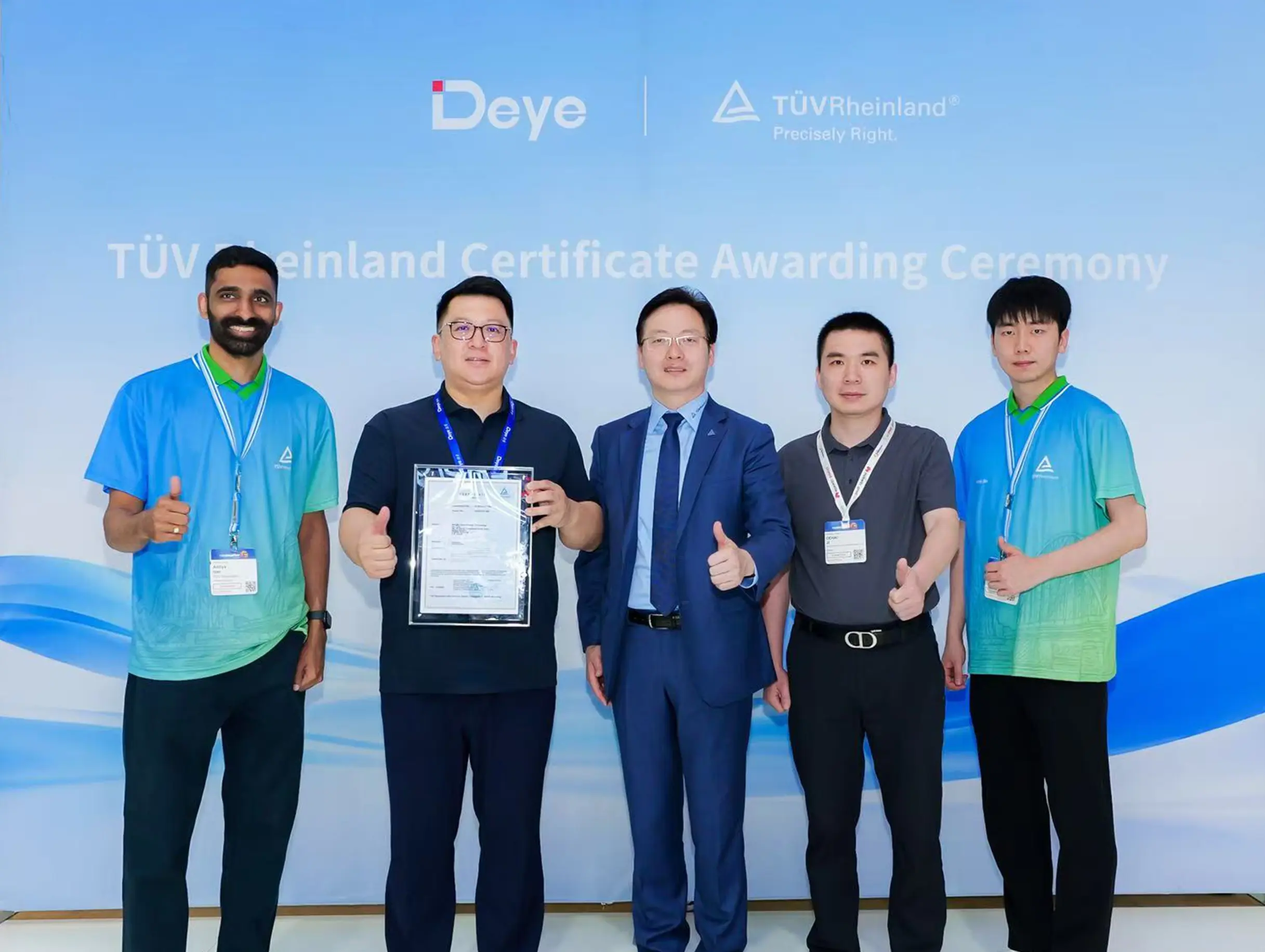 Deye Secures Multiple TÜV Rheinland Certifications at The smarter E Europe
On June 23, the opening day of The smarter E Europe 2026, Deye was officially awarded several presti...

Copyright@ 2024.Ningbo Deye Inverter Technology Co.,Ltd. All rights reserved. Solar Inverter Manufacturer
