
 Online Shop
 English
 China - 简体中文
 Global - English
 Brazil - Português
 Netherlands - Dutch
 Italy - Italiano
 Germany - Deutsch
 Spain - Español
 France - Français
 Vietnam - Tiếng Việt
 Poland - Polski
 Australia - English
 Japan - 日本語
Luo Qinxue — Regional Sales Manager, On-Grid Inverter Solutions

18–20 kW Three-Phase String Inverter: A High-Efficiency Platform for Modern Commercial Solar Systems
The transition toward distributed solar power is accelerating across commercial buildings, industrial facilities, agricultural sites, public infrastructure, and large residential properties. As photovoltaic arrays become larger and grid requirements become more demanding, the inverter has become much more than a simple device that converts direct current into alternating current. It is now a central energy-management component responsible for power conversion, grid interaction, protection, monitoring, system flexibility, and long-term operational reliability.
The SUN-18/20K-G06P3-EU-BM2-P1 series is designed for these requirements. This three-phase string inverter platform provides 18 kW and 20 kW output options, two maximum power point tracking channels, a maximum efficiency of 98.5%, wide operating voltage compatibility, optional intelligent string monitoring, and support for applications such as zero export and virtual synchronous generation. It is intended for grid-connected photovoltaic installations that require high energy yield, practical system integration, and a strong collection of electrical protection functions.
Manufactured by Ningbo Deye Inverter Technology Co., Ltd., the product benefits from the experience of a global technology manufacturer that integrates research and development, design, production, sales, and service. The company’s broad product portfolio includes string inverters, hybrid inverters, energy storage systems, microinverters, and related energy-management technologies. This wide market perspective supports the development of products that can be integrated into increasingly sophisticated solar and storage ecosystems.
This article examines the product’s technical architecture, operating advantages, application value, manufacturing strengths, protection features, monitoring capabilities, and suitability for different commercial and industrial solar projects.
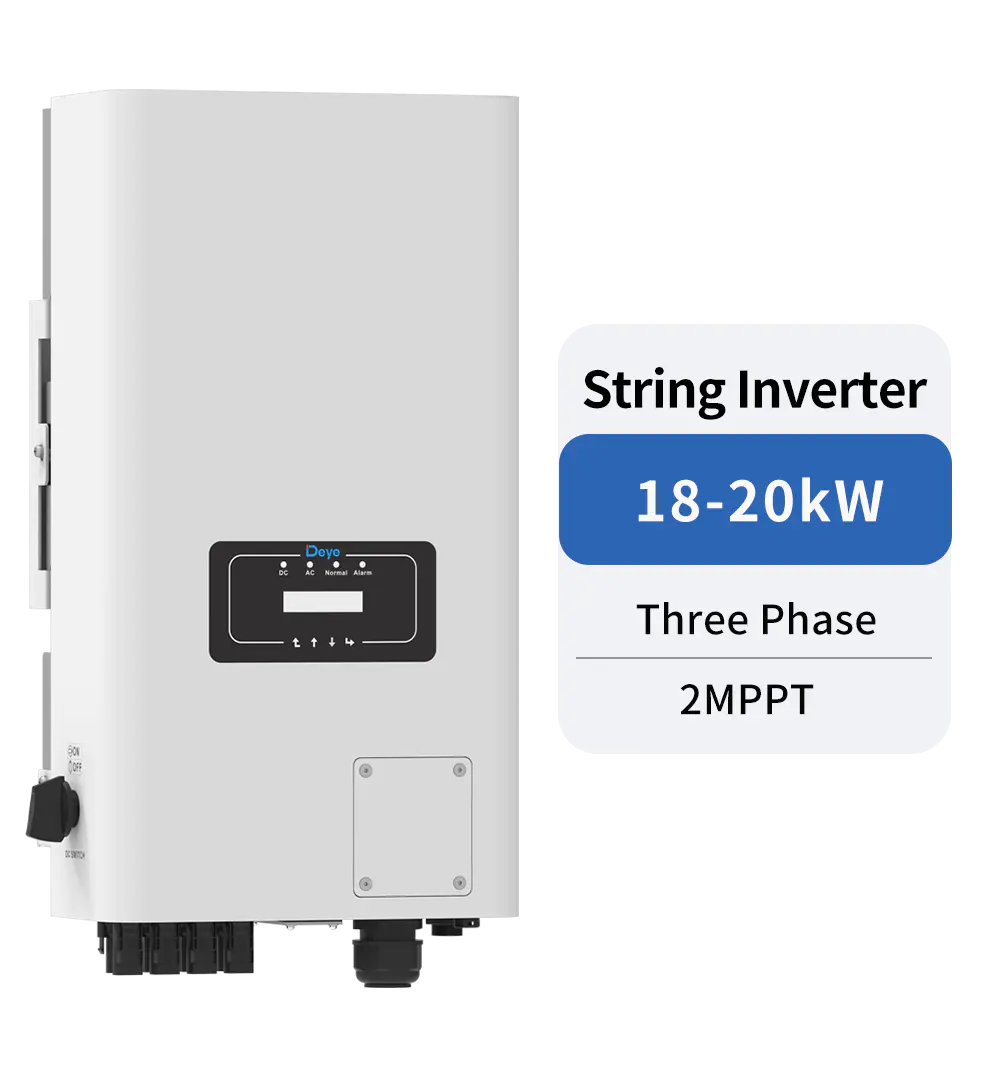
SUN-18/20K-G06P3-EU-BM2-P1
1. Product Overview and Intended Applications
The SUN-18/20K-G06P3-EU-BM2-P1 is a three-phase string inverter available in two closely related power ratings. The SUN-18K version delivers 18 kW of rated active power, while the SUN-20K version delivers 20 kW. Both models share the same essential photovoltaic input architecture, operating voltage range, protection framework, communication interfaces, and enclosure concept.
These power ratings occupy an important position in the distributed solar market. Systems in the 18–20 kW range are large enough to serve commercial rooftops, small industrial buildings, workshops, offices, retail locations, agricultural facilities, schools, and multi-unit properties, while remaining compact enough for decentralized installation. Rather than concentrating an entire project around one very large central inverter, an installer can use multiple units to create a modular system that is easier to design, transport, commission, and maintain.
The inverter is designed for three-phase grid connection through a 3L/N/PE configuration. It supports common low-voltage three-phase systems rated at 220/380 V or 230/400 V, with an allowable voltage range of 0.85 to 1.1 times the nominal voltage. It also supports 50 Hz and 60 Hz grid environments within the stated frequency ranges. This makes the platform suitable for a wide range of international markets, subject to local grid approval and installation requirements.
A central characteristic of the product is its string-inverter architecture. Each photovoltaic string is monitored and converted through the inverter rather than routing the entire array through one central conversion stage. This architecture improves design flexibility and can reduce the effect of partial shading, module mismatch, different roof orientations, and uneven operating conditions. It also allows a project to be expanded in stages by adding additional inverter units as energy demand or available roof space increases.
The product is not presented as a battery inverter or hybrid inverter. Its primary function is grid-tied photovoltaic power conversion. However, its support for zero export and VSG-related applications gives it a role in more advanced energy systems where grid interaction, power limitation, and dynamic operating behavior are important.
2. Main Technical Strengths
2.1 High conversion efficiency
The maximum efficiency of the inverter is specified at 98.5%, while the European efficiency is specified at 98.0%. These figures indicate that only a small proportion of the incoming photovoltaic energy is lost during conversion under suitable operating conditions. In a commercial solar installation that operates for many hours every day, even a relatively small efficiency difference can influence annual energy production and system economics.
Maximum efficiency is normally achieved under particular voltage and loading conditions, whereas European efficiency is intended to provide a more representative indication of performance across a range of operating points. The combination of 98.5% maximum efficiency and 98.0% European efficiency positions the unit competitively among modern three-phase string inverters in its power class.
The inverter also provides MPPT efficiency above 99%. Maximum power point tracking is essential because photovoltaic modules do not produce a fixed voltage and current throughout the day. Temperature, solar irradiance, shading, module aging, and installation orientation all affect the best operating point. High MPPT efficiency helps the inverter extract more usable energy from the array instead of allowing available power to remain unused.
Compared with older inverter designs that may have had narrower tracking ranges or less responsive algorithms, this combination of high conversion efficiency and high MPPT efficiency can provide a stronger energy yield across changing weather and load conditions. For commercial users, the advantage is not limited to a headline efficiency number; it is also reflected in better utilization of installed module capacity.
2.2 Dual-MPPT architecture
The product incorporates two MPP trackers and supports two strings per MPPT tracker. The stated string arrangement is 2/2+2, providing practical flexibility for photovoltaic arrays with different orientations or operating characteristics.
Dual-MPPT architecture is particularly valuable on rooftops divided into east-facing, west-facing, south-facing, or partially shaded sections. Each tracker can operate at a different voltage and current condition, allowing the inverter to manage separate array sections more effectively than a single-tracker design. This helps reduce the energy losses that can occur when dissimilar strings are forced to operate at one common point.
The two-tracker design also simplifies system planning. Installers can allocate strings according to roof geometry, module quantity, tilt angle, and shading exposure. In many projects, this avoids the need for additional external optimization equipment or complex string combinations. The result can be a cleaner electrical layout, more predictable commissioning, and improved use of available roof space.
2.3 Broad photovoltaic voltage range
The inverter accepts a maximum photovoltaic input voltage of 1100 V. Its start-up voltage is 140 V, its MPPT voltage range is 120–1000 V, and its rated PV input voltage is 600 V. This broad range supports a variety of string lengths and module configurations.
A low start-up voltage allows the inverter to begin operation earlier in the day when the array has sufficient voltage but limited irradiance. A wide MPPT range also gives designers greater freedom when selecting the number of modules per string. At the upper end, support for high-voltage photovoltaic strings can help reduce current-related cable losses and improve the economics of larger rooftop arrays.
System designers must always verify the cold-weather open-circuit voltage of the selected modules and ensure that the maximum string voltage remains below the inverter’s permitted limit. Nevertheless, the stated voltage architecture provides a useful design margin and accommodates many mainstream high-voltage PV modules.
2.4 High current-handling capability
The inverter is specified with a maximum input short-circuit current of 32 A plus 32 A and a maximum operating PV input current of 48 A plus 48 A. These values provide compatibility with modern high-power photovoltaic modules and higher-current string designs.
As module output has increased, older inverter platforms with low input-current limits may not be able to use the full capability of newer modules. A higher input-current allowance reduces the risk of clipping caused by current restrictions and gives installers more options when selecting modules. It also supports better design compatibility across a changing PV module market.
Although current compatibility must be checked against the exact electrical characteristics of the selected modules, the platform’s input specifications demonstrate an effort to address the needs of contemporary high-output PV arrays rather than only older, lower-current module generations.
2.5 Zero export and VSG applications
The product information identifies zero export and VSG applications among its key features. Zero export is important for sites where local regulations, utility contracts, or facility operating policies prohibit the delivery of excess photovoltaic electricity to the public grid. In such an installation, power control can be used to match PV generation with on-site consumption or coordinate with a broader energy-management system.
Zero-export operation can be valuable in factories, offices, farms, retail premises, and other facilities with variable daytime loads. It allows the site to use solar energy while reducing the risk of unintended reverse power flow. Proper meter installation, control configuration, commissioning, and compliance with local requirements remain essential.
VSG, or virtual synchronous generation, refers to control behavior that can emulate certain characteristics associated with synchronous generators. Depending on the complete system configuration and applicable firmware or regulatory settings, such behavior may support grid stability and more controlled inverter interaction. This feature is relevant in modern electrical networks with increasing penetration of inverter-based generation.
The inclusion of these applications indicates that the inverter is designed not only for basic energy conversion but also for more intelligent grid participation. This provides an advantage over simpler products that offer only fixed-output grid connection without advanced export-control or grid-support functions.
3. AC Output Performance and Grid Compatibility
The SUN-18K model has a rated AC output power of 18 kW and a maximum apparent power of 19.8 kVA. The SUN-20K model has a rated AC output power of 20 kW and a maximum apparent power of 22 kVA. The additional apparent-power capacity provides useful operating headroom for reactive-power control and grid-support functions, depending on the configured operating conditions.
The rated output current is listed as 27.3/26.1 A for the 18 kW model and 30.4/29 A for the 20 kW model. The corresponding maximum AC output currents are 30/28.7 A and 33.4/31.9 A. These values should be considered when selecting circuit breakers, cables, isolators, distribution equipment, and upstream protection.
The power-factor adjustment range extends from 0.8 leading to 0.8 lagging. This enables the inverter to provide a broad range of reactive-power behavior when required by the grid operator or site design. Reactive-power control can help support voltage management and meet local interconnection requirements, although the exact permitted settings depend on national regulations and utility approval.
Total current harmonic distortion is specified at below 3%. Low harmonic distortion is important because excessive harmonics can affect sensitive equipment, increase losses, and create power-quality concerns within a facility. The stated specification demonstrates attention to clean AC output and compatibility with modern commercial electrical networks.
DC injection current is specified at below 0.5% of rated current. Limiting DC injection helps protect transformers and other AC network components from unwanted direct-current components. Together with harmonic control and power-factor adjustment, this contributes to more stable and compliant grid operation.
The platform supports multiple international grid regulations, including IEC 61727, IEC 62116, CEI 0-21, EN 50549, NRS 097, RD 140, UNE 217002, OVE-Richtlinie R25, G99, and VDE-AR-N 4105. The actual approval status for a particular project must be confirmed using the current product documentation and the requirements of the destination market. Nevertheless, the broad list indicates that the product has been developed for international deployment rather than for one isolated grid environment.
4. Protection and Safety Architecture
Reliability in a solar inverter depends on more than efficiency. The unit must protect itself, the PV array, connected equipment, personnel, and the public grid under abnormal conditions. The product includes a broad set of protective functions designed to address common electrical and environmental risks.
4.1 DC-side protection
DC reverse-polarity protection helps prevent damage if photovoltaic cables are connected incorrectly. Although correct installation and polarity verification are always required, this protective layer can reduce the consequences of wiring errors during commissioning or maintenance.
The inverter also includes insulation impedance detection. This function helps identify leakage or insulation deterioration between the PV array and ground. Early detection of insulation problems is important because moisture ingress, cable damage, connector failure, and module defects can create safety hazards or cause unwanted shutdowns.
DC component monitoring is provided to identify direct-current components that may appear in the AC output. The DC switch gives installers and service personnel a defined means of isolating the photovoltaic input during maintenance, inspection, or emergency procedures, subject to site safety practices.
4.2 AC-side protection
AC output overcurrent protection, overvoltage protection, and short-circuit protection are included. These functions help protect the inverter and connected distribution system when abnormal current or voltage conditions occur. Thermal protection is also provided to prevent operation beyond safe temperature limits.
Anti-islanding protection is a fundamental grid-connected inverter function. If the utility grid becomes unavailable, the inverter must stop energizing the circuit within the required time so that it does not continue supplying an isolated section of the network. This protects utility workers and helps maintain safe network operation.
Residual-current detection adds another layer of protection by monitoring leakage-related conditions. It is especially relevant in non-isolated inverter topologies, where appropriate system grounding, protective devices, installation methods, and local electrical codes must be carefully observed.
4.3 Surge protection and optional AFCI
The product uses Type II surge protection on both the DC and AC sides. Surge protective devices help limit transient overvoltage caused by lightning-related events, switching operations, and disturbances on the electrical network. They do not eliminate all lightning risk, so the complete installation should still include a properly designed grounding and lightning-protection strategy where required.
An arc fault circuit interrupter is available as an option. AFCI technology can detect electrical arc signatures that may occur because of damaged cables, loose connections, degraded connectors, or other faults. Early interruption of arc faults can reduce fire risk in photovoltaic installations. The optional configuration allows project developers to select the feature according to local regulations, insurance requirements, risk assessments, and project priorities.
Compared with entry-level products that may provide only basic overcurrent and anti-islanding functions, this combination of reverse-polarity protection, insulation monitoring, residual-current detection, surge protection, thermal protection, and optional AFCI presents a more comprehensive safety architecture.
5. Monitoring, Communications, and Intelligent Operation
Solar plant owners increasingly expect visibility into energy production, alarms, historical performance, and equipment condition. The inverter includes RS485 and RS232 communication interfaces. These interfaces can support connection to meters, data loggers, monitoring equipment, control systems, and other compatible devices.
Optional monitoring modes include GPRS, Wi-Fi, Bluetooth, 4G, and LAN. This range of communication choices is useful because project conditions vary considerably. A small commercial installation may prefer Wi-Fi or Bluetooth for local commissioning, while a larger or remote site may require cellular communication or a wired LAN connection.
String intelligent monitoring is identified as an optional feature. String-level visibility helps installers and operators identify underperforming sections of the PV array. Without detailed monitoring, a low-production string may remain unnoticed for an extended period. With intelligent string monitoring, operators can compare expected and actual performance, identify irregular current or voltage behavior, and prioritize inspection work.
Better monitoring can reduce operating costs. Instead of sending technicians to inspect every component on a fixed schedule, a service team can use alarm records and performance data to investigate the most likely source of a problem. This supports condition-based maintenance and may reduce downtime.
Communication capability also supports zero-export applications. A site meter can provide information about electricity flowing between the facility and the grid, while the inverter adjusts photovoltaic output to maintain the desired export limit. The exact control arrangement depends on the meter, communication protocol, software settings, and project design.
6. Mechanical Design and Environmental Performance
The inverter has a cabinet size of 283 × 525 × 188 mm, excluding connectors and brackets, and a listed weight of 12 kg. This relatively compact and lightweight format can simplify transportation, wall mounting, handling during installation, and replacement activities.
Compact dimensions are especially valuable on commercial rooftops where equipment space may be limited. A smaller enclosure can leave more room for cable routing, service clearances, fire access paths, and other balance-of-system components. Even so, installers must follow the manufacturer’s mounting, ventilation, clearance, and environmental instructions.
The enclosure has an IP65 ingress-protection rating. This helps protect internal components against dust and water jets from typical directions. IP65 does not mean that the inverter can be submerged or installed without regard to drainage, condensation, direct exposure, or local weather conditions. Proper mounting remains essential for long-term performance.
The operating temperature range is listed as -25 to -60°C in the supplied product information. Because this range appears unusually broad and may reflect a formatting issue in the source data, project engineers should confirm the exact approved operating range in the latest technical datasheet before final design or procurement. This verification is particularly important for installations exposed to very hot or very cold climates.
Permissible ambient humidity is specified at 0–100%, and permissible altitude is listed at up to 4000 m. High-altitude projects may experience reduced air density and different thermal behavior, so derating requirements and installation instructions should be checked before deployment. The stated altitude capability nevertheless indicates suitability for many elevated locations when the complete design is properly evaluated.
Noise is rated at no more than 45 dB. This makes the product appropriate for many commercial and semi-residential environments where acoustic performance matters. The inverter uses intelligent air cooling, which helps manage internal temperature during high-power operation. Active cooling can support thermal stability, although adequate airflow and regular inspection of ventilation paths remain important.
The inverter topology is non-isolated. This architecture can contribute to high efficiency and compact dimensions, but it places increased importance on correct grounding, insulation monitoring, residual-current protection, module compatibility, and compliance with local electrical standards. Qualified professionals should perform the design and installation.
7. Anti-PID Capability and Long-Term PV Performance
Potential-induced degradation, commonly known as PID, can reduce the power output of photovoltaic modules under certain voltage, temperature, humidity, and system-grounding conditions. The product identifies an anti-PID function as optional.
By offering anti-PID capability, the platform can be adapted for projects where module technology, climate, system voltage, or investor requirements create a heightened concern about long-term degradation. The correct anti-PID configuration depends on the specific module construction, system architecture, and local conditions. It should therefore be selected as part of the engineering process rather than treated as a universal substitute for proper module selection and system design.
The optional approach can also help control project cost. Sites with low PID risk may not require the additional function, while demanding projects can specify it when the expected long-term energy benefit justifies the investment.
8. Advantages Compared with Less Capable Alternatives
8.1 Compared with small single-phase inverters
Small single-phase inverters can be appropriate for modest residential systems, but they are not always suitable for larger commercial or three-phase loads. The 18–20 kW platform provides balanced three-phase output, a higher power rating, and grid-control features suited to facilities with substantial daytime consumption.
Using a three-phase unit can simplify the connection of three-phase equipment and reduce the need to distribute a larger single-phase output across multiple circuits. It also offers a better match for commercial utility connections that require three-phase generation.
8.2 Compared with single-MPPT products
A single-MPPT inverter may be adequate for a uniform, unshaded roof with one orientation. However, many real-world sites have multiple roof surfaces, obstructions, skylights, parapets, and changing shading patterns. Dual MPPT allows the array to be separated into two independently managed electrical groups.
This can provide a practical energy-yield advantage over single-tracker alternatives, particularly when roof geometry prevents all strings from operating under identical conditions. It may also reduce design compromises and simplify the allocation of strings.
8.3 Compared with lower-current inverter platforms
Some older or lower-cost inverter models have input-current limits that are poorly matched to contemporary high-power modules. The product’s high current-handling specifications provide greater compatibility with newer module designs and reduce the likelihood that module current will be unnecessarily restricted.
Compatibility with high-current modules can improve procurement flexibility. Developers are not forced to select only older or lower-output panel types simply to remain within the inverter’s electrical limits.
8.4 Compared with basic grid-tied inverters
Basic grid-tied inverters may convert PV power effectively but lack advanced functions such as zero export, optional intelligent string monitoring, broad communication choices, reactive-power control, and VSG-related operation. The SUN-18/20K platform offers a more complete foundation for sites that require active control and monitoring.
These features can be especially valuable when a commercial customer wants to maximize on-site self-consumption, comply with export restrictions, investigate performance remotely, or prepare the facility for future energy-management integration.
8.5 Compared with oversized central inverters
Central inverters can be effective in large utility-scale plants, but a smaller distributed project may not benefit from concentrating all conversion equipment in one location. Multiple 18–20 kW string inverters can divide the system into manageable sections. If one unit requires service, the remaining units may continue operating, reducing the impact of a localized failure.
String-level architecture can also improve design flexibility across multiple rooftops or buildings. It may reduce long DC cable runs, simplify phased construction, and make fault localization more direct.
9. Manufacturing and Corporate Strengths
The product is manufactured by Ningbo Deye Inverter Technology Co., Ltd., a technology manufacturing enterprise founded in 2000. The company integrates research and development, design, production, sales, and service. This vertically coordinated structure is important in the inverter industry because product performance depends on the interaction between electrical design, embedded software, mechanical engineering, production quality, testing, logistics, and after-sales support.
An integrated development and manufacturing model can shorten the feedback loop between field experience and product improvement. Engineers can respond to installer observations, grid-code updates, component changes, and customer requirements through coordinated product development rather than relying entirely on external suppliers or disconnected business units.
The company’s product portfolio covers PV inverters, energy storage systems, microinverters, environmental appliances, and related energy technologies. It includes string inverter products from 1 kW to 136 kW, energy storage inverters from 3 kW to 80 kW, and microinverters from 300 W to 2.2 kW. This breadth gives the manufacturer experience across residential, commercial, industrial, and utility-oriented applications.
Experience across multiple power classes can support more consistent platform engineering. Lessons learned from compact residential products may improve usability and communications, while experience with larger systems can inform thermal design, grid compliance, and protection strategies. The result is a product family that can support customers as their energy requirements grow.
The company was listed on the Shanghai Stock Exchange in April 2021. Public-company status can contribute to stronger governance, investment capacity, reporting processes, and long-term business visibility. For distributors, installers, and project developers, a stable manufacturer with international operations can reduce concerns about product continuity and technical support.
Deye products are sold in more than 140 countries and regions. International deployment requires adaptation to different grid standards, climate conditions, installation practices, certification requirements, and customer expectations. The broad range of supported grid regulations associated with this inverter reflects the manufacturer’s international orientation.
The company also develops energy IoT technologies, including the Deye Cloud App and LoRa-based wireless energy-management solutions. These capabilities are relevant because modern inverters are increasingly judged by the quality of their digital ecosystem as well as by their electrical conversion performance. Monitoring, alarms, remote access, and energy data can help owners operate systems more efficiently over their full service life.
9.1 Advanced manufacturing perspective
The supplied materials do not provide a detailed factory process map, such as specific automated assembly equipment, inspection station counts, semiconductor packaging methods, or production-line cycle times. It would therefore be inappropriate to assign unsupported numerical claims to the manufacturing process. However, the company’s integrated R&D, design, production, sales, and service structure demonstrates the organizational foundation required for advanced inverter manufacturing.
For a product such as the SUN-18/20K series, high-quality manufacturing involves coordinated control of power electronic components, printed circuit boards, cooling systems, enclosure sealing, connectors, protection circuits, firmware, communications modules, and final functional testing. Each of these areas influences field reliability. A technically strong circuit design can still fail if assembly quality, thermal interface control, connector installation, or software verification is inadequate.
The product’s combination of high efficiency, high input-current capability, dual MPPT, broad grid support, IP65 enclosure protection, intelligent cooling, and multiple monitoring options suggests a design process that considers the complete operating environment rather than focusing on one isolated specification. Manufacturing quality must preserve these design intentions through component control, assembly consistency, inspection, testing, and documented service procedures.
The company’s ability to produce products across several inverter and energy-storage categories also indicates a substantial manufacturing and engineering base. This can support economies of scale, shared technical expertise, common quality systems, and more efficient product iteration. For international customers, these capabilities are important when selecting a supplier for repeated projects rather than a one-time installation.
10. Installation and System Design Considerations
Although the inverter is designed for practical installation, professional system design remains essential. The installer should confirm the module open-circuit voltage under the lowest expected temperature, maximum operating current, string length, MPPT voltage, and total DC oversizing. The array must remain within the inverter’s absolute voltage and current limits under all expected environmental conditions.
The 18 kW model accepts a maximum PV input power of 27 kW, while the 20 kW model accepts up to 30 kW. This allows a DC-to-AC ratio of approximately 1.5 under the stated maximum values. Appropriate oversizing can improve annual energy production by allowing the array to deliver more power during low-irradiance periods, but designers must evaluate clipping, local temperature, module orientation, irradiance conditions, and warranty requirements.
AC cable sizing should reflect the rated and maximum output currents, cable length, installation method, ambient temperature, grouping, and applicable electrical codes. Protective devices should be selected based on the complete circuit design rather than relying only on the inverter’s nominal power rating.
Since the inverter uses a non-isolated topology, grounding and insulation requirements must be treated carefully. The PV modules, mounting structure, inverter, AC distribution equipment, surge protection, and site grounding system should be coordinated. The installation should include adequate separation, labeling, emergency procedures, and access for inspection.
For zero-export projects, the energy meter and communication arrangement should be designed before installation. The location of the meter is important because the control system needs accurate information about power flowing between the site and the grid. Incorrect meter orientation, wiring, phase mapping, or communication settings can cause export-control errors.
In areas with high lightning activity, the inverter’s Type II surge protection should be integrated into a broader lightning-protection plan. Cable routing, grounding conductors, external surge protective devices, and building protection should be assessed together.
Ventilation and mounting position also influence service life. The inverter should not be placed where heat accumulates, where water can collect, or where airflow is blocked. Direct sunlight may increase enclosure temperature and should be considered during layout. The intelligent air-cooling system can manage operating heat, but it cannot compensate for an unsuitable installation environment.
11. Commercial and Industrial Value
For commercial users, the financial value of a solar inverter is linked to annual energy harvest, uptime, maintenance cost, compatibility with the facility, and ease of service. The SUN-18/20K platform addresses these factors through its high efficiency, dual-MPPT design, broad input range, monitoring options, and compact form.
Businesses with daytime electricity consumption can use the inverter to convert rooftop solar generation into three-phase power for lighting, motors, refrigeration, ventilation, office equipment, production machinery, and other loads. Where export is restricted, zero-export functionality can help the owner prioritize self-consumption.
For agricultural facilities, the inverter can support pumps, ventilation equipment, cold storage, processing machinery, and other three-phase loads. Rural and agricultural sites may also benefit from remote monitoring because service personnel may be located far from the installation.
For schools, public buildings, and offices, low noise and a compact enclosure can simplify placement. Monitoring data can also support sustainability reporting, energy education, maintenance planning, and performance verification.
For industrial sites, the broad reactive-power control range and low harmonic-distortion specification may support more demanding electrical environments. The installation must still be assessed by qualified engineers, particularly where large motors, variable-frequency drives, generators, or sensitive production equipment are present.
For multi-building projects, several units can be distributed across different roofs or electrical zones. This approach may reduce DC cable distances and provide more granular monitoring. It also allows project developers to phase construction according to available capital, roof access, or changes in electricity demand.
12. Reliability, Serviceability, and Lifecycle Management
The inverter is supplied with a standard five-year warranty, with extended warranty options available. Warranty terms should be reviewed for the destination market, installation conditions, registration requirements, and any exclusions. An extended warranty may be appropriate for commercial owners seeking to align inverter coverage with long-term financing or power-purchase agreements.
Reliability begins with correct system design and installation. The inverter’s protection features provide important safeguards, but they cannot replace proper cable termination, torque control, grounding, ventilation, weatherproofing, and commissioning. Regular inspection should include connectors, cable glands, filters or ventilation openings, enclosure condition, surge-protection status, and alarm history.
Remote monitoring can improve lifecycle management by identifying unusual production patterns before they become major failures. Operators can compare inverter output with irradiance, historical production, neighboring units, or expected seasonal behavior. A sudden current imbalance may indicate a string issue, while a repeated thermal alarm may indicate airflow or installation problems.
The compact 12 kg form factor may simplify replacement compared with heavier central equipment. Modular system design also limits the effect of an individual inverter outage. In a multi-unit plant, a failure does not necessarily stop the entire photovoltaic array, although the actual impact depends on the system layout and operating conditions.
Service teams should retain the latest manuals, firmware procedures, wiring diagrams, grid-code settings, and commissioning records. Local technicians should be trained to follow safe isolation procedures and to verify the absence of dangerous voltage before opening or servicing equipment.
13. Technical Specification Summary
| Item | SUN-18K-G06P3-EU-BM2-P1 | SUN-20K-G06P3-EU-BM2-P1 |
|---|---|---|
| Product type | Three-phase string inverter | Three-phase string inverter |
| Rated AC active power | 18 kW | 20 kW |
| Maximum PV input power | 27 kW | 30 kW |
| Maximum PV input voltage | 1100 V | 1100 V |
| Start-up voltage | 140 V | 140 V |
| MPPT voltage range | 120–1000 V | 120–1000 V |
| Rated PV input voltage | 600 V | 600 V |
| Maximum input short-circuit current | 32 A + 32 A | 32 A + 32 A |
| Maximum operating PV input current | 48 A + 48 A | 48 A + 48 A |
| MPPT configuration | 2 MPPT, 2 strings per MPPT | 2 MPPT, 2 strings per MPPT |
| Maximum AC apparent power | 19.8 kVA | 22 kVA |
| Maximum efficiency | 98.5% | 98.5% |
| European efficiency | 98.0% | 98.0% |
| MPPT efficiency | Above 99% | Above 99% |
| Grid connection | 3L/N/PE | 3L/N/PE |
| Power factor range | 0.8 leading to 0.8 lagging | 0.8 leading to 0.8 lagging |
| Total harmonic distortion | Below 3% | Below 3% |
| Surge protection | Type II DC and Type II AC | Type II DC and Type II AC |
| Communication interfaces | RS485 and RS232 | RS485 and RS232 |
| Optional monitoring | GPRS, Wi-Fi, Bluetooth, 4G, LAN | GPRS, Wi-Fi, Bluetooth, 4G, LAN |
| Ingress protection | IP65 | IP65 |
| Dimensions | 283 × 525 × 188 mm | 283 × 525 × 188 mm |
| Weight | 12 kg | 12 kg |
| Cooling | Intelligent air cooling | Intelligent air cooling |
| Standard warranty | Five years | Five years |
14. Frequently Asked Questions
Q1: What type of solar system is this inverter designed for?
It is designed primarily for grid-connected photovoltaic systems with three-phase AC output. It is suitable for commercial, industrial, agricultural, institutional, and larger residential installations, subject to local grid requirements.
Q2: What is the difference between the 18 kW and 20 kW versions?
The main difference is rated AC active power. The 18 kW model provides 18 kW of rated output and accepts up to 27 kW of PV input power. The 20 kW model provides 20 kW of rated output and accepts up to 30 kW of PV input power. Many other core specifications are shared.
Q3: How many MPPT trackers does the inverter have?
The inverter has two MPP trackers, with two strings per tracker. This supports arrays with different orientations, shading conditions, or electrical characteristics.
Q4: Can it be used for zero-export solar installations?
Yes. Zero-export application is identified as one of the product’s supported features. A compatible meter and correctly configured control system are required, and the final design must comply with local utility and electrical requirements.
Q5: Does the inverter support high-power PV modules?
Its maximum operating PV input current is listed as 48 A plus 48 A, and the maximum input short-circuit current is 32 A plus 32 A. These specifications provide compatibility with many modern high-current modules, but the exact module electrical data must be checked during design.
Q6: What is the inverter’s maximum efficiency?
The maximum efficiency is 98.5%, the European efficiency is 98.0%, and MPPT efficiency is specified above 99%.
Q7: What protection functions are included?
Protection features include DC reverse-polarity protection, AC overcurrent protection, AC overvoltage protection, AC short-circuit protection, thermal protection, insulation impedance detection, DC component monitoring, anti-islanding protection, residual-current detection, Type II DC and AC surge protection, and a DC switch. AFCI and anti-PID functions are optional.
Q8: Is monitoring available?
Yes. The inverter includes RS485 and RS232 communication interfaces. Optional monitoring methods include GPRS, Wi-Fi, Bluetooth, 4G, and LAN. Intelligent string monitoring is also available as an option.
Q9: Can it operate in very high-altitude locations?
The supplied specification lists permissible altitude up to 4000 m. Project designers should verify any applicable derating, cooling, installation, and certification conditions in the latest official documentation.
Q10: Is the inverter suitable for outdoor installation?
The IP65 enclosure rating supports outdoor-oriented installation when the unit is mounted correctly. It must be protected from unsuitable flooding, excessive condensation, blocked airflow, and other environmental conditions beyond the approved specifications.
Q11: What is the warranty period?
The standard warranty is five years, with extended warranty options available. Specific terms should be confirmed for the purchasing market and project contract.
Q12: Why is dual MPPT useful on a commercial roof?
Commercial roofs often include multiple orientations, obstructions, and shading patterns. Dual MPPT allows different string groups to operate independently, reducing the performance impact of mismatched array conditions.
Q13: Does the inverter include battery storage?
This product is a three-phase string inverter rather than a battery-hybrid inverter. Battery storage would require a compatible storage architecture and separate equipment unless a complete system solution specifies otherwise.
Q14: What should be confirmed before purchase?
Customers should confirm the required grid code, module current and voltage, string design, maximum DC power, AC protection, communications requirements, zero-export equipment, environmental conditions, warranty terms, and local certification status.
15. Conclusion
The SUN-18/20K-G06P3-EU-BM2-P1 series is a strong option for commercial and industrial photovoltaic projects that require high efficiency, flexible array design, three-phase output, and advanced grid-interaction capabilities. Its 18 kW and 20 kW power classes cover a broad range of distributed solar applications, while the 27 kW and 30 kW maximum PV input ratings support practical DC oversizing.
The dual-MPPT architecture, wide 120–1000 V tracking range, 1100 V maximum PV input voltage, and high input-current capability make the platform compatible with many modern PV designs. Its 98.5% maximum efficiency and above-99% MPPT efficiency support strong energy harvesting, while low harmonic distortion and adjustable power factor contribute to grid-friendly operation.
Protection functions, optional AFCI and anti-PID features, IP65 construction, intelligent air cooling, multiple communication options, zero-export support, and optional string monitoring add value beyond basic power conversion. These functions can help installers create safer, more observable, and more adaptable solar systems.
The manufacturer’s integrated R&D, design, production, sales, and service model, combined with its broad inverter and energy-storage portfolio and international market presence, provides a substantial foundation for product development and support. While every project must be evaluated against local regulations and site conditions, this inverter platform offers a balanced combination of efficiency, flexibility, protection, monitoring, and lifecycle practicality.
References
1. Product technical specification for the 18–20 kW three-phase string inverter series.
2. Product installation and operating instructions for the 18–20 kW three-phase inverter platform.
3. IEC 62109-1, Safety of Power Converters for Use in Photovoltaic Power Systems—General Requirements.
4. IEC 62109-2, Safety of Power Converters for Use in Photovoltaic Power Systems—Particular Requirements for Inverters.
5. IEC 61727, Photovoltaic Systems—Utility Interface Characteristics.
6. IEC 62116, Utility-Interconnected Photovoltaic Inverters—Test Procedure of Islanding Prevention Measures.
7. EN 50549, Requirements for the Connection of Generators in Parallel with Public Distribution Networks.
8. IEC 61000 series, Electromagnetic Compatibility Requirements for Power Conversion Equipment.
9. Manufacturer information concerning research and development, production, energy-storage solutions, inverter products, and international operations.
Product: SUN-18/20K-G06P3-EU-BM2-P1
PREV:Three-Phase String Inverter Technology for Efficient Commercial Solar Systems
NEXT:Three-Phase String Inverters for Efficient, Flexible, and Reliable Solar Generation
Share
Product recommendations
news recommendations
-
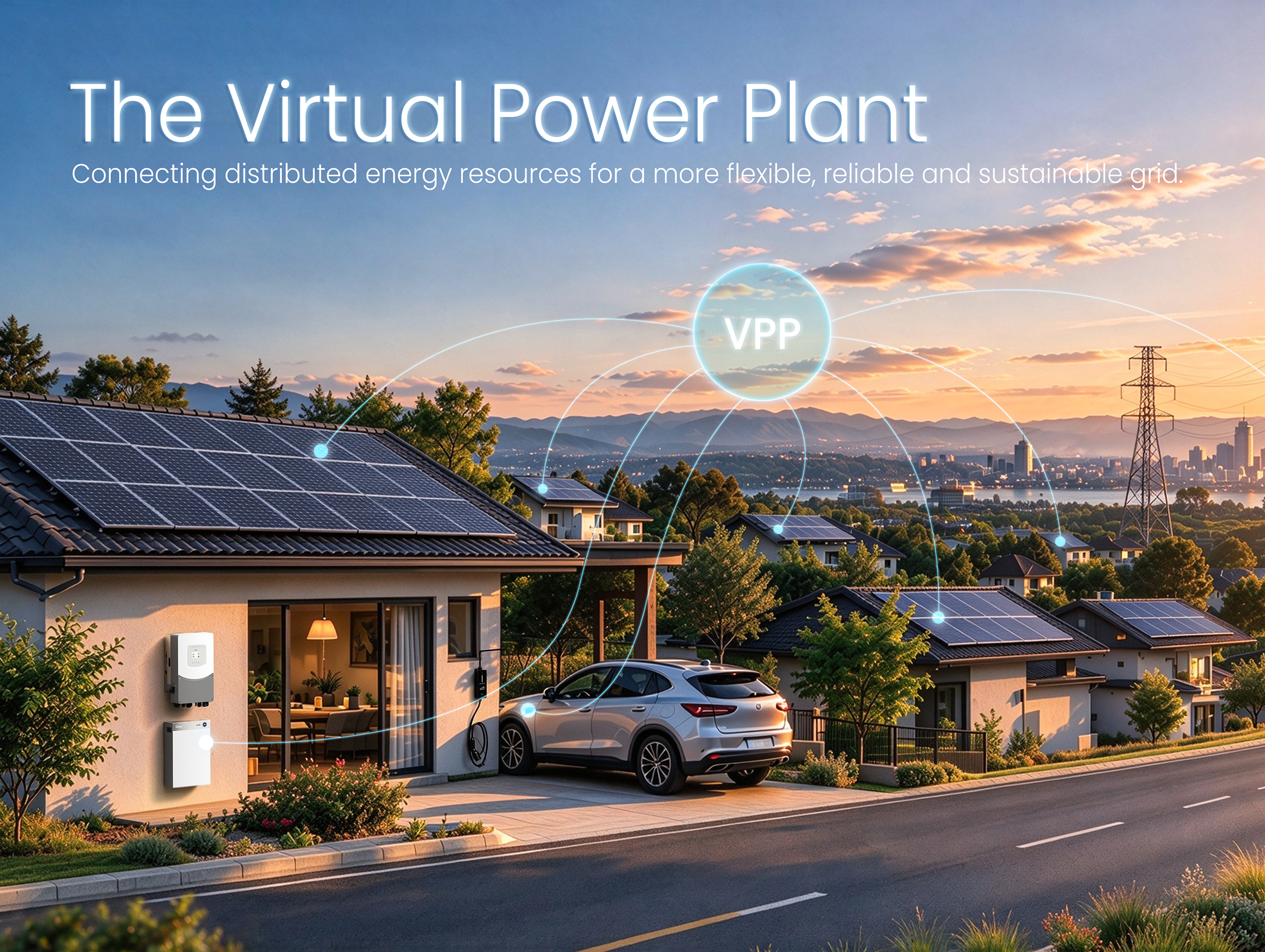 From Centralized Grids to Virtual Power Plants: The Next Evolution of the Power System
For more than a century, power systems around the world have relied on a centralized model. Large p...
-
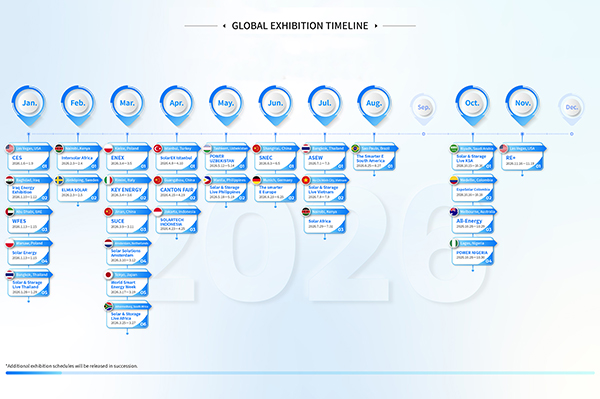 GLOBAL EXHIBITION TIMELINE
*Click to view larger image
-
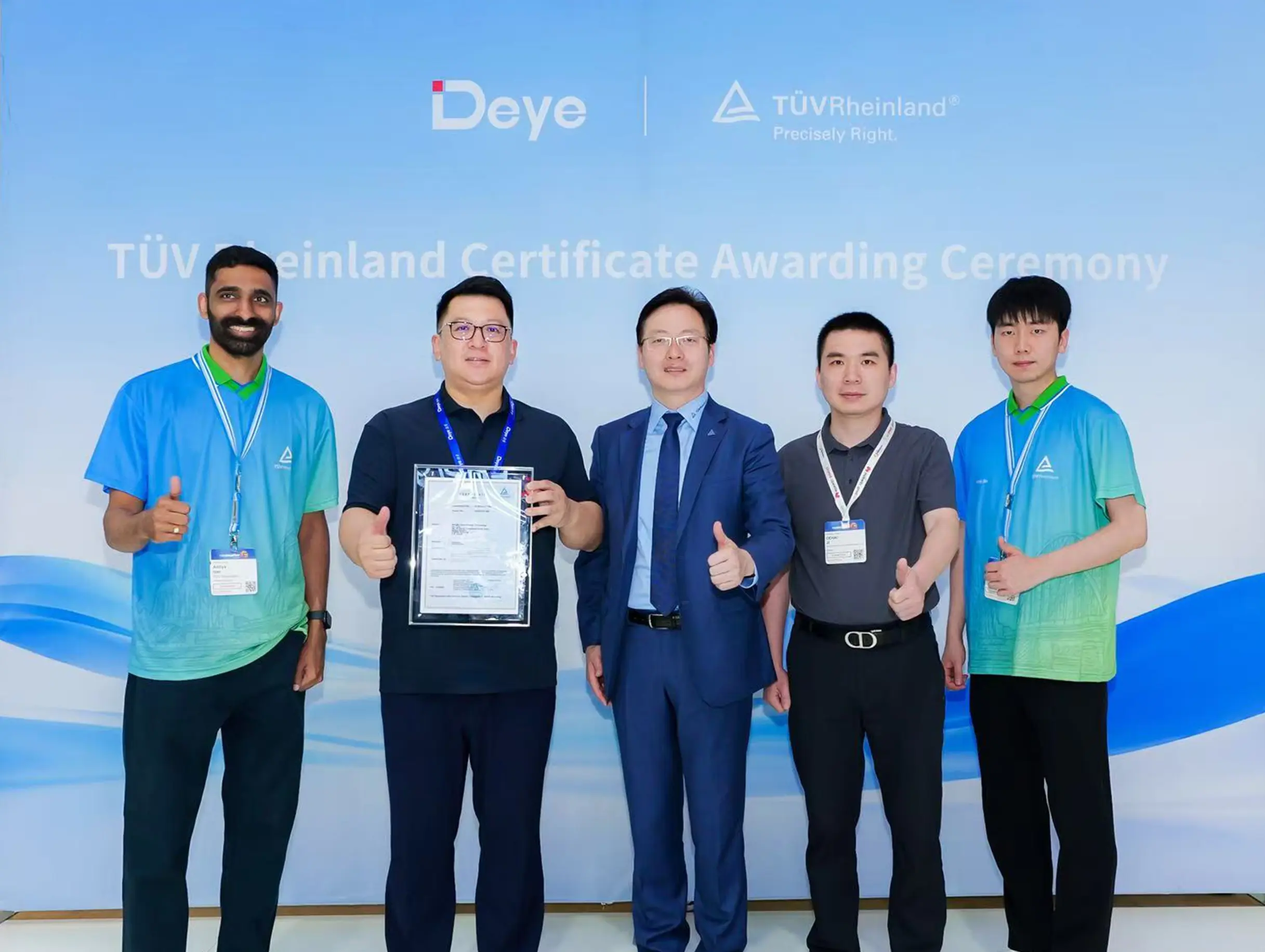 Deye Secures Multiple TÜV Rheinland Certifications at The smarter E Europe
On June 23, the opening day of The smarter E Europe 2026, Deye was officially awarded several presti...

Copyright@ 2024.Ningbo Deye Inverter Technology Co.,Ltd. All rights reserved. Solar Inverter Manufacturer
